By Maxwell Awumah, GNA
Ho, Nov. 03, GNA – An onboarding and orientation workshop, as part of a mentorship and coaching programme for women with disabilities, has concluded in Ho.
It was organised by the Women with Disability Development and Advocacy Organisation (WODAO), a Ho-based not-for-profit empowerment and advocacy group, supported under the EU-funded Civil Society Strengthening Project and implemented in collaboration with Sightsavers and the ABAK Foundation.
The programme aims to strengthen advocacy, leadership, and participation of women with disabilities in decision-making and development processes and seeks to foster long-term mentorship relationships for 45 mentees and 15 mentors.
It was on the theme: “Empowering Women with Disabilities through Mentorship, Leadership and Inclusion.”
Ms Princess Lovia Tetteh, representing the Volta Regional Director of Gender, highlighted the compounded vulnerabilities faced by women and girls with disabilities, who often experience double discrimination due to both gender and impairment.
She cited data from the Ghana Statistical Service (GSS), which showed a higher prevalence of disability among females (8.8%) compared to males (6.7%).
“This means women with disabilities do not only constitute a significant portion of the disabled population but also navigate a society where deep-seated social norms and stigma severely restrict their rights and opportunities,” she said.
Ms Tetteh added that research and census data revealed that women with disabilities were disproportionately affected by poverty, because of lower levels of education, and economic dependence.
They are also twice as likely to experience sexual or physical violence compared to women without disabilities.
“These statistics underscore the urgent need for gender-sensitive and disability-inclusive policies to address systemic inequalities that hinder the full participation and empowerment of disabled women in Ghanaian society,” she said.
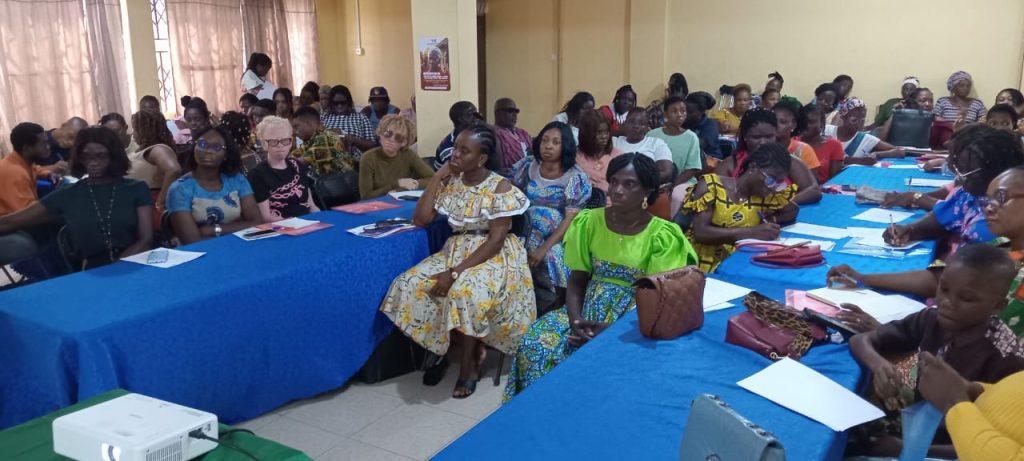
She called for integrating disability perspectives into gender equality efforts through acknowledgment, curiosity, support, boundary-respecting dialogue, validation, empowerment, and continuous learning.
Ms Tetteh noted that despite progress in gender equality, significant disparities remained, citing the World Economic Forum, which stated that it could take 131 years to close the global gender gap. As women currently hold only 28 per cent of managerial positions worldwide, with women with disabilities facing even greater barriers.
“Gender equality isn’t just a women’s issue; it is a human issue. Let’s work together to create a more inclusive and equitable society for all,” she said.
She urged mentors and mentees to model inclusive behaviors, challenge stereotypes, support one another, and advocate for inclusive policies and practices.
Madam Veronica Denyo Kofiedu, the Executive Director of WODAO, described the workshop as a milestone in the organisation’s journey to promote leadership, inclusion, and empowerment for women and girls with disabilities.
“This programme is not just an activity, it is a transformative journey designed to bridge the gap between potential and opportunity, between life experience and leadership.”
“Through this mentorship initiative, we are amplifying the voices of women with disabilities to ensure their full and equal participation in development and decision-making spaces,” she said.
Madam Patience Atipoka Atuah, the Programmes Manager at Voices for Women and Children with Disabilities in Ghana (VOWWAC), emphasised that effective communication in mentorship requires intentionality and mutual respect.
She noted that setting clear goals provides direction, tracks progress and fosters accountability between mentors and mentees.
“Conflicts are natural but addressing them early and focusing on issues rather than personalities helps maintain cordial relationships,” she said.
Mr George Edem Kofiedu, the Programmes Officer at WODAO, outlined the programme’s core principles: inclusivity, accessibility, trust, confidentiality, mutual respect, shared responsibility, and continuous learning.
He said the mentorship programme included virtual, hybrid, and internship components, beginning in November and concluding in February 2026.
GNA
Edited By Christabel Addo