By Yussif Ibrahim, GNA
Kumasi, May 7, GNA – Professor Christian Agyare, Provost of the College of Health Sciences at the Kwame Nkrumah University of Science and Technology (KNUST), has urged policy makers to prioritise the implementation of local research findings to help address Ghana’s growing injury burden.
He said although several studies had been conducted on injuries in the country over the years, a major challenge remained the persistent gap between research evidence and policy action.
“Now data has been collected, studies have been conducted and reports have been written and placed on shelves, yet there remains a troubling gap between what research tells us and what policy does with it,” he stated.
Prof Agyare made the call at a two-day injury prevention conference organised by KNUST in collaboration with the University of Washington, under the theme: “Nipping Ghana’s Injury Menace in the Bud – Harnessing Evidence from Local Research.”
The conference was part of activities under a KNUST-led injury research project funded through a training grant from the Fogarty International Center of the National Institutes of Health.
Prof Agyare observed that Ghana often relied heavily on foreign models and interventions to address injuries such as road traffic crashes, drowning, burns and workplace accidents, without sufficiently adapting them to local realities.
“Some of these tools have merit, but they were not born from our soil. They do not always speak to our context, our culture, our geography and our governance realities,” he noted.
He said the conference theme underscored the need for solutions grounded in local evidence and tailored to Ghana’s unique circumstances.
According to him, injuries remained a major public health emergency, claiming lives, disabling productive citizens and placing enormous pressure on the national economy and the healthcare system.
Prof Agyare said Ghanaian researchers had over the years generated significant evidence on injury patterns, risk factors and effective interventions, which should be central to policy formulation and implementation.
He urged researchers to actively engage policy makers, the media and relevant institutions to ensure that research findings translated into action.
“To our researchers, share your findings boldly and ensure your work reaches someone who can act on it,” he advised.
Prof Agyare commended the injury research project for training about 43 researchers in injury-related fields over the past two decades, noting that all had remained in Ghana and were contributing to national development.
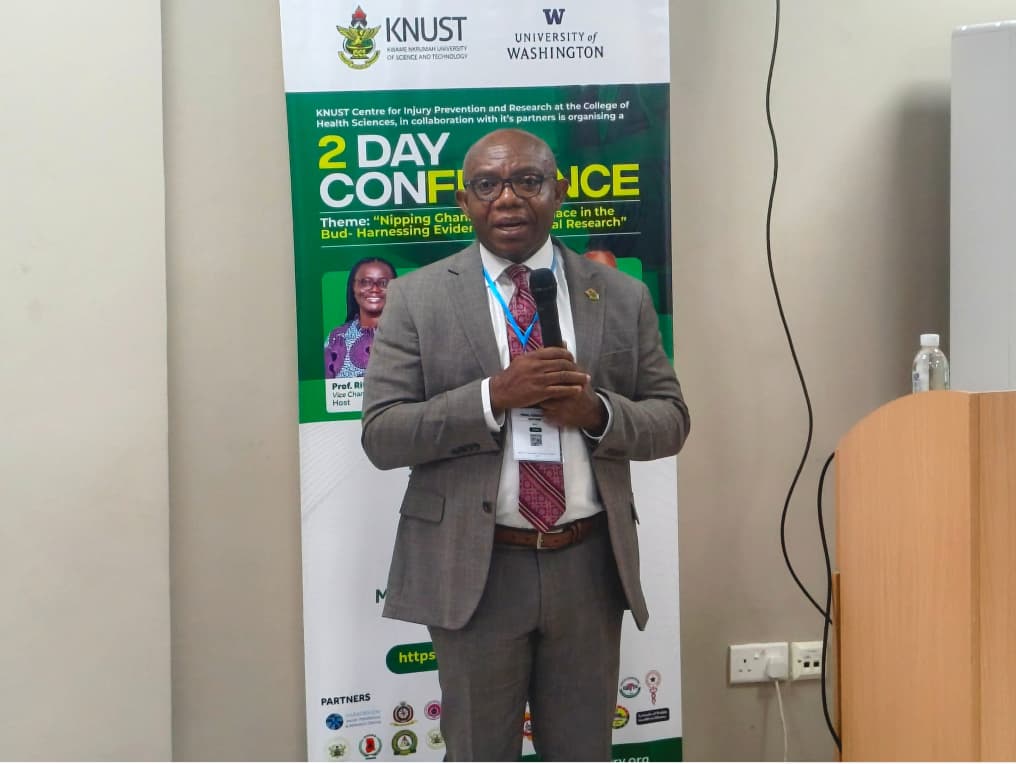
He also lauded the establishment of the University Injury Prevention and Research Centre at KNUST, describing it as a vital platform for sustained stakeholder engagement and information sharing on injury prevention.
He called for stronger national commitment to addressing injuries through evidence-based policies and interventions.
“Ghana has the talent, the institutions and the tools to confront its injury burden decisively. What has sometimes been missing is the collective resolve to place this issue at the top of our national agenda and to trust our own evidence to guide the way,” he stressed.
GNA
Edited by Lydia Kukua Asamoah
Reporter: Yussif Ibrahim
Email: [email protected]