By J. K Nabary
Kasoa (C/R), Nov 08, GNA – The Awutu–Senya East Municipal Directorate of the National Commission for Civic Education (NCCE) has held a Town hall engagement session for women’s groups on the rule of law and the crusade against corruption at their business areas and localities.
The even,t held at Kasoa, brought together about 90 women, made up of dressmakers, hairdressers, traders, and representatives of faith-based and community-based organisation and physical challenge persons and young women.
The event is an initiative under the Participation, Accountability and Integrity for a Resilient Democracy (PAIReD) programme that seeks to empower women on the rule of law, civic rights, legal frameworks such as the Whistleblower’s Act ai enhance their role at promoting transparency and accountability.
The PAIReD was commissioned by the German Federal Ministry for Economic cooperation and Development (BMZ) and co-financed by the European Union and Swiss State Secretariat for Economic Affairs (SECO) and implemented by GIZ and Ministry of Finance.
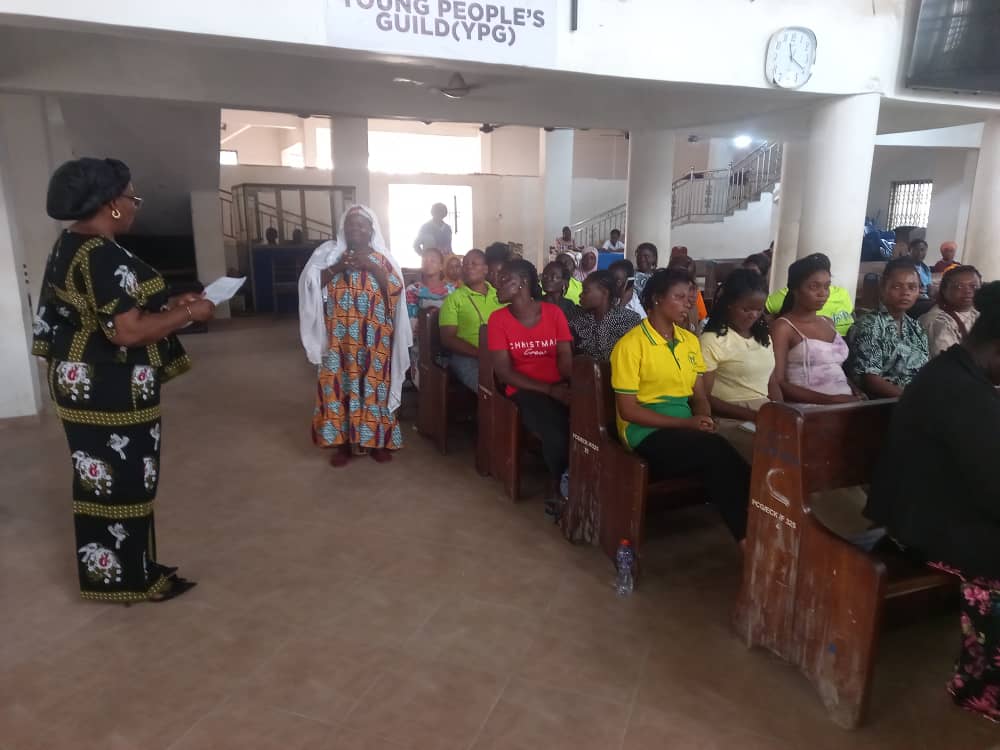
The project aimed empowering women to participate in building a more transparent and accountable Ghana by updating their knowledge on corruption, also encourages them to expose persons into all forms of corruption in the society.
The Domestic Violence Act,and the Right to Information Act were among the topics discusses to help them to advocate for their rights and contribute to national development.
During an open forum, the participants shared their ordeal including extortion through illegal levies, sexual harassment in exchange for services which undermine their dignity, poverty and inequality.
Mrs Mary Ankrah, the Municipal Director of the NCCE, said women were critical actors in local development, despite serving as caregivers, businesswomen and community leaders and that their efforts also helped drive the socio-economic development of Awutu-Senya Municipality.
She stated that, strengthening women’s understanding of their civic rights, legal protection, and available reporting mechanisms was crucial to building resilient communities that could resist corruption.
She emphasised the importance of empowering women to understand their civic rights and responsibilities in the fight against corruption.
This would strengthen democratic governance and injustices; hence, the engagement to empower and equip them with knowledge to resist corruption, promote transparency and actively engage in accountability processes.
Deputy Superintendent of Police (DSP), Doris Laryea, Central East Police Command DOVVSU Coordinator, in her presentation on Women’s Rights and Vulnerability and Domestic Violence, underscored the importance of integrity in both public service and community life.
She expressed concern about women continuously facing systemic barriers such as limited access to education, economic inequality, and underrepresentation in governance and decision-making spaces.
These issues, he noted heightened their vulnerability to corruption and abuse of power when coerced into offering favours or bribes in workplaces, communities, and even institutions designed to protect them, just to access their basic rights.
“It is time as women to be patriotic citizens in all our endeavours since women’s rights are woman rights, stand-up to say enough is enough, to resist all forms of abuse and corruption and to be bold to report persons into such acts who are with us in the society to the security agencies and our identity will be protected,” she added.
Ms Victoria Homiah, a legal practitioner who schooled them on Corruption and Anti-Corruption Laws in Ghana, asked them to be patriotic citizens in all their endeavours since women’s rights were human rights.
She emphasised the importance of empowering women to understand their civic rights and responsibilities in the fight against corruption to strengthen the country’s democratic governance.
“Strengthening women’s understanding of their civic rights, legal protections and available reporting mechanisms was crucial to building resilient communities that could resist corruption and injustice.”
She said corruption, the abuse of trusted power for private gain, disproportionately affected mostly women, creating barriers to essential services like justice, healthcare, education, and economic opportunities, leaving them vulnerable to coercion and exploitation.
“Relevant legal frameworks such as the Whistleblower’s Act, the Right to Information Act and the Office of the Special Prosecutor Act are there to tackle corruption and the need for us the citizenry to take vital steps to explore and utilise them by identifying, resisting and be bold to report all related crimes including extortion and sexual harassment to help freed us from discrimination and violence and to make Ghana corrupt-free country.,” she added.
GNA
Edited by Alice Tettey/ Benjamin Mensah