By Iddi Yire, GNA
Accra, Oct 03, GNA – President John Dramani Mahama has renewed his call on his fellow African leaders to prioritise healthcare investments, to help build health sovereignty and protect economic growth as foreign aid declines.
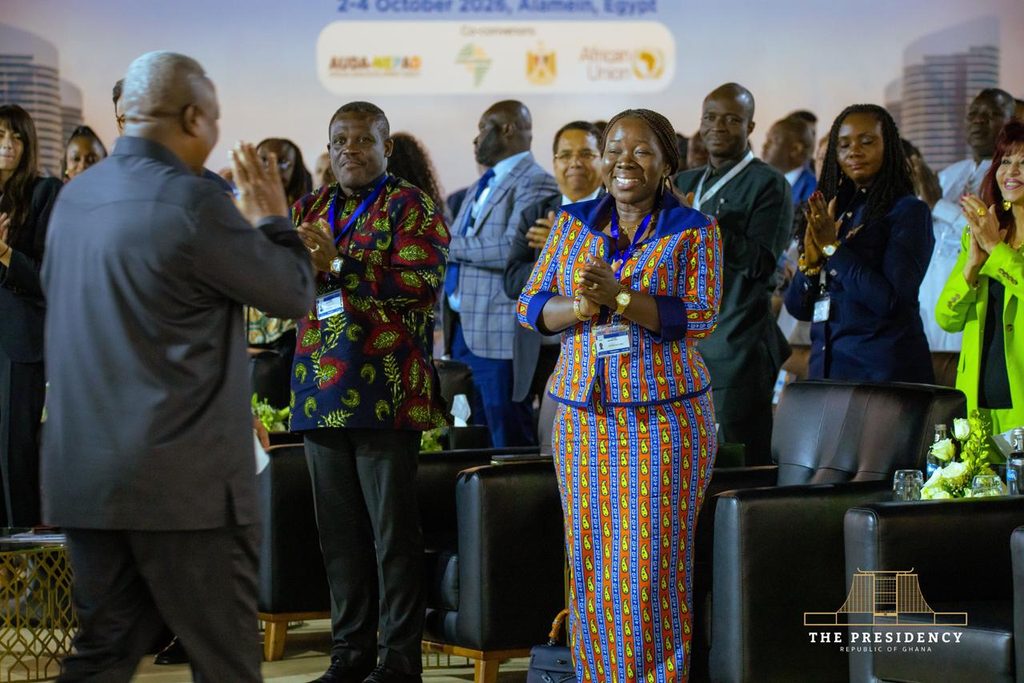
President Mahama, who is the African Union (AU) Champion for Reparations and Champion for African Financial Institutions, made the appeal in his keynote address at the maiden Alamein Africa Forum, which is running parallel to the African Union Heads of State Summit in Egypt.
“Let us stop treating health as a line-item expense. Let us build factories, integrate supply chains, fund innovators, and secure our citizens’ future.” the President said.
Speaking on the topic “Investing in Health: Manufacturing and Regional Value Chain,” the President, said the Alamein Forum provided a platform to address new challenges, using capital, industrial capacity, and political will.
He said their goal was to ensure health sovereignty, as well as the economic and physical security of 1.4 billion Africans.
The President said for decades, African Finance Ministers and global investors had made a fundamental error by treating health as a line-item cost—a social expenditure to be funded only when there was budget left over.
“Today, at the Alamein Africa Forum, we are moving beyond this outdated perspective. Health is not a charitable cause; it is an investable, high-growth economic sector,” the President said.
He reiterated that health drove human capital, manufacturing, job creation, and macroeconomic stability, and that the arithmetic was indisputable.
President Mahama said the Copenhagen Consensus showed that a targeted package of basic emergency maternal and newborn care, yielded $87 in economic and social returns for every single dollar invested.
He said the Lancet Commission established that falling mortality rates accounted for nearly a quarter of total income growth in developing economies in the early 2000s.
President Mahama said investing in health strengthened their balance sheets rather than depleting resources.
Examining the market fundamentals, President Mahama said Africa imported over 70 per cent of its pharmaceuticals and nearly 99 per cent of its vaccines and that each year, tens of billions of dollars left their economies to purchase medicines from abroad, meanwhile, traditional donor assistance was declining.
He said the OECD projections indicated that health aid would decrease by 29 to 46 per cent compared to the 2024 levels, presenting not only a crisis but also a significant market opportunity for domestic capital.
He said the business case for local pharmaceutical manufacturing was based on four key pillars.
These included a Captured, Growing Market, Import Substitution and Foreign Exchange Protection; the African Continental Free Trade Area (AfCFTA) Market Size, and the Africa CDC.
He stated that for a Captured, Growing Market, Africa’s population would reach 2.5 billion by 2050, and that the demand for essential medicines, chronic disease management, and biologics was expanding exponentially.
Concerning Import Substitution and Foreign Exchange Protection, the President said local capacity preserved foreign exchange reserves, stabilised currencies, and shielded economies from global supply disruptions.
Touching on the Market Size, President Mahama said under the AfCFTA, an African pharmaceutical plant does not serve a single country of 10 or 30 million people, but served a single, unified market of 1.4 billion consumers.
He said the Africa CDC recently conducted its first pooled tender for maternal and child health products.
The President said by aggregating demand across borders, it achieved price reductions of 30 per cent to 90 per cent, while ensuring African manufacturers won 50 per cent of the product lines.
Presidency.
GNA
Edited by Christabel Addo