By James Amoh Junior, GNA
Accra, Oct. 1, GNA – Ghana and Germany have reaffirmed their commitment to strengthening bilateral relations, with renewed focus on economic cooperation, security, skills development, climate resilience and cultural exchanges.
The renewed pledge comes as Ghana-Germany relations continue to expand beyond traditional development cooperation to encompass trade and investment, security collaboration, technical and vocational education, climate action and opportunities for young people.
Germany also views Ghana as a key partner in promoting stability and economic growth in West Africa.
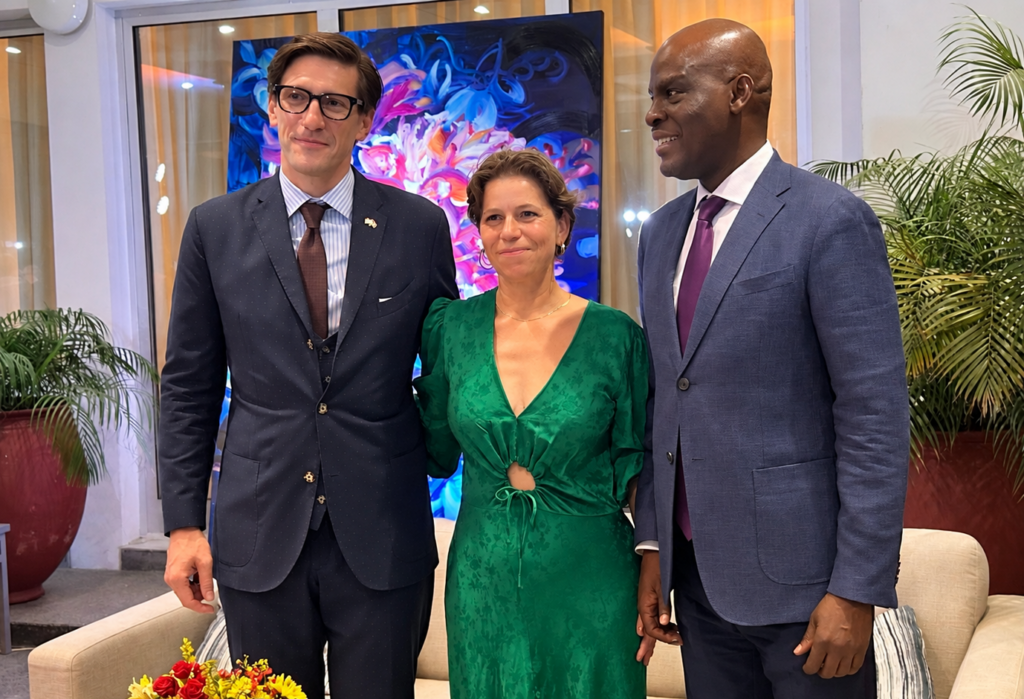
The commitment was reaffirmed at a reception in Accra to commemorate German Unity Day, attended by senior government officials, members of the diplomatic corps, representatives of the German community, business leaders, traditional authorities and other distinguished guests.
Addressing the gathering, Ambassador Frederik Landshöft, German Ambassador to Ghana, said the two countries shared common values as democracies and middle powers that believed in international cooperation and a rules-based international order.
“Germany has much to offer Ghana. But Ghana has much to offer Germany. Our task is to bring these strengths together,” he said.
On security cooperation, the Ambassador described Ghana as “an anchor of peace and stability in West Africa” and said Germany remained committed to strengthening collaboration through military and police partnerships, development programmes and stabilisation initiatives.
He noted that Germany’s cooperation with Ghana increasingly linked security and development, particularly in northern Ghana, where livelihoods, opportunities and resilience were critical to long-term stability.
Ambassador Landshöft disclosed that Germany’s Federal Minister of Defence and Federal Minister for Economic Cooperation and Development were expected to visit Ghana later this year to deepen collaboration on integrated security and development.
Touching on economic relations, he said German companies were seeking markets, reliable partners, skilled labour and resilient supply chains, while Ghana was pursuing industrialisation, job creation and greater value addition to its products.
He cited the Northshore Apparel textile project in Savelugu, which has created more than 2,000 jobs, as a practical example of how Ghanaian enterprise and German cooperation could combine investment, skills development and market access.
Reflecting on his first professional experience in Ghana more than two decades ago, when he arrived in Tema aboard a container ship carrying cocoa beans, the Ambassador said the experience had shaped his interest in helping Ghana retain more value from its exports before they left its ports.
He identified technical and vocational education and training (TVET) as another key area of cooperation, noting that more than 20 German public and private institutions were currently partnering Ghanaian organisations in skills development.
According to him, Germany was keen to support opportunities for Ghana’s youthful population while also addressing workforce needs arising from its ageing population.
On climate change, Ambassador Landshöft said Germany’s engagement with Ghana recognised the close links between climate resilience, livelihoods, migration, development and security.
He also addressed the historical relationship between the two countries, including Germany’s colonial past, stressing that an equal partnership required honest engagement with history.
The Ambassador referenced Germany’s provenance research into four cultural artefacts from Kpando, comprising two war drums and two war horns, and reiterated Germany’s commitment to facilitating the return of cultural property acquired during colonial times.
Looking ahead, he announced that Accra would host the German-African Business Summit in November, bringing together more than 600 business leaders and decision-makers from Germany and across Africa.
He said the summit would provide a platform to showcase Ghana’s economic potential and strengthen its position as a gateway to the wider African market.
Beyond diplomacy and commerce, Ambassador Landshöft emphasised the role of culture, music and creativity in strengthening relations between the two countries.
German Unity Day, observed annually on October 3, marks the reunification of Germany in 1990 following the fall of the Berlin Wall in 1989.
Reflecting on the significance of the occasion, he said Ghana’s ability to accommodate diverse ethnic, religious and cultural identities offered valuable lessons in promoting social cohesion.
“Unity does not mean being the same. Unity means staying together while being different,” he said, noting that Ghanaians from different faiths and traditions continued to participate in democratic processes and coexist peacefully.
The Ambassador further announced that Ghana and Germany would next year celebrate 70 years of diplomatic relations, coinciding with Ghana’s 70th anniversary of independence.
He described the milestone as a testament to decades of trust and cooperation and said the relationship should now translate into even stronger partnerships and tangible benefits for the peoples of both countries.
Ambassador Landshöft concluded by proposing a toast to the health and wellbeing of President John Dramani Mahama, the prosperity of the Ghanaian people and deeper collaboration between Ghana and Germany.
The reception also celebrated the rich cultural heritage of both countries. Musician Okyeame Kwame and music duo Dope Nation entertained guests, while the cultural programme featured performances by the Petch Bay Band and other artistes. German artist Rebecca Macht also showcased her works during the event.
GNA
Edited by Agnes Boye Doe
Reporter: James Amoh Junior
Email: [email protected]