By Albert Allotey
Accra, Sept. 24, GNA – The members of the Civil Division of the Ghana Institution of Engineering (GhIE) have been urged to always subscribe to the Engineering Practitioner’s Oath of discharging their duties in honesty, fairness, and truthfulness.
This would help them to have due regard for the safety of human life, the environment, and property, and that the Oath is not a ceremonial formality, but a single sentence that the entire theme of the membership was built on.
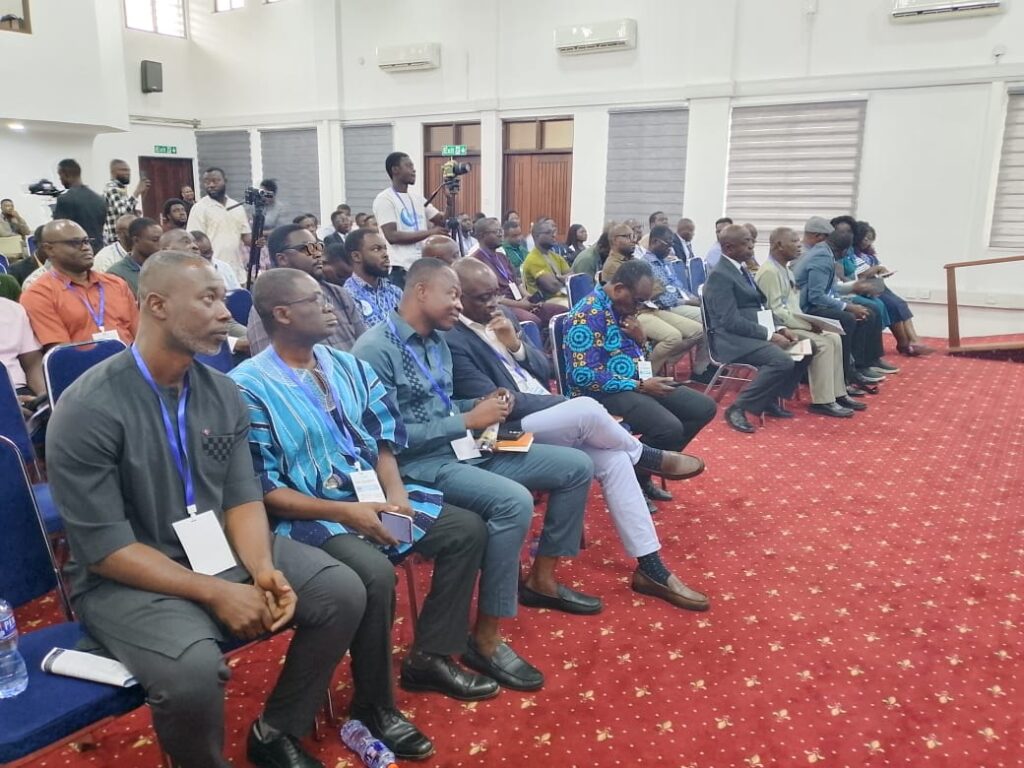
Professor Kwaku Amaning Adjei, Dean, Faculty of Civil and Geo-Engineering College of Engineering, Kwame Nkrumah University of Science and Technology made the call when he delivered keynote address via zoom at the 2026 Civil Technical Division Mini conference held at the Engineering Centre in Accra.
The Mini conference was on the theme: “Engineering Integrity in Action: The Role of Civil Division Practitioners.”
The event also gave the main sponsors, Leica Geosystems, and ATTACHY, the opportunity to display and demonstrate some of their state-of-the-art equipment for infrastructural development.
Prof. Adjei noted that the Ghana Institution of Engineering’s Constitution, in Article 8.2, required every member and every registered entity to uphold the highest standard of integrity in the practice of engineering.
“The Code of Ethics that flows from that Article does not treat honesty as an aspiration. It opens by naming honesty, justice, and integrity as the very foundation of ethics itself, the moral philosophy on which everything else we do as engineers is built.”
The Dean said as civil division practitioners, integrity in action means having the courage to say no when a client asked them to omit a necessary investigation, reduce a specification without technical justification, proceed without approved drawings, or overlook a safety concern.
“We must have the courage to say no. This is not acceptable engineering practice. We should never sign, certify, approve, or endorse work that we have not adequately reviewed, inspected, or supervised.
“Our signature carries responsibility. It means rigorous quality assurance and quality control,” he stated.
He noted that Ghana had witnessed the cost of compromising integrity over the years, where structural failures and infrastructure deterioration have resulted in loss of lives, destruction of property, disruption of livelihoods and declining public confidence in the built environment.
He called on the GhIE and the Engineering Council to work constructively with Metropolitan, Municipal and other regulatory and professional institutions to strengthen systems that promote professional responsibility and protect the public.
“There must be clear mechanisms for professional accountability supervision, inspection, reporting of unsafe practice, enforcement of standards, and appropriate sanctions for professional misconduct,” Prof Adjei pointed out.
He said, “Regulations are only effective when they are implemented and enforced. Stop-work notices must mean stop work, and professional certifications must be taken seriously.”
He said civil division practitioners must work together to protect the public, adding we also have a responsibility to educate the public because many developers saw engineering services simply as an additional cost to a project. We need to change that perception
“We must continuously update our knowledge, learn from new evidence and technologies, reflect on our professional experiences, and remain prepared to adapt our practice to emerging challenges,” he advised
He stated, “Engineering is ultimately a covenant of trust with society. Therefore, let us not allow commercial pressure, political pressure, institutional weakness, or personal gain to undermine that responsibility.”
Mr Michael Obeng Konadu, Chairman of the Civil Division of the GhIE in an interview said for the past few years the members of the division had been observing things and realised that there was the need to organise the conference to remind themselves of how important integrity and the professional ethics was for their practice.
“So, basically the idea is to remind ourselves and educate ourselves on the core principles of integrity and ethics for our practice and moving forward find a way and live by them practically, so that society will see that we are doing what we should be doing right way,” he stated.
Mr Ludwig Annang Hesse, the President of the Institution of Engineering said integrity was central in the engineering profession because the code of ethics, while the oath and the constitution dealt with it.
“Integrity is one of our key things required of a member of the institution so that will guide you to know that you are doing things according to the standard of engineering or doing things you believe that are right or wrong.”
GNA
Edited by Linda Asante Agyei