By Daniel Adu Darko
Accra, Nov. 10, GNA – The African Development Bank (AfDB) has extended Ghana’s Post-COVID-19 Skills Development and Productivity Enhancement Project (PSDPEP) to 2028 to ensure completion of outstanding activities.
The one-year extension moves the project’s original mid-2027 completion deadline and is expected to allow the full implementation of its three components covering media development, technical and vocational education and training (TVET), and health-sector skills development.
Dr Patience Ugonma Ekoh, Principal Social Economist at the AfDB and Task Manager for the project in Ghana, announced the extension during the Bank’s final-quarter supervision mission to Ghana from November 1 to 11, 2026.
She said the mission assessed implementation progress, identified challenges and bottlenecks, and recommended measures to ensure the completion of outstanding activities within the revised timeframe.
Dr Ekoh said particular attention was given to construction works and challenges requiring early intervention ahead of the next supervision mission scheduled for the second quarter of 2027.
She expressed satisfaction with progress across the three components, particularly the rehabilitation and upgrading of Ghana News Agency (GNA) facilities.
Under the GNA component, facilities in Accra, Tamale, Takoradi and Tema are being rehabilitated, renovated and equipped to improve the Agency’s operational capacity and content production.
Dr Ekoh said work at the GNA Head Office in Accra was approximately 95 per cent complete, while the Tamale office had reached 97 per cent.
The Takoradi office was about 90 per cent complete, with the Tema facility, where construction began later, recording 60 per cent progress.
She commended the supervisory consultants and contractors for their performance, describing progress on the GNA infrastructure projects as encouraging.
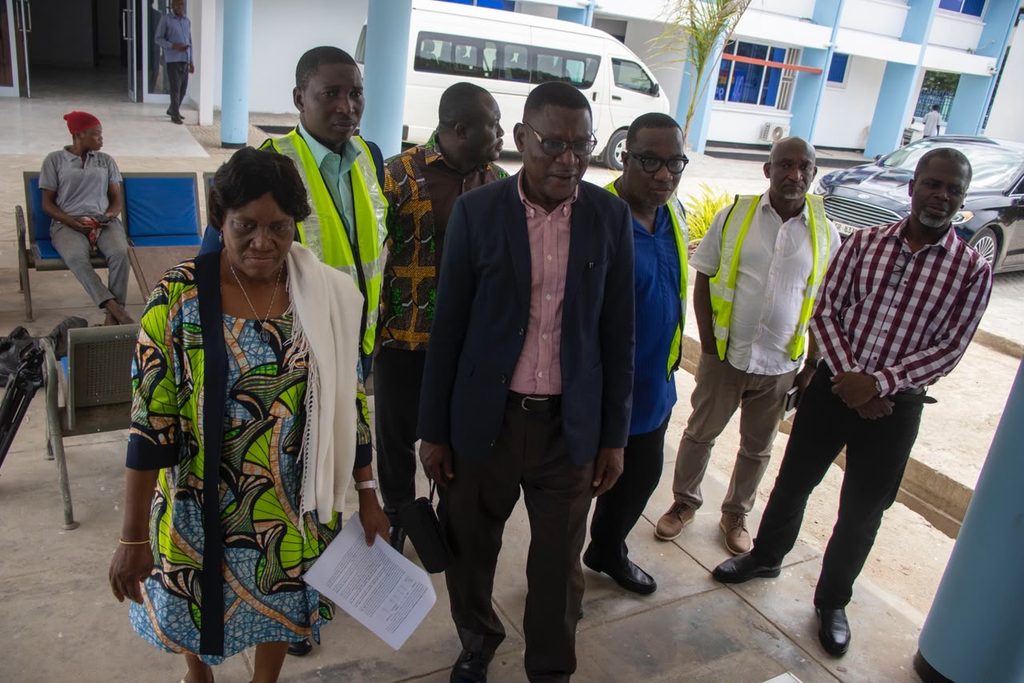
The mission also assessed construction works at four TVET institutions across the country, with the least advanced facility recording 17 per cent completion.
Dr Ekoh expressed confidence that the facilities would be completed before mid-2027 if implementation remained on schedule.
She, however, identified delays in the release of payment certificates as a major constraint, explaining that timely payments were necessary to sustain contractors’ operations and improve the project’s disbursement rate.
She said the mission was engaging the Ministry of Finance to resolve the payment bottlenecks and prevent further delays.
On the health-sector component, Dr Ekoh said the project was supporting the University of Ghana through infrastructure development, equipment provision and postgraduate scholarships to strengthen specialised skills.
She said about 51 scholarships had been awarded for Master of Philosophy (MPhil) and Doctor of Philosophy (PhD) studies in Biotechnology and Microbiology.
Three female university staff members were also undergoing specialised training at universities in South Africa and the United States of America.
They were expected to return after their studies to transfer the knowledge and expertise acquired to other researchers and professionals.
Dr Ekoh said construction works on the University’s facilities were approximately 50 per cent complete, describing progress as satisfactory.
Under the media development component, she said journalist training in reporting, news handling, communication and information dissemination had been completed.
The GNA newsroom had also been rehabilitated and equipped to strengthen the Agency’s capacity to produce and disseminate quality news content.
Dr Ekoh said more than 30 per cent of the project’s total funding had been allocated to the GNA component, underscoring the Bank’s investment in the Agency’s institutional and operational capacity.
She urged GNA management to sustain the investment through regular equipment maintenance, content development and revenue-generating activities.
Dr Ekoh said the Agency needed to strengthen its capacity to generate income from its content and news distribution services to support its operations and future development.
She also called for a maintenance plan and annual budgetary allocation to preserve the rehabilitated offices and equipment.
The supervision mission engaged the Ministry of Finance, the Microfinance and Small Loans Centre (MASLOC), GNA, ASH Africa, APEX Bank and the Social Investment Fund (SIF) team.
The delegation also inspected construction works at the University of Ghana’s Biotechnology Centre and School of Nursing and Midwifery facility, as well as the Microbiology Centre at the Korle Bu Teaching Hospital.
Other visits covered the GNA Head Office in Accra, its Takoradi office and the Abetifi TVET facility in the Eastern Region to assess progress, outstanding works and implementation challenges.
The PSDPEP is funded by the AfDB and the Government of Ghana and implemented through the Social Investment Fund.
The project seeks to strengthen skills development, institutional capacity and productivity through investments in education, healthcare, technical and vocational training, and media development.
GNA
Edited by Kenneth Sackey
10 Nov. 2026
Reporter: Daniel Adu Darko