By Albert Futukpor, GNA
Nyankpala (N/R), Sept 24, GNA – Thirty Agricultural Extension Agents (AEAs) from three districts have visited the CSIR–SARI Agricultural Technology Park at Nyankpala to explore agricultural technologies to help disseminate them to farmers within their jurisdictions.
At the park, the AEAs were introduced to climate smart, gender responsive and nutrition sensitive agricultural technologies/crop varieties, which have been developed by the Council for Scientific and Industrial Research-Savanna Agricultural Research Institute (CSIR-SARI).
The AEAs were from the Tolon, Kumbungu Districts, and the Sagnarigu Municipality of the Northern Region.
Dr Charles Nelimor, Research Scientist, Plant Breeder and Manager of the CSIR-SARI Agricultural Technology Park, took the AEAs round the field and explained the technologies to them.
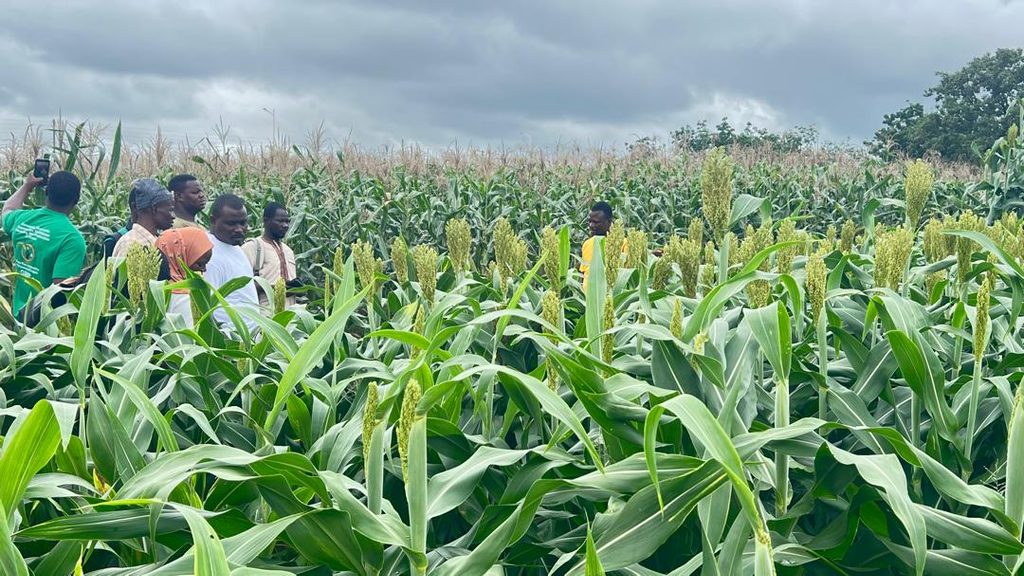
He said the park currently showcased about 54 technologies covering nine different crops.
The crops included maize, soybeans, cowpea, rice, millet, cassava and groundnut amongst others.
The CSIR-SARI Agricultural Technology Park, established by the CSIR-SARI at Nyankpala, near Tamale, CSIR-SARI, showcases technologies developed by the Institute to help address challenges confronting farmers.
It also serves as a demonstration and training centre to promote the adoption of improved agricultural technologies amongst farmers and other actors in the agricultural value chain.
Dr Nelimor said the technologies were developed with particular attention to climate smart agriculture as well as gender and nutrition sensitivity.
He said for maize, the CSIR-SARI had developed different categories of varieties including hybrids and open-pollinated varieties with some varieties maturing within 80 to 85 days and others within 90 to 95 days.
He explained that the early-maturing varieties were particularly important in the face of climate change because their shorter growing periods could enable farmers to reduce exposure to drought and other climate-related challenges.
He said for soybean, the Institute had developed varieties suitable for mechanical harvesting.
Dr Nelimor urged the AEAs to take the knowledge acquired to farmers in their respective operational areas saying the purpose of the visit was not only to introduce the AEAs to the technologies but also to make them agents of dissemination, who could help increase farmers’ access to improved agricultural technologies.
He also encouraged the AEAs to bring farmers to the Technology Park for practical training and demonstrations.
Mr Karim Musah, an AEA from the Kumbungu District, lauded the visit, saying it had exposed them to improved varieties that they were not aware of.
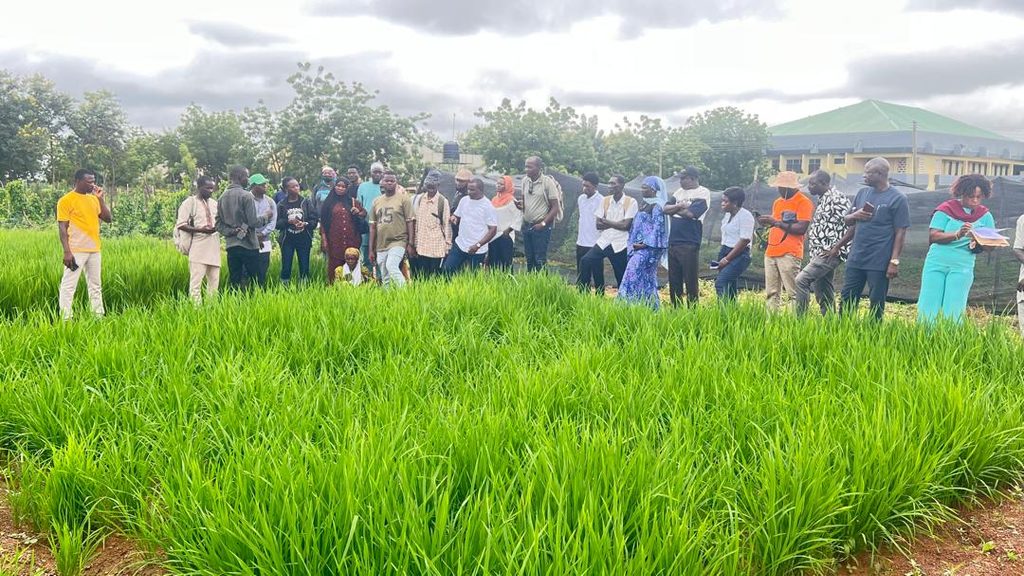
He said he would share the knowledge with farmers and explore the establishment of smaller demonstration sites to enable farmers, who could not travel to Nyankpala, to access information on the technologies.
He said: “By sharing what we learn with our farmers, we are all contributing to the development of the country especially in the areas of food security and agricultural productivity.”
Madam Rabiatu Jumai Issah, an AEA from the Sagnarigu Municipality, said the visit had provided an opportunity for them to learn about agricultural technologies that were of immense benefit to farmers.
She pledged to share the information with farmers and encourage some of them to visit the park to gain first-hand knowledge of the technologies.
Mr Shani Abukari Adua, the Sagnarigu Municipal Director of Agriculture, said the Municipal Department of Agriculture would discuss the knowledge acquired and develop strategies to ensure that the technologies were disseminated to farmers.
GNA
Edited by Benjamin Mensah
Reporter: Albert Futukpor
Reporter’s email address: [email protected]