By Albert Oppong-Ansah, GNA
Accra, Sept. 7, GNA – In Kenya, a small civil society organisation faced a decision that could determine its future. The donor money on the table was substantial. Accepting it would have secured programmes, protected jobs, and eased financial pressure. Rejecting it could have meant uncertainty, yet the organisation declined.
The funding would have required it to expand into new communities before it felt ready. The donor wanted scale. The organisation wanted depth. It wanted to strengthen relationships in communities it already served before moving elsewhere. For many development organisations across Africa, such a decision would be almost unthinkable.
But for Nafissatou Sene, Senior Manager, Portfolio Services, African Collaborative, the Kenyan organisation’s decision symbolised a quiet shift taking place across the continent.
“They knew it would not be easy,” she recalled. “But they wanted to send a message that they would not accept something simply because it was available.” Behind that decision lies a deeply human story unfolding across Africa.
It is the story of development workers, community leaders, young professionals, and civic actors grappling with an uncomfortable question: How do you remain true to your mission when survival often depends on money controlled by someone else?
For decades, African organisations have worked at the frontline of some of the continent’s most pressing challenges, from public health and agriculture to governance and education. Yet many of those organisations have often found themselves navigating a difficult reality.
On one hand are the communities they serve, people with urgent and immediate needs and on the other are funding conditions, donor priorities and international systems that do not always align with local realities. The result has sometimes been a painful disconnect.
Projects arrive in communities already designed elsewhere. Timelines are dictated by funding cycles. Success is measured through reports submitted rather than lives transformed.
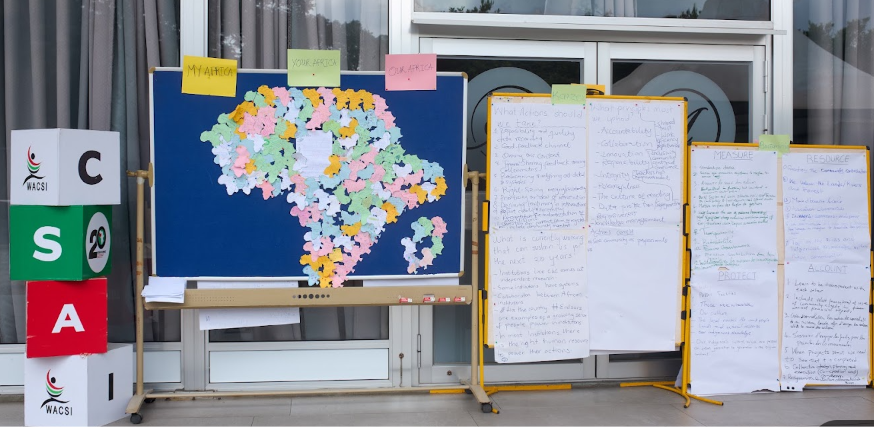
At a recent gathering in Accra, dozens of African civil society leaders reflected on these tensions, and beneath discussions about financing systems and development models was a recurring emotion: frustration. Not frustration with development itself, but with a system that many feel has struggled to fully trust African voices.
For Dr. Nana Asantewa Afadzinu, Executive Director of the West Africa Civil Society Institute (WACSI), the challenge runs deeper than money.
She said the current generation of Africans was searching for its place in conversations about the continent’s future. For too long, she argued, many solutions to African problems had been defined elsewhere. The consequences, she suggested, extended beyond economics and policy.
“We have resources. Not merely financial resources, but human resources, indigenous knowledge, creativity, and rich culture. Yet despite possessing those assets, Africa often finds itself treated as though the answers must come from outside,” she said.
That reality is particularly difficult for people like Madam Wanjiru Kanyiha, a Kenyan lawyer whose career has centred on helping ordinary citizens find their voices.
Before joining international policy discussions, she spent years working alongside communities, encouraging residents to participate in budgeting decisions, governance processes, and local development planning.
She noted that in many communities, however, participation remains limited. Decisions arrive before consultation, projects begin before conversations happen, and communities become recipients rather than partners.
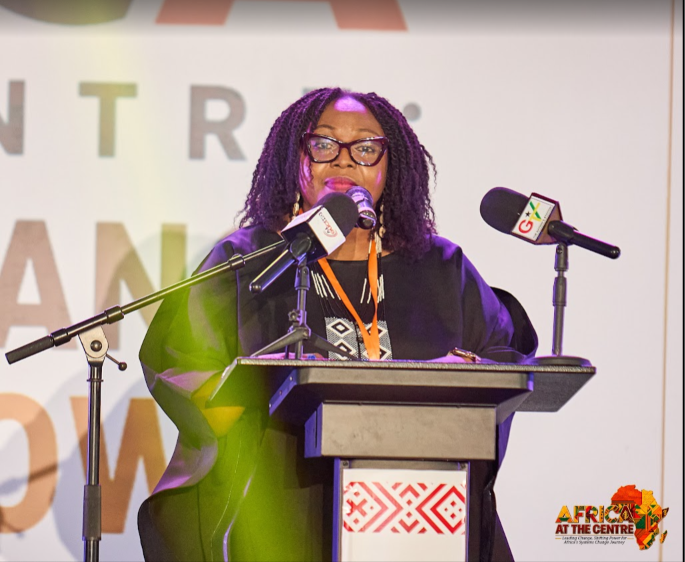
“They should have a voice and they should have power,” Madam Kanyiha said, whose work is built around the simple idea that people should not simply watch development happen around them but should help shape it.
Her words captured a concern repeatedly raised during the convening.
If development is truly about people, why are those same people so often absent when decisions are made?
Madam Juliet A. Amoah, Country Director of Emerging Public Leaders Ghana, confronts a different version of that challenge every day. As a leader, she works with young people seeking to transform public institutions from within.
Many of them, she noted, carry idealism, energy, and a determination to make a difference. Yet, they are also entering systems burdened by resource constraints, public scepticism, and institutional challenges, she said.
Madam Amoah said leadership was not simply about occupying positions but making difficult choices.
“One of those choices, increasingly, involves deciding what kind of organisation one wants to become,” she said.
She described the pressure many organisations face when funding opportunities emerge outside their original mission as overwhelming.
“An organisation established to strengthen public institutions suddenly considers education projects because funding for governance has become scarce. Another begins chasing issues far removed from its founding purpose,” she noted.
The phenomenon, Madam Amoah said, was so common that development practitioners had a name for it: mission creep. Behind the technical term, she explained, was a human dilemma.
“Do you change course to survive? Or do you risk financial uncertainty to remain faithful to the communities you were created to serve?” For Madam Amoah, the answer is not always straightforward.
Organisations employ people, those employees support families and programmes affect real lives. The consequences of a wrong decision are rarely abstract.
“That is why discussions about power, money and ownership often become deeply personal. They are not simply debates about funding models. They are conversations about responsibility, to staff, communities, and future generations,” she added.
Throughout the gathering, another theme repeatedly emerged: collaboration.
Many participants acknowledged that African organisations often operate in isolation, pursuing similar goals while competing for limited resources. Yet as conversations unfolded, there was growing recognition that no single organisation could transform a continent alone.
Madam Amoah advised organisations to learn to work differently, not by protecting institutional territories, but by building partnerships and combining strengths.
The strongest impression, however, may have come from discussions around language itself. Words such as “beneficiary,” “grantee” and “capacity building” resurfaced repeatedly. For some participants, those words revealed a deeper problem.
They subtly suggest that expertise belongs in one place and need exists in another; that some people possess knowledge while others merely receive it.
Madam Tendisai Chigwedere, Programme Officer at the Hewlett Foundation, challenged that thinking.
African organisations, she argued, already understand their communities and not waiting to become experts., saying, “What they often lack is not capacity but recognition,” she said.
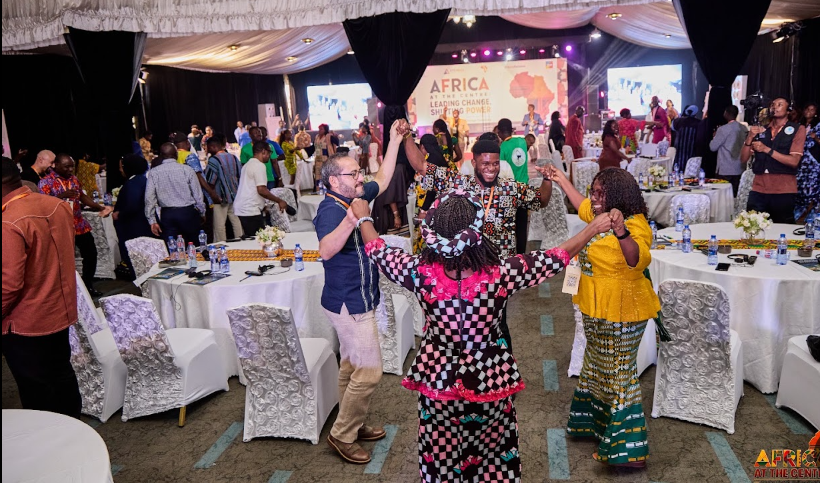
As delegates prepared to leave Accra, there was little illusion that three days of discussion would solve Africa’s development challenges. No grand declaration was issued. No revolutionary financing model was launched. No blueprint emerged. Yet something significant had happened.
People from different countries, sectors and generations had gathered to ask difficult questions about ownership, accountability, and the future. More importantly, they had begun imagining a future where development was not something done for Africans, but something shaped by Africans themselves.
Perhaps, that is why the story of the Kenyan organisation lingered long after the discussions ended. It was not about rejecting a grant but reclaiming the confidence to decide. The confidence to trust local knowledge and choose a community’s priorities over a donor’s preference but for a continent long accustomed to being told what it needs, the confidence to finally believe that it already knows.
In many ways, the discussions reflected the unfinished journey envisioned under Agenda 2063, which seeks an Africa that is prosperous, self-reliant, people-driven and anchored in accountable institutions.
The struggle unfolding in conference rooms, community halls and civil society spaces across the continent is therefore not simply about development funding. It is about power, dignity, whose knowledge counts.
It is about whether Africa can become what Agenda 2063 envisions: a continent “driven by its own citizens”, rather than one whose future is shaped primarily by the priorities of others.
GNA
Edited by Linda Asante Agyei
07 September 206
Reporter: Albert Oppong-Ansah
Email: [email protected]
This story was a collaboration with New Narratives