By Francis Ntow
Accra, Sept 18, GNA – Africa is charting a new path to fund its own development, backed by the utilisation of pool of funds, including pension, insurance, sovereign wealth and deeper domestic capital markets, experts in development and policy have said.
While noting that the paradigm was not a departure from foreign funding, which has seen cuts in recent years, they noted that funding Africa’s critical sectors like health, education, roads and support for farmers should be financed mainly from within.
The looking-within approach to funding Africa’s development follows steep aid cuts, with Organisation for Economic Co-operation and Development (OECD) data showing Official Development Assistance (ODA) fell 23.1 per cent to US$174.3bn in 2025.
The International Monetary Fund (IMF) has also reported that bilateral aid to sub-Saharan Africa dropped 26.3 per cent in 2025 alone, leaving low-income states highly vulnerable to external financing shocks.
To support Africa’s new path, the Future of Development Cooperation Coalition (FDCC), a multi-governmental and stakeholder institution and its co-host, African Centre for Economic Transformation are championing an initiative to reposition the global finance architecture to deliver better outcomes for African.
The Ghana News Agency spoke exclusively with the Head of the Coalition’s Secretariat, Alexia Latortue, and co-hosts, represented by ACET’s President, Mavis Owusu-Gyamfi, and Vice President of the Centre for Global Development (CGD), Clemence Landers, on the development.
This was on the sidelines of the Future of Development Cooperation Coalition (FDCC)’s third Commissioners’ Meeting in Accra, where they detailed the Africa’s blueprint towards global governance and financial systems shift.
The experts noted that the approach for African capital to fund its development was built on a principle of “take care of your own house first,” which required stronger management of the economy, building financial buffers and increasing domestic savings.
“By doing so, Africa can negotiate with the rest of the world from a place of strength, telling partners here is what we are doing, here is where we want to go, and here is the partnership we want,” Ms Owusu-Gyamfi, the President and Chief Executive Officer (CEO) of ACET said.
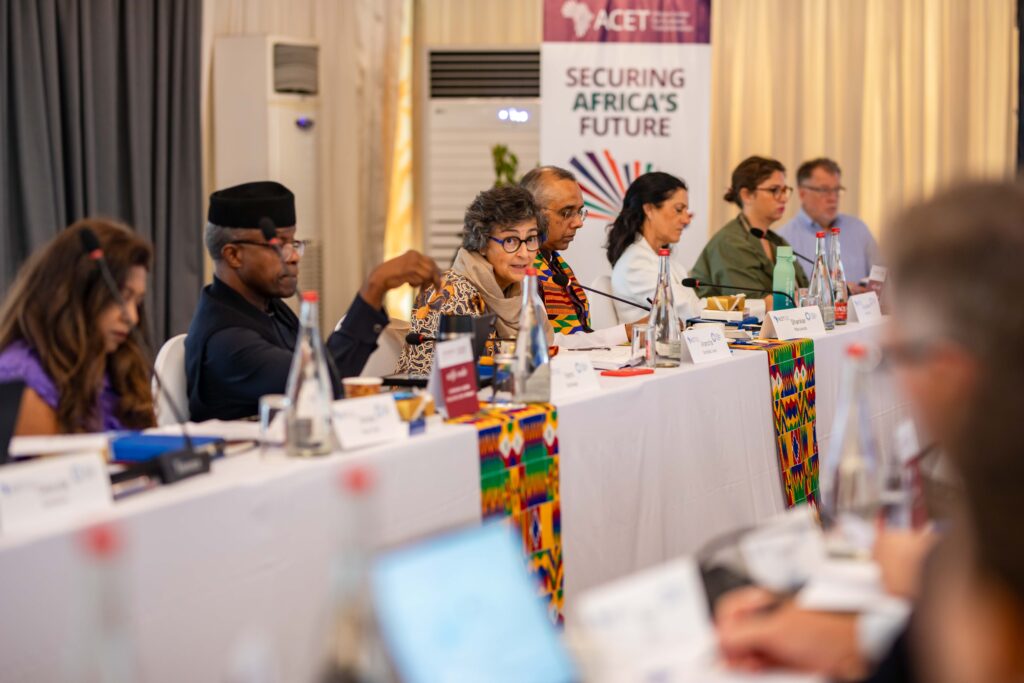
She cited Ghana as a leading example, with its “Ghana Beyond Aid” agenda, insisting that the nation must finance health, education and roads from domestic resources rather than depending heavily on unpredictable foreign aid support.
Ms Alexia Latortue, the Head of the Coalition Secretariat, noted that the new direction came at a time when Official Development Assistance has fallen sharply by about 25 per cent in recent years, becoming more severe during and after the COVID-19 pandemic.
She noted that at the same time, many African countries that turned to international capital markets when interest rates were low were now paying almost twice as much to borrow because of higher global rates.
“Despite these shocks, many African economies have shown resilience. This can be attributed to better economic management, deeper local markets and stronger buffers built over the past two decades,” she said.
The former US Treasury Assistant Secretary stated that such resilience indicated that Africa could mobilise and manage local resources and capital to fund its development agenda and economic transformation.
Ms Landers, Vice President and Senior Policy Fellow at CGD, explained that Africa’s resilience was informing its demand for the global system to move from an aid-centric model to one that recognises trade, domestic capital, risk perceptions, and affordable finance as core to transformation and job creation.
She noted that without Africa at the table, global talks would focus only on aid, missing bigger issues like trade, illicit financial flows, remittances, domestic capital and building capable institutions.
She encouraged African governments and private sector, including banks to increase lending to small and medium enterprises (SMEs), describing them as the continent’s biggest creators of jobs for young people and economic lever.
On accountability, Ms Landers said any money that came from outside and within must be put on national budgets and be traceable, “so citizens know how it is used and can hold governments accountable.”
Meanwhile, recommendations from the Coalition’s meeting, targeting development banks, governments and the private sector, was expected to be channelled to the G20 Common Framework, IMF, World Bank, private creditors, and African development institutions.
GNA
Edited by Agnes Boye-Doe
Reporter: Francis Ntow