A GNA Feature by Albert Futukpor
Nyankpala (N/R), Aug 05, GNA – For years, cowpea farming, especially in the northern part of Ghana was a gamble against nature.
Farmers invested heavily in seeds and pesticides, sprayed the fields repeatedly and anxiously watched their fields as erratic rainfall and destructive pests wiped out their months of hard work.
Today, however, a quiet revolution is unfolding across the country’s cowpea sector.
Mr Abdulai Mohammed, a cowpea farmer at Nyankpala in the Northern Region, said he had completely abandoned conventional cowpea varieties after two years of cultivating the genetically modified cowpea variety known as Songotra-T.
Mr Mohammed, in an interview with the Ghana News Agency (GNA) on his experience in cultivating the Songotra-T variety, said: “The previous varieties required spraying up to six times. With Songotra-T, I spray only about two or three times but I harvest more.”
The transformation has been dramatic. The shorter maturity period allows him to harvest before the rain stops, reducing his production costs while increasing his yields. Last season, after harvesting his first Songotra-T in mid-July, he planted it again within the same rainy season and had good yield, something he had never done before,
His success inspired his older brother to also cultivate Songotra-T in the area. The results were equally remarkable. When neighbouring farmers witnessed him harvesting twice within one farming season, demand for the improved seed (Songotra-T) surged throughout the community.
“I am encouraging every farmer to try it. Once you plant it, the difference is obvious,” Mr Mohammed said.
Madam Suweiba Abdallah, another farmer at Nyankpala, also shared a similar story with the GNA.
Today, she has become one of the variety’s ambassadors encouraging other farmers to adopt it.
These success stories are no longer isolated stories.
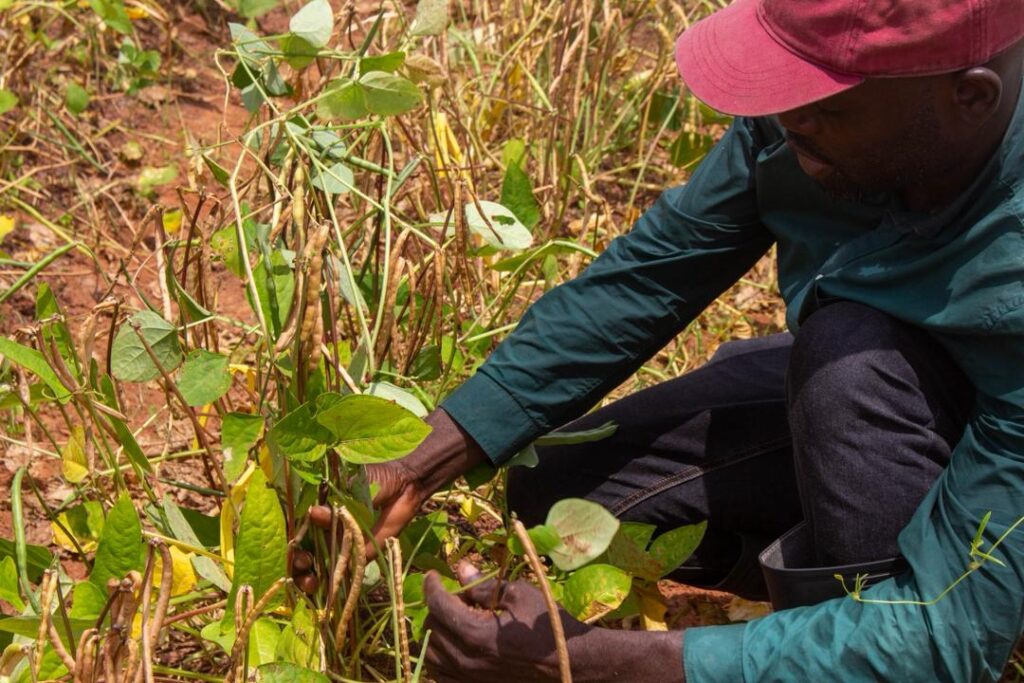
Throughout the country’s cowpea-growing communities, thousands of farmers are embracing Songotra-T because it is delivering what many thought was impossible-higher yields, fewer pesticide applications, lower production costs and increased household incomes.
Barely two years after its official release, Songotra-T has become more than another improved seed. It has become a symbol of hope for farmers battling pests, unpredictable rainfall and rising production costs.
Songotra-T’s Growing Contribution to Ghana’s Economy
The significance of Songotra-T extends far beyond individual farms and represents one of the country’s strongest examples of how agricultural biotechnology can transform a strategic food value chain with national economic implications.
Dr Jerry Nboyine, a Research Scientist at the Council for Scientific and Industrial Research-Savanna Agricultural Research Institute (CSIR-SARI), in an interview with the GNA at Nyankpala, said the speed of adoption of Songotra-T had exceeded expectations.
He said immediately after the variety was released in 2024, the CSIR-SARI distributed 800 kilograms of seed to eight seed companies for multiplication.
He said by the beginning of the 2025 farming season, every kilogram was sold.
Demand exploded
Additional seed companies from the Volta, Eastern, Upper East and Upper West Regions, alongside individual farmers, purchased foundation seeds for multiplication.
In 2025 alone, more than 5,000 kilograms of seed were sold through official channels.
Dr Nboyine said: “Using the standard planting rate of 10 kilograms per acre, this quantity alone supports cultivation on over 500 acres.”
He added: “Even under conservative yield estimates of less than 600 kilograms per acre, those farms are expected to produce approximately 300,000 kilograms of cowpea grain.”
The Growth Trajectory More Striking
The CSIR-SARI has already produced approximately 12,000 kilograms of foundation seed capable of generating about 600,000 kilograms of certified seed.
Dr Nboyine said: “That certified seed could support cultivation on more than 60,000 acres and produce approximately 24 million kilograms of cowpea grain by 2028.”
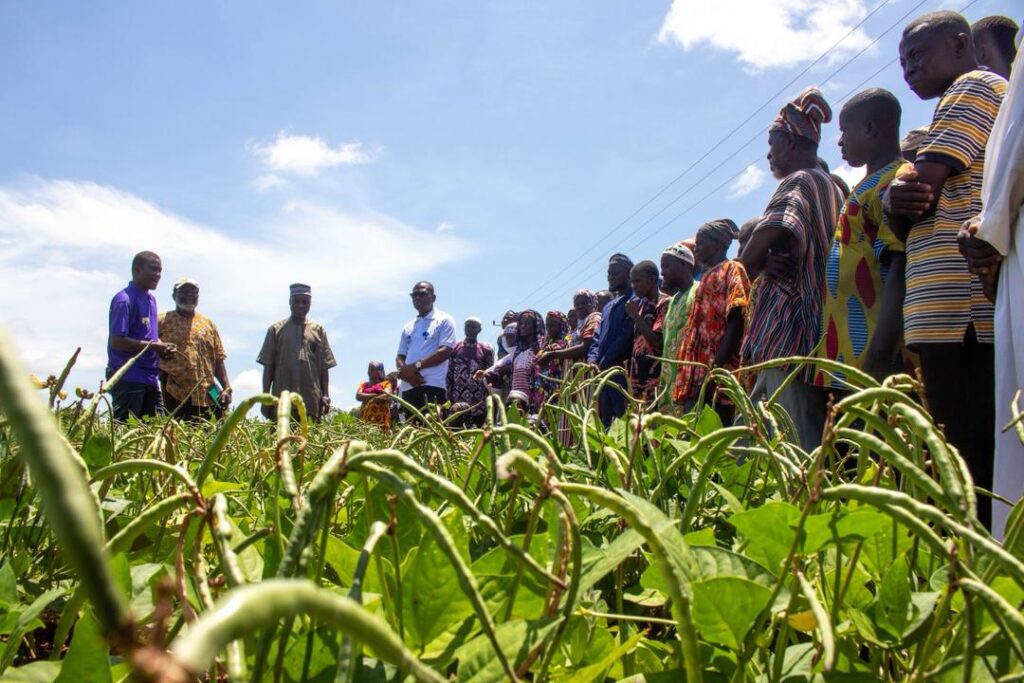
The figures represent far more than production statistics as they signal the country’s gradual transition from a country that depends on imported cowpea to one capable of meeting domestic demand and eventually exporting surplus production to other parts of the world.
Reducing Imports and Conserving Scarce Foreign Exchange
Lower import bills ease pressure on the country’s foreign currency reserves, contribute to a stronger currency and improve the country’s trade balance.
At the household level, increased productivity translates directly into higher incomes enabling farmers to invest in education, healthcare and improved livelihoods.
The Health Gains
Conventional cowpea farming often requires six times of pesticide sprays to control the destructive Maruca pod borer. However, Songotra-T reduces this to only two or three sprays.
Fewer pesticide applications means lower production costs, reduced chemical exposure for farmers and their families and lower national healthcare expenditure associated with pesticide-related illnesses.
In many respects, Songotra-T is demonstrating that scientific innovation can simultaneously improve food security, public health and macroeconomic resilience.
The Science behind the Breakthrough
Songotra-T is Ghana’s first genetically modified cowpea variety developed specifically to resist the devastating Maruca pod borer, one of Africa’s most destructive cowpea pests.
Before its development, many farmers lost substantial portions of their harvest, despite repeated pesticide applications.
The cost of chemicals consumed significant share of production expenses while fewer rainfall increasingly shortened the already brief growing season in the northern part of the country.
Scientists recognised that conventional breeding alone could not adequately solve the Maruca problem.
After nearly a decade of laboratory research, confined field trials and on-farm evaluations, scientists at CSIR-SARI successfully developed Songotra-T in collaboration with an international consortium coordinated by the African Agricultural Technology Foundation involving research partners from West Africa, Australia and the United States.
The Songotra-T variety combines the desirable characteristics of the country’s locally adapted cowpea with biotechnology that protects it against Maruca infestation.
Its Strengths Are Compelling
Songotra-T flowers early, forms pods around 40 days after planting and reaches maturity within approximately 60 to 65 days.
The shorter growing cycle enables farmers to escape terminal droughts/low rains and in some cases cultivate two times within one rainy season.
The variety also requires significantly fewer pesticide applications, delivers higher yields and performs well under increasingly unpredictable climatic conditions.
Its outstanding performance during the severe 2024 dry spell recorded in the northern part of the country provided convincing evidence of its resilience.
While many conventional varieties failed because the rains ended prematurely, Songotra-T still produced appreciable yields convincing many farmers that climate-smart agriculture had arrived.
Sustaining the Momentum: Making Improved Seeds Accessible
The greatest challenge confronting Songotra-T is no longer proving its value. It is ensuring that every farmer, who wants the seed, can obtain it.
Dr Nboyine said the country had already laid a strong foundation to ensure that the seed reached every farmer, who wanted it.
The initial multiplication programme has expanded rapidly from eight seed companies to a growing network of producers across several regions. CSIR-SARI’s current stock of foundation seed provides a solid platform for further multiplication.
Dr Nboyine said CSIR-SARI was also developing four additional genetically modified cowpea varieties incorporating resistance to Maruca, while offering farmers greater choice regarding maturity periods, biomass production and ecological adaptability.
Future research is targeting resistance to storage weevils potentially addressing another major source of post-harvest losses.
However, seed availability remains the critical link.
Many seed companies are concentrated in urban centres making access to them difficult for farmers in remote communities.
Strengthening community-based seed distribution systems, expanding private sector multiplication, supporting agro-dealer networks and increasing public awareness will be essential if the country is to sustain the remarkable momentum already achieved.
Equally important is continued farmer education on proper grain storage using technologies such as Purdue Improved Crop Storage bags to protect harvested grain from weevil damage. Innovation succeeds only when farmers can access, afford and effectively utilise it.
The Way Forward: Planting the Seeds of Ghana’s Agricultural Future
The story of Songotra-T is ultimately not about genetic modification but rather solving real problems confronting the people.
It is about farmers spending less on pesticides, harvesting more grain, protecting their health, educating their children and building resilience against unpredictable rainfall.
It is about science moving beyond research stations to transform lives in farming communities.
Barely two years after its commercial release, Songotra-T has already demonstrated that science, when supported by strong partnerships and responsive policies, can generate home-grown solutions to some of the country’s most pressing agricultural challenges.
If the country continues investing in research, seed multiplication, farmer education and efficient distribution systems, Songotra-T could become the catalyst that transforms the country’s cowpea sector from one constrained by pests and imports into one driven by innovation, food security and export competitiveness.
The tiny cowpea seeds now being planted across the country carry something far bigger than grain.
It carries the promise that when science reaches the hands of farmers, it can harvest not only crops but prosperity, resilience and national transformation.
GNA
Edited by Eric K Amoh/Benjamin Mensah
Writer’s email address: [email protected]