By Iddi Yire
Accra, July 03, GNA – The Government has unveiled the National Post-Flood Clean-Up and Recovery Exercise as part of efforts to mitigate the impact of the June 29 flood disaster which hit the Greater Accra Region and other parts of the nation.
In line with that, a National Post-Flood Mitigation Task Force has been activated to coordinate all recovery, relief and mitigation interventions.
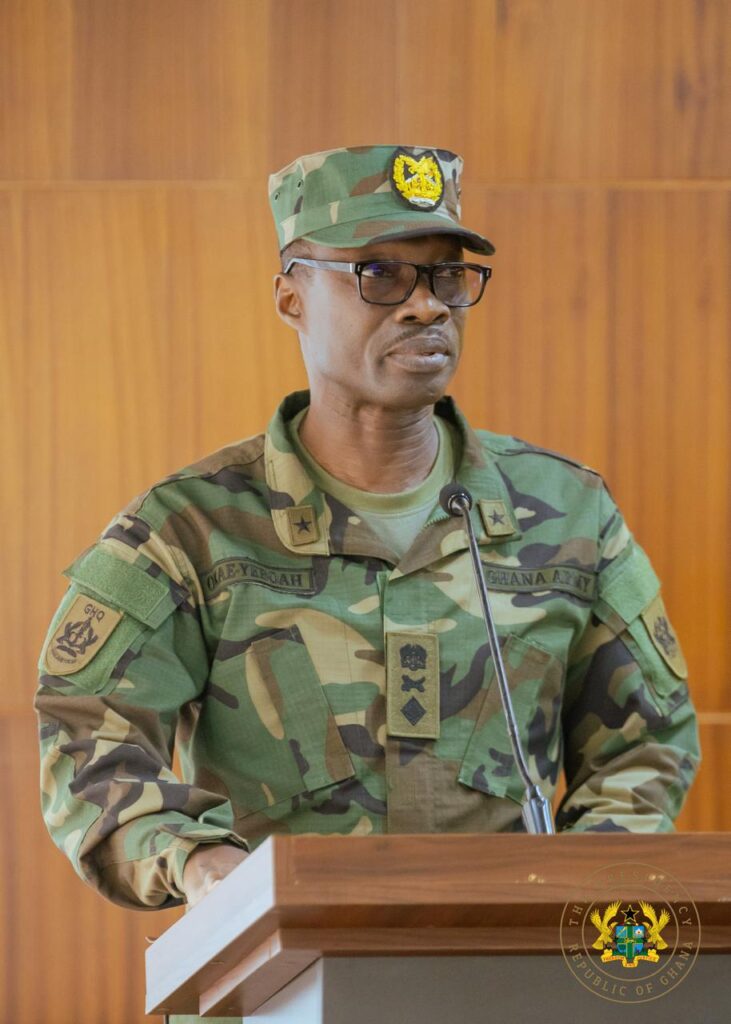
The Task Force, which is under the leadership of Brigadier General Forster Okae-Yeboah, Director General, Joint Operations, Ghana Armed Forces, would ensure an effective and coordinated response, specialised sub-committees have been established, namely: The Anti-Flood Taskforce, which is now the Post-Flood Mitigation Committee, Early Warning Committee Sanitation and Health Committee, Relief and Donations Committee, and Emergency Communications Committee.
Brigadier General Okae-Yeboah in his remarks during a press conference at the Presidency in Accra, said following the heavy rains of Sunday, 28 and Monday, 29 June 2026, which caused devastating floods in several communities within the Greater Accra Region and parts of the Volta and Central Regions, a comprehensive post-flood recovery and mitigation programme had been activated to restore normalcy, safeguard public health and strengthen national resilience against future flooding.
He noted that in the immediate aftermath of the disaster, President John Dramani Mahama conducted an aerial reconnaissance of the affected areas to obtain a first-hand assessment of the extent of the devastation and to direct Government’s response based on the realities on the ground.
He said following this assessment, the President directed the activation of a National Post-Flood Mitigation Task Force to coordinate all recovery, relief and mitigation interventions.
He said as an immediate demonstration of the Government’s commitment to the welfare of affected communities, the President had committed GHS 350 million to support emergency relief, recovery, and flood-mitigation interventions.
He noted that the Government had directed that the Ghana Armed Forces (GAF) lead the operational component of the mitigation effort.
Brigadier General Okae-Yeboah said this would be done in collaboration with the relevant agencies under the Ministry of Water Resources, Works and Housing, the National Disaster Management Organisation (NADMO), the Metropolitan, Municipal and District Assemblies (MMDAs), the Ghana Police Service, the Ghana National Fire Service, the Ghana Health Service, the Environmental Protection Agency, Private Sector Organisations, and other relevant stakeholders.
He said the nationwide clean-up and recovery exercise will focus on restoring public safety, improving sanitation, and preventing secondary disasters such as outbreaks of cholera, typhoid, and other waterborne diseases.
He noted that particular attention would be given to the removal of refuse, silt, fallen trees, abandoned vehicles, collapsed structures and other debris obstructing roads, bridges, drains and waterways.
“As part of the operation, the Ghana Armed Forces will deploy personnel, engineers and specialised equipment to clear major drains, streams, rivers and other critical waterways,” Brigadier General Okae-Yeboah stated.
He said in accordance with applicable laws and directives of the appropriate civil authorities, structures illegally erected within waterways or that pose an immediate danger to public safety and flood mitigation efforts may be removed where necessary.
He said the Metropolitan, Municipal and District Assemblies had also been directed to organise and lead clean-up exercises within their respective jurisdictions in support of the national operation.
Brigadier General Okae-Yeboah said their efforts would complement those of the Ghana Armed Forces and other security agencies to ensure that all affected communities receive the required attention.
He said the Government was particularly grateful to the numerous private sector organisations that had responded positively to the national appeal by voluntarily providing heavy equipment, technical expertise, and logistics to support the exercise.
He noted that the Government commended this demonstration of patriotism and corporate social responsibility, and encourages other organisations to support this important national endeavour.
He said in addition, equipment acquired under the District Road Improvement Programme (DRIP) was being mobilised to augment ongoing operations across the affected areas.
He advised that portions of some roads might experience temporary traffic diversions or restricted access while clean-up and engineering works were underway.
GNA
Edited by George-Ramsey Benamba