By Michael Foli Jackidy
Ho (V/R), July 20, GNA – Stakeholders have been urged to strengthen collaboration in promoting gender equality, protecting children’s rights, and addressing emerging challenges in the digital space to build a more inclusive and equitable society.
The call was made at the opening of a two-day sensitisation workshop in Ho under the Support to Human Rights, Gender Equality and Civil Society Project (S(HE)), jointly implemented by the German Development Cooperation (GIZ Ghana), the Commission on Human Rights and Administrative Justice (CHRAJ), and the National Commission for Civic Education (NCCE).
The workshop brought together representatives of public institutions, educational establishments, civil society organisations, women’s groups, persons with disabilities, child rights advocates, the media, and community leaders to deepen public understanding of gender-transformative approaches and the protection of children’s rights in the digital environment.
Ms Martha Ofori, Technical Advisor at GIZ Ghana, said the workshop formed part of the second phase of the S(HE) Project, which seeks to extend awareness and advocacy on human rights and gender equality beyond institutional stakeholders to the wider public.
She said while the first phase focused on strengthening institutions, the second phase aimed at equipping communities with the knowledge to address discrimination, injustice, and abuse affecting women, men, children, and other vulnerable groups.
“The objective of this two-day sensitisation workshop is to share information on gender-transformative approaches to addressing discrimination, maltreatment and injustice faced by women, men, children and other vulnerable groups. We will also discuss protecting children’s rights in the digital space,” she said.
Ms Ofori said the workshop, which began in Takoradi last month before moving to Ho, was designed to be interactive and to strengthen collaboration among key stakeholders in promoting human rights and ending abuse and discrimination.
She noted that participants included traditional leaders, public sector officials, educational institutions, and universities, all working together to create safer and more inclusive communities.
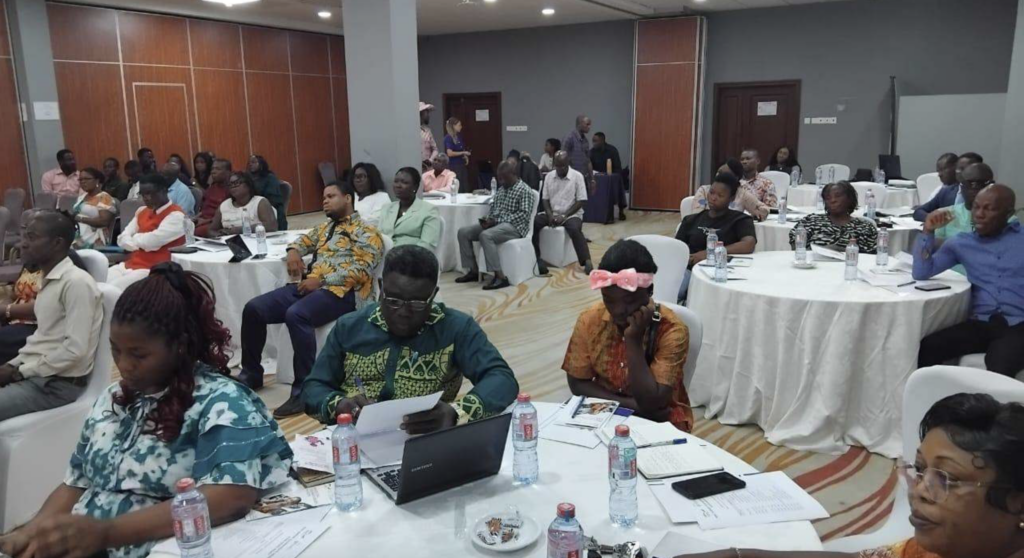
Mrs Joy Anima Debrah, Deputy Director of Public Education at CHRAJ, said the gathering reflected a shared commitment to building communities where the rights and dignity of every individual, particularly women and children, were respected, protected, and promoted.
She observed that although the digital revolution had created enormous opportunities for education, innovation, communication, and development, it had also introduced new risks, including cyberbullying, online exploitation, misinformation, harmful gender stereotypes, and other forms of abuse that disproportionately affect women and children.
Mrs Debrah said CHRAJ, Ghana’s National Human Rights Institution established under Article 218 of the 1992 Constitution, remained committed to promoting and protecting the fundamental rights and freedoms of all persons.
She said safeguarding human rights in today’s rapidly evolving digital environment required coordinated efforts among government institutions, development partners, traditional authorities, educators, parents, faith-based organisations, and community members.
“Sustainable change can only be achieved when all stakeholders work together to promote equity, inclusion and accountability,” she stated.
Mrs Debrah said CHRAJ’s partnership with GIZ under the S(HE) Project, initiated in 2024, had supported interventions aimed at advancing gender equality, eliminating discrimination against women and strengthening the protection of children’s rights, particularly within the digital space.
She urged participants to actively engage in discussions, share experiences and identify practical solutions to challenges confronting women and children in the digital age.
“Technology should become a tool for empowerment rather than exclusion or harm. Together, we can build a society where every child is protected, every woman and man is treated with dignity and respect, and everyone has the opportunity to realise their full potential,” she said.
Mr Kenneth Kponor, Volta Regional Director of the NCCE, described civic education as a shared national responsibility and urged participants to share knowledge gained from the workshop within their respective communities.
He said the S(HE) Project was essential to Ghana’s democratic development because respect for human rights and equality formed the foundation of good governance and national progress.
“As society, we should not focus only on politics. Human rights, gender equality, and civic responsibility are equally important in building a strong and democratic nation,” he said.
Mr Kponor encouraged participants to serve as ambassadors of the knowledge acquired during the workshop, ensuring that those unable to attend would also benefit from the information and contribute to promoting respect for human rights, gender equality, and child protection in their communities.
GNA
Edited by Maxwell Awumah/Lydia Kukua Asamoah
July 20, 2026