By Edward Dankwah
Accra, June 4, GNA – Madam Natasha Quist, the Regional Director for West Africa, AGRA, has underscored the need for coordinated financing and stronger investment partnerships to drive rice production and agricultural transformation across West Africa.
She said while significant progress had been made in identifying investment opportunities and strengthening regional coordination, the region’s biggest challenge remained connecting viable agricultural projects to the capital needed for implementation.
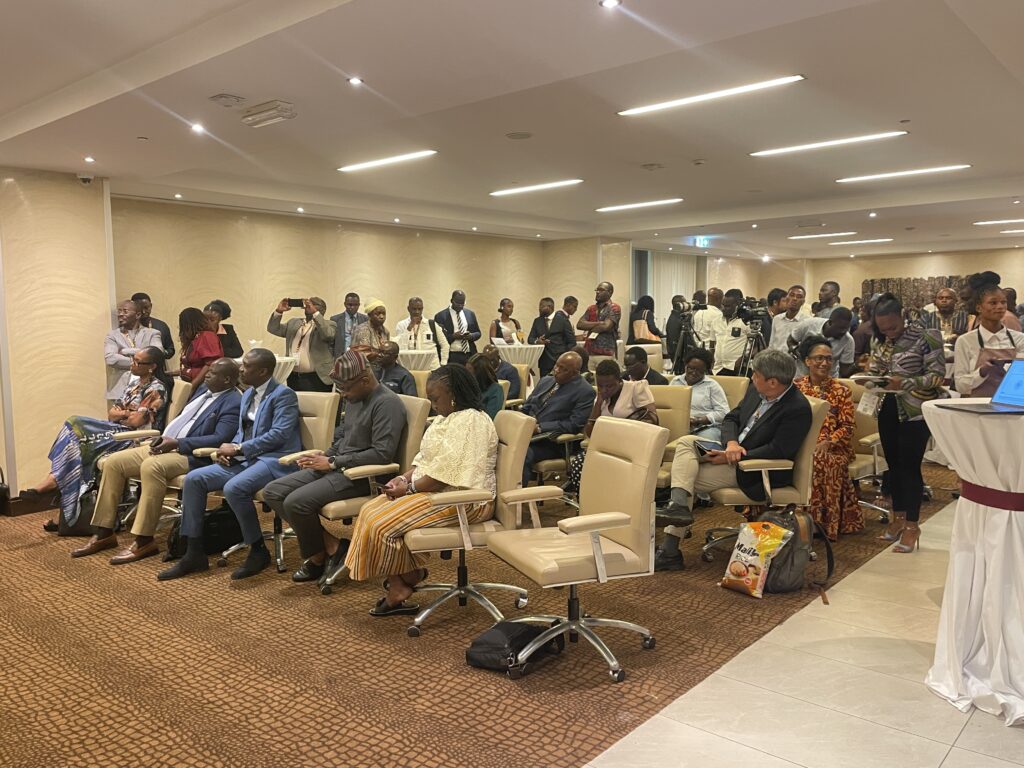
Madam Quist was speaking on behalf of Dr Alice Ruhweza, President of AGRA, at the Partners Dialogue which took place alongside the ECOWAS Rice Investment Roundtable in Accra, on the theme, “Advancing West Africa Financing.”
The AGRA exists to fulfil a vision where Africa can feed itself and the world, transforming agriculture from a solitary struggle for survival into a thriving business.
She noted that the future of rice and agriculture in West Africa would depend largely on the collective ability of governments, development partners, financial institutions, and the private sector to mobilise and coordinate investments around proven opportunities.
She highlighted AGRA’s collaboration with the ECOWAS, the United Kingdom’s Foreign, Commonwealth and Development Office (FCDO), and other partners in strengthening the ECOWAS Rice Observatory (ERO), supporting National Rice Investment Action Plans (NRIAPs), and improving regional investment visibility.
“The challenge is no longer identifying opportunities. The challenge is connecting those opportunities to capital,” she added.
Madam Quist said discussions surrounding the proposed West Africa Rice Financing Facility (WARFF) and other innovative financing mechanisms were therefore crucial to unlocking large-scale investments in the rice sector.
She stressed that rice development extended beyond food production, describing it as a catalyst for job creation, farmer prosperity, women’s economic empowerment, agro-industrialisation, regional trade, and food security.
“Every investment in rice value chains is ultimately an investment in livelihoods, resilience, and shared prosperity,” she said.
She noted that West Africa was increasingly emerging as a knowledge hub for agricultural investment through initiatives such as the ERO, which was helping to address information gaps by improving market intelligence, data systems, investment visibility, and regional coordination.
Madam Quist said stronger access to reliable information was helping build investor confidence and enable governments and businesses to make informed decisions.
The Regional Director observed that the foundations for transformation had already been laid through strategic partnerships, investment-ready projects, and growing private sector interest.
She, however, challenged stakeholders to focus on moving from investment readiness to investment execution to ensure that farmers, businesses, and economies across the region benefited from the opportunities created.
Madam Quist commended ECOWAS for its leadership in advancing the regional rice agenda and acknowledged the support of FCDO through the Africa Food Trade and Resilience Programme, which has contributed to strengthening regional investment frameworks.
She called for sustained collaboration among governments, financial institutions, development partners, and private sector actors to unlock the investments needed to transform West Africa’s agricultural sector and reduce dependence on food imports.
Dr Kalilou Sylla, the ECOWAS Commissioner for Economic Affairs and Agriculture, called for innovative financing mechanisms and stronger regional market integration to unlock investment in West Africa’s agricultural sector.
He said agriculture remained one of the most underfunded sectors due to perceptions of high risk and the misconception that it was merely a social sector rather than a viable business opportunity.
Dr. Sylla stressed that smallholder farmers were the largest investors in African agriculture and should be recognised as key private-sector actors.
“The first investors in agriculture are the farmers themselves, and that many farmers diversify their crops to manage risks and protect incomes,” he added.
He observed that access to finance remained a major challenge, as many financial institutions lacked a clear understanding of agricultural investments and were often reluctant to lend to the sector.
Dr. Sylla called for the development of innovative risk-reduction mechanisms, beyond traditional guarantees, to encourage greater private-sector participation in agriculture.
He cited Nigeria’s success in expanding agricultural lending through innovative financing approaches, saying similar models could be adopted across the region.
He noted that ECOWAS was working to strengthen the regional investment ecosystem through market integration initiatives and investment protocols aimed at improving the business environment for agriculture.
GNA
Edited by Benjamin Mensah