By D.I. Laary
Bunso (E/R), June 24, GNA – Scientists are racing to preserve Ghana’s disappearing plant genetic resources as biodiversity loss driven by illegal mining, deforestation, land degradation and climate change threatens food security, ecosystem resilience and future livelihoods.
They warn that while conservation efforts are expanding, the destruction of natural habitats continues to outpace restoration, placing many indigenous species at risk of extinction.
The concerns emerged during a Biodiversity Media Learning Initiative workshop organised by the Council for Scientific and Industrial Research-Plant Genetic Resources Research Institute (CSIR-PGRRI), the World University Service of Canada (WUSC) and the International Union for Conservation of Nature (IUCN) at Bunso in the Eastern Region.
Dr Edmund Owusu, Senior Research Scientist and Plant Pathologist at CSIR-PGRRI, described the situation as increasingly urgent.
“We are losing a lot of our plant genetic resources, especially the indigenous ones,” he said.
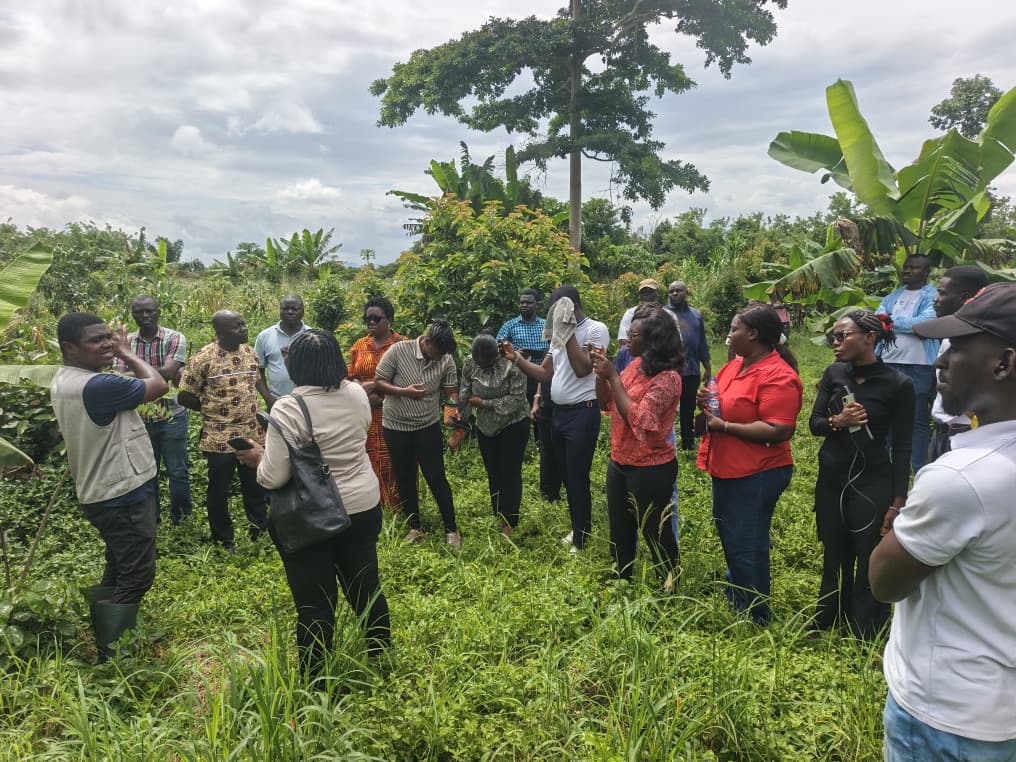
Ghana forms part of the Guinean Forest biodiversity hotspot, one of the world’s most biologically significant ecosystems. However, scientists say increasing land-use changes, logging, mining and human encroachment are eroding that natural wealth.
Dr Owusu said although Ghana has about 275 forest reserves, biodiversity within many of them has declined significantly.
According to him, about 146 forest tree species are currently listed as threatened on the IUCN Red List.
Some species have become so scarce that only a few juvenile stands remain in the wild.
“If somebody comes to clear that land for building, we have lost it from the face of the Earth,” he said.
He noted that some indigenous species are endemic to Ghana and cannot be found anywhere else.
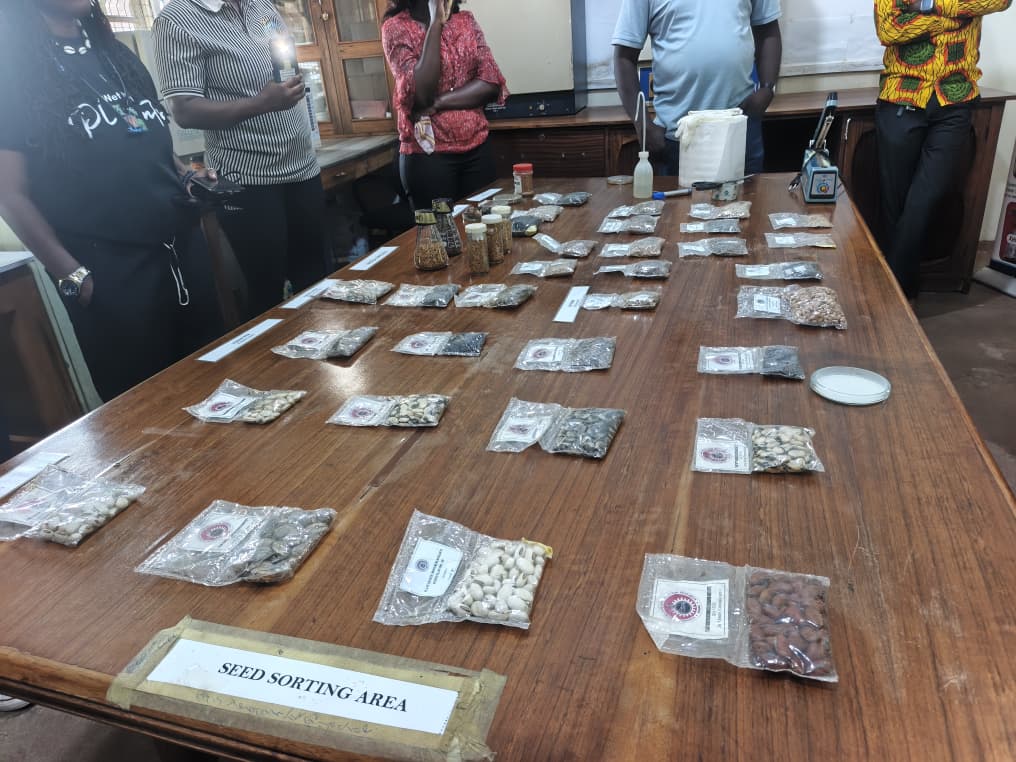
Dr Owusu said conservationists increasingly find themselves collecting and preserving species before they disappear entirely from their natural habitats.
“Our approach is that let us salvage and secure them because you’ll be fighting over the land and the next time you go, they have graded it and your trees are gone,” he said.
In an assessment of the country’s conservation challenges, he added: “Laws are not working.”
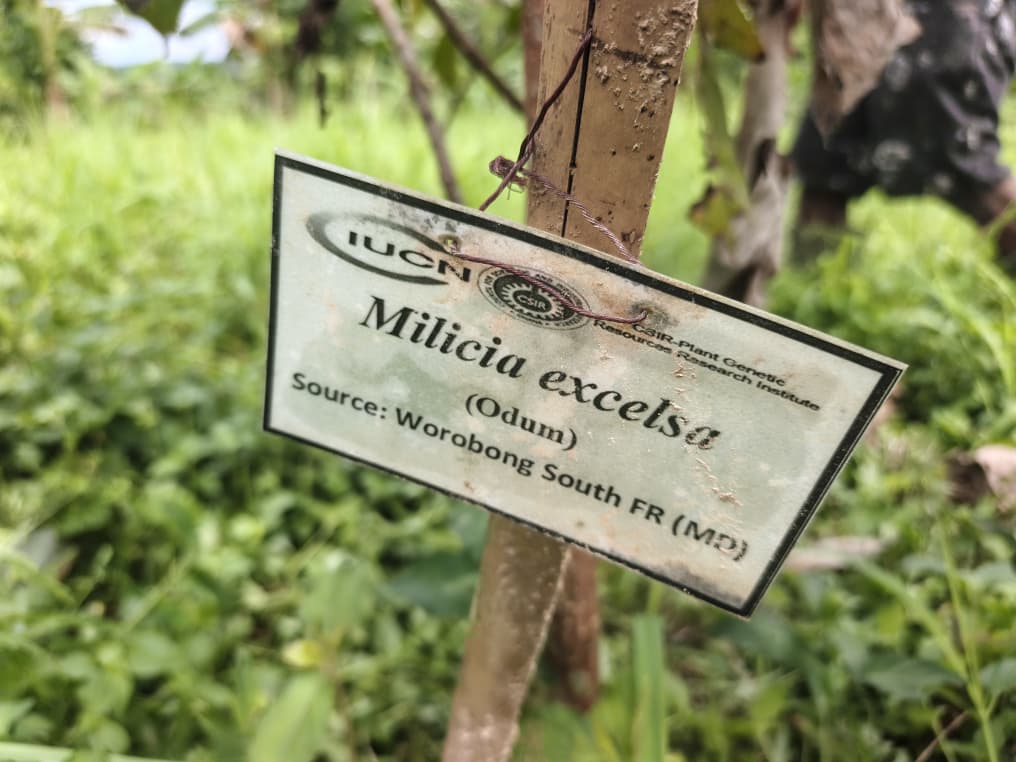
To safeguard threatened species, CSIR-PGRRI and IUCN have established a three-acre live threatened tree gene bank at Bunso.
The facility conserves genetic materials from endangered species such as Odum, Wawa, Mahogany, Baku, Kusia, Asanfena and Cola Boxiana collected from different ecological zones across Ghana.
Dr Owusu explained that the objective extends beyond preserving individual trees.
“The essence of this gene bank is that it will conserve the diversity we have and when they are mature, they will serve as a seed source for future restoration activities,” he said.
He cautioned that restoration programmes relying on limited genetic sources risk weakening ecosystem resilience.
“If you only use progeny of one stand, you are likely to make the forest less resilient,” he added.
Using a human analogy, he stressed the importance of genetic diversity, saying: “We are all human here with different skills. If all of us are taken out and replaced with only progeny of one person, the world will not be the same. We need this diversity to keep us in check and to keep the world moving.”
Scientists say the biodiversity crisis extends beyond forests and wildlife.
Dr Matilda Bissah, a Senior Research Scientist at CSIR-PGRRI, said biodiversity loss increasingly threatens food systems, nutrition and climate resilience.
She explained that many neglected and underutilised crops preserved by local communities could help address food insecurity and climate challenges but continue to receive limited policy attention.
The Ghana National Genebank managed by the CSIR-PGRRI in Bunso, currently conserves 81 out of 101 neglected and underutilised crop species identified globally as important opportunity crops.
“We need to promote them, we need to get people to utilise them for food, medicine and income generation,” she said.
Dr Bissah cited successful interventions involving Bambara groundnuts, indigenous leafy vegetables and taro, noting that conservation and utilisation of genetic resources had contributed to strengthening crop resilience and improving livelihoods.
She also called for stronger policy coordination to ensure those responsible for environmental destruction bear greater responsibility.
“There are no policies that facilitate getting these people to pay for the degradation of the genetic resources they degrade,” she said.
While scientists focus on conservation, development partners say public awareness is equally important.
Mr Rusmond Didewuyem Anyinah, Project Coordinator of the Nature-Based Climate Adaptation in the Guinean Forests of West Africa Project, said biodiversity conservation could not remain the responsibility of scientists alone.
He said the WUSC, which has operated in Ghana for nearly three decades, partnered with CSIR-PGRRI and IUCN to expose journalists to conservation approaches that often receive little public attention.
“Today’s event basically is to expose our media professionals to some of the conservation mechanisms and approaches that our partner, CSIR-PGRRI, is using to promote biodiversity conservation in Ghana,” he said.
Mr Anyinah said the WUSC and its partners had worked with CSIR-PGRRI over the past three years to establish two gene banks, one at the institute and another within project communities.
He expressed hope that journalists would generate stories capable of increasing public understanding and support for biodiversity conservation.
Meanwhile, restoration efforts are continuing across degraded landscapes.
Ms Dorcus Owusuwaa Agyei of IUCN said nearly 2,893 hectares of degraded land had been restored between 2024 and 2025 under the Nature-Based Climate Adaptation in the Guinean Forests of West Africa Project.
An additional 2,000 hectares are targeted for restoration this year.
The interventions include agroforestry systems and modified taungya programmes implemented with communities and the Forestry Commission.
She however cautioned that degradation remains extensive. “You may see people in Wassa thinking the forest is humongous. Meanwhile, when you go there, you see a lot of greens. You enter the forest reserve and inside is empty,” she said
She disclosed that some forest reserves previously occupied by illegal miners remained inaccessible, adding: “There are still some that the Forestry Commission cannot enter.”
Beyond conservation, experts say biodiversity also presents untapped economic opportunities.
Mr Victor Nketia, the Head of Commercialisation at CSIR-PGRRI, cited nutmeg as one example.
Although Ghana imports significant quantities of nutmeg, he said the crop performs well in parts of the country and offers considerable commercial potential.
“The last time I checked, a bag of nutmeg was around GH¢7,000 to GH¢8,000,” he said.
He noted that increased investment in research, commercialisation and farmer awareness could help create jobs, reduce imports and improve incomes.
However, scientists say achieving such outcomes requires sustained investment.
Dr Daniel Ashie Kotey, the Director of CSIR-PGRRI, told the Ghana News Agency that the institute requires approximately US$500,000 annually, equivalent to about GH¢5.6 million, to maintain its gene banks and operate according to international standards.
He said staffing had fallen well below approved levels, saying, “Our manpower ceiling is 170. Currently, we are operating at 105.”
The institute’s infrastructure also requires upgrading as “Most of the buildings you see are from the 1950s,” he said, adding that the institute was “barely breaking even.”
Dr Rashid Tetteh, Deputy Director of CSIR-PGRRI, stressed that long-term conservation also depended on protecting strategic lands from competing pressures.
He said biodiversity conservation could not succeed without securing spaces dedicated to research, restoration and genetic resource preservation.
For scientists and conservationists, the gene banks represent an insurance policy against extinction.
But they warn that preserving seeds in secured facilities will mean little if Ghana continues to lose the forests, landscapes and biodiversity that sustain them in the wild.
The challenge, they say, is not only to save endangered species for future generations but to ensure they continue to survive where they naturally belong.
GNA
Edited by Benjamin Mensah
Reporting by D.I. Laary
Email: [email protected]