By D.I. Laary
Bunso (E/R), June 24, GNA – Women are playing a critical role in preserving Ghana’s disappearing indigenous crops, seeds and biodiversity, safeguarding genetic resources that support food security, nutrition and climate resilience, even as environmental degradation threatens their survival.
Scientists and development practitioners say protecting biodiversity in Ghana will require more than conserving endangered species and restoring degraded landscapes.
It will also require investing in the women who continue to safeguard indigenous knowledge, traditional seed systems and underutilised crops that many communities depend on for survival.
The issue featured prominently on Tuesday during a Biodiversity Media Learning Initiative workshop held at Bunso in the Eastern Region.
The workshop was organised by the Council for Scientific and Industrial Research-Plant Genetic Resources Research Institute (CSIR-PGRRI), the World University Service of Canada (WUSC) and the International Union for Conservation of Nature (IUCN).
The workshop forms part of the Nature-Based (Nbs) Climate Adaptation in the Guinean Forests of West Africa Project, a regional initiative being implemented in Ghana, Côte d’Ivoire and Guinea to promote gender-transformative climate adaptation and biodiversity conservation.
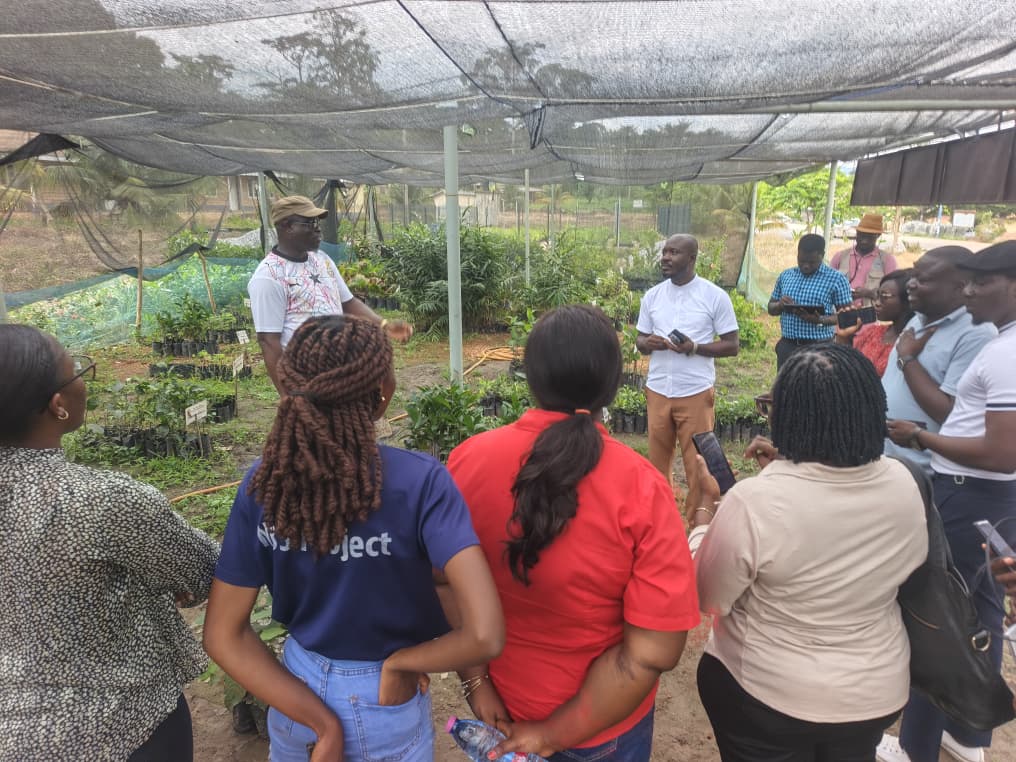
Mr Rusmond Didewuyem Anyinah, Nbs Project Coordinator, said women were deliberately placed at the centre of the intervention because they were disproportionately affected by climate-related shocks.
“The project has three key components,” he said, and added: “One is to support women to play a key role in biodiversity conservation and nature-based planning.”
He said the project also supports women to undertake inclusive restoration activities at the landscape level and strengthen businesses capable of improving their resilience to climate change.
“We all suffer from the extremes of climate change, but we all agree that women suffer more,” he said. “And once they suffer more, when interventions are being undertaken, we have to place them at the centre.”
The project currently operates in the Wassa-Amenfi and Mampong landscapes across five districts in the Western and Ashanti Regions, where women are being supported to participate actively in restoration activities, biodiversity management and climate-resilient enterprises.
For scientists, however, women have long played a largely unrecognised role in biodiversity conservation.
Dr Matilda Bissah, a Senior Research Scientist at CSIR-PGRRI, noted that women remained among the most important custodians of Ghana’s neglected and underutilised crop species.
“If you are looking for something that you used to find and it’s not there, the last thing will be to go to a woman because we know that women conserve these species very well,” she said.
According to her, many indigenous crops survive largely because women continue to preserve seeds, maintain planting materials and pass on indigenous knowledge from one generation to another.
She explained that while men often focus on commercial cash crops, women frequently maintain crops that contribute significantly to household nutrition, food security and resilience.
“The reason being that men are mainly cash-oriented, and they will go for the bigger cash crops and leave the underutilised crops to the women who don’t have the land, who don’t have the resources to promote them,” she said.
Dr Bissah said many neglected and underutilised species have received limited research attention, funding and policy support despite their potential to address food insecurity and climate vulnerabilities.
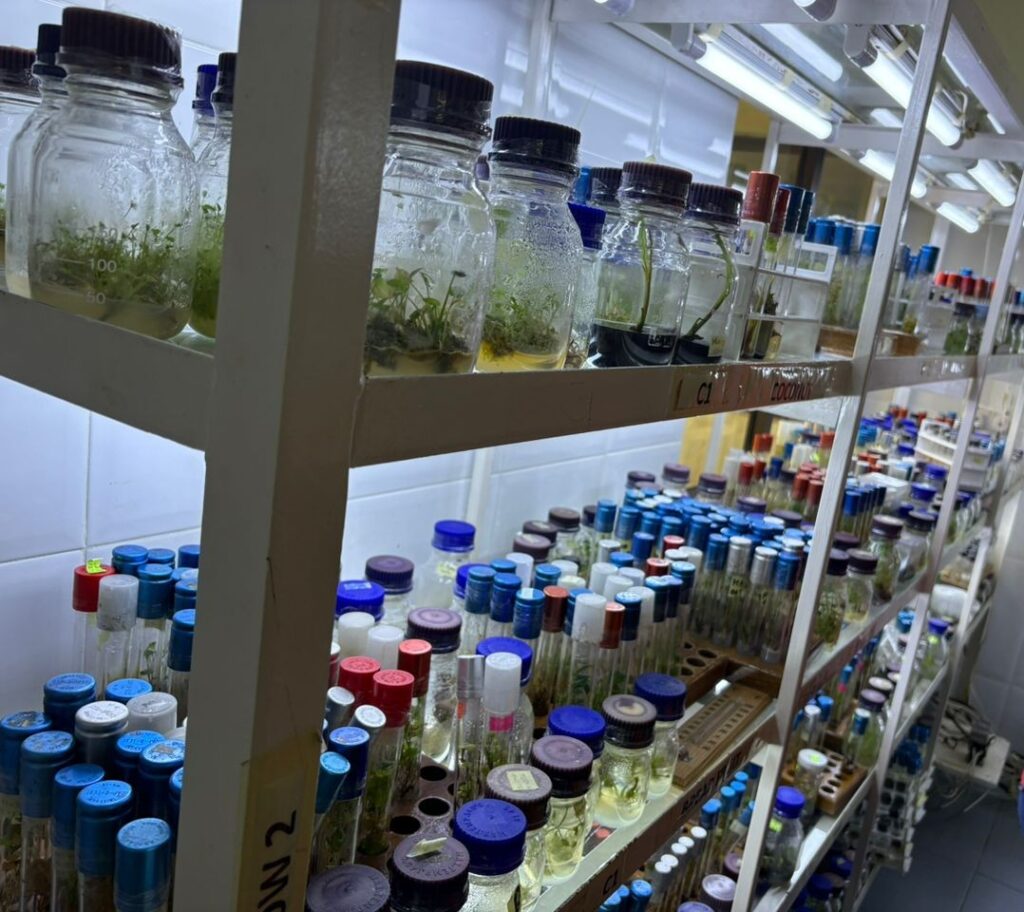
The Ghana National Genebank, managed by CSIR-PGRRI in Bunso, currently conserves 81 out of 101 priorities neglected and underutilised species identified internationally as important opportunity crops.
They include Bambara groundnuts, indigenous leafy vegetables, amaranth and other traditional crops that scientists say can contribute significantly to nutrition, income generation and climate adaptation.
Scientists warn that the disappearance of such crops could have far-reaching consequences.
Many remain outside formal seed systems and survive largely through farmer-to-farmer exchanges and traditional knowledge maintained within households and communities.
Dr Bissah noted that weak seed systems continue to limit access to many indigenous crops, saying: “The seed system for this germplasm has not been developed”.
As a result, many seeds are unavailable in agro-input shops and remain dependent on informal community networks for their survival. The urgency of protecting those resources has increased as biodiversity loss accelerates.
Dr Edmund Owusu, Senior Research Scientist and Plant Pathologist at CSIR-PGRRI, said Ghana was losing indigenous species at an alarming rate, stating: “We are losing a lot of our plant genetic resources, especially the indigenous ones”.
According to him, about 146 forest tree species are currently listed as threatened on the IUCN Red List, and that some populations have declined to levels where only a few juvenile stands remain.
“If somebody comes to clear that land for building, we have lost it from the face of the Earth,” he warned, noting that some indigenous species are unique to Ghana and cannot be found elsewhere.
To prevent their disappearance, CSIR-PGRRI and IUCN have established live gene banks that conserve endangered species and preserve the genetic diversity needed for future restoration efforts.
At the same time, restoration activities are being expanded across degraded landscapes.
Ms Dorcus Owusuwaa Agyei of IUCN said nearly 2,893 hectares of degraded land had been restored between 2024 and 2025 through agroforestry and modified taungya systems involving local communities.
An additional 2,000 hectares are expected to be restored this year.
She said women remain central to those interventions because biodiversity conservation and climate adaptation cannot succeed without their active participation.
The project also supports women-led enterprises and investments designed to strengthen resilience against climate shocks.
Despite those efforts, experts say structural inequalities continue to undermine women’s contributions.
Many women involved in biodiversity conservation have limited access to land, credit, improved technologies and formal markets.
Scientists argue that addressing those barriers is critical to protecting biodiversity.
“We should address these inequalities to ensure that we promote the role of women and the benefits that these genetic resources have for our women,” Dr Bissah said.
Funding also remains a challenge.
Dr Daniel Ashie Kotey, Director of CSIR-PGRRI, told the Ghana News Agency that the institute requires approximately US$500,000 annually, equivalent to about GH¢5.6 million, to maintain its gene banks and operate according to international standards.
He said sustained investment was necessary to conserve genetic resources, support research and improve access to planting materials.
For conservationists, the future of biodiversity in Ghana depends not only on protecting forests and preserving endangered species but also on empowering the people who have quietly safeguarded them for generations.
Scientists say women remain at the heart of that effort.
As climate change, deforestation and land degradation intensify, strengthening women’s role in conservation may prove just as important as restoring forests in securing Ghana’s biological heritage, food systems and climate resilience for future generations.
GNA
Edited by Benjamin Mensah
Reporting by D.I. Laary
Email: [email protected]