By Maxwell Awumah, GNA
Ho, June 06, GNA – Professor Yaw Asante Awuku, the Dean, School of Medicine (SOM) of the University of Health and Allied Sciences (UHAS) Friday delivered his inaugural lecture at the Cedi Auditorium in Ho, by which he has become a full-fledged professor.
The lecture, entitled, “From Bedside to Academia: A Clinician-Scholar’s Role in Advancing Medical Education and Gastroenterology Practice,” encapsulates an inseparable relationship between clinical practice, academic scholarship and the training of future physicians.
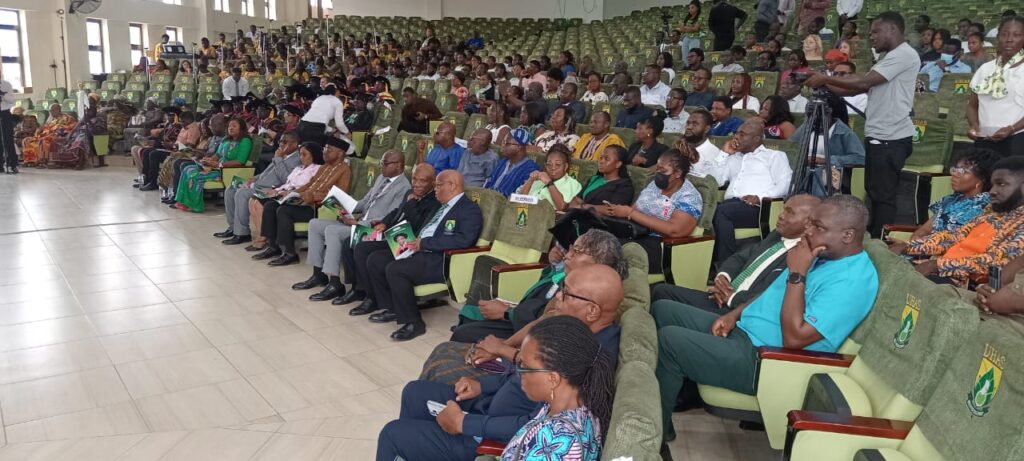
It was attended by present and past Vice Chancellors, heads of sister institutions, deans, faculty members and lecturers, students, family members and friends.
Prof Awuku lecture recommended the development of a “Ghana Health Sustainability Index” away from the “Africa Health Sustainability Index” as a framework for future-proofing healthcare systems.
He said domesticating the index through data-driven regional health monitoring and policy guidance would engender ownership and easy acceptance and carry all cultural nuances into focus.
The celebrant emphasised the need to train future physicians not only as consumers of knowledge but also as innovators, educators, researchers, and advocates capable of transforming healthcare delivery in Ghana and beyond.
He paid attention particularly to the growing burden of gastrointestinal and liver diseases in Ghana and Africa, including viral hepatitis, hepatocellular carcinoma, metabolic dysfunction-associated fatty liver disease (MAFLD/MASLD), gastroesophageal reflux disease, inflammatory bowel disease, and gastrointestinal malignancies, calling for stepping up approaches.
He identified the challenges posed by limited diagnostic infrastructure, inadequate access to endoscopy services, low public awareness, and delayed presentation of disease and further examines the role of academic physicians in addressing these challenges through therapeutic endoscopy training, advocacy, guideline development, and public education.
He re-examined contemporary medical education, advocating a transition from rote learning to competency-based, patient-centered, and technology-enabled training.
Prof Awuku emphasised attention to be placed on bedside teaching, simulation-based learning, case-based pedagogy, mentorship, faculty development, and assessment methods that evaluate both knowledge application and professionalism.
Drawing from personal research experiences, Prof Awuku demonstrated how clinically derived questions can shape impactful research and policy with areas explored to include hepatitis B elimination strategies, hepatocellular carcinoma epidemiology, healthcare worker vaccination protection, point-of-care ultrasound (POCUS) training, geographic disparities in dialysis and gastrointestinal endoscopy services, and healthcare sustainability planning in Ghana.
He said lessons learned from the clinic, classroom and community across the academic journey demonstrate that integration matters, local relevance is global strength and mentorship multiplies impact.
He indicated medical education must promote critical thinking, not rote learning, embrace simulation and case-based learning and assess not just ‘what students know’ but how they apply knowledge and relate to patients.
Prof Awuku’s urged policymakers to ground decision in frontline reality, insisting Universities nurture more clinician-scholars through the clinical professorship pathways with UHAS expected to lead the pact.
He urged the public to demand and support healthcare systems that value both competence and compassion and again asked the academia never to stop asking how to do better with students learning with urgency and care with humility.
He proposed the establishment of Centres of Excellence as an engine to transform the health ecosystem to become a catalyst for medical tourism.
Prof Awuku has contributed to Boards, Committees and University extension services and made substantial contributions to medical literature, with a focus on gastroenterology, hepatology, nephrology, clinical practice and health systems in Africa.
On outreach service, Prof Yaw Asante Awuku has made significant contributions to medical education, clinical practice and professional standards, nationally, has served as an external examiner for all public medical schools in Ghana, as well as examiner for the Ghana College of Physicians and Surgeon (GCPS) and the West African College of Physicians. He served as the faculty Chair for Internal Medicine at the GCPS and the president for GASLIDD all for a period of four years. He has been a member of accreditation teams for the Medical and Dental Council of Ghana and the Ghana Tertiary Education Commission and has served on the FDA Technical Advisory Committee on Clinical Trials.
Internationally, he is a member of the African Network for Gastroenterology and Heptology Association of Sub-Saharan Africa and serves on the Africa Advisory Board of the American Association for the Study of Liver and Digestive and World Endoscopy Organisation Star.
He has published several scientific books and papers on viral hepatitis and end stage liver disease, diagnosis and care for kidney disease clients, liver and neck cancer characerisation; gut microbiome and disease; covid-19 and clinical care; gastrointestinal disease manifestation and clinical decisions among others.
Prof Yaw Asante Awuku, 50, is a royal in Akropong-Akuapem, Eastern region and married to Dr Nana Agyeiwah Awuku, a consultant haematologist and head of Haematology at the University of Ghana Medical Centre and blessed with three children- Maame Akosua, Nana Yaw and Papa Kwasi.
Prof Awuku enjoys listening to music and watching football.
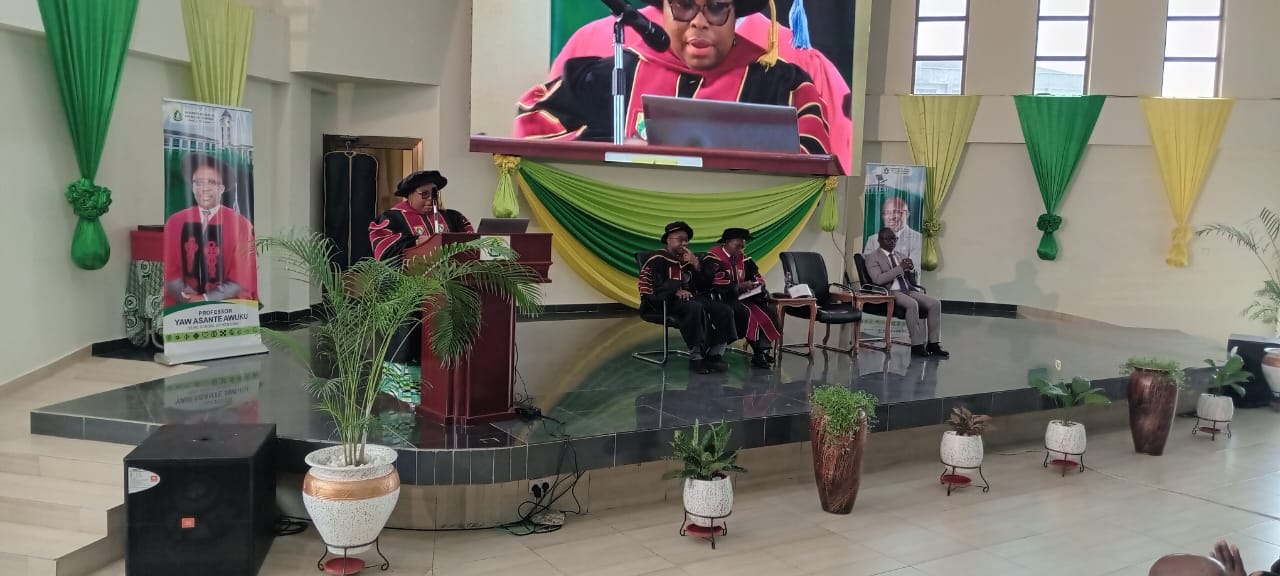
Prof Lydia Aziato, the Vice Chancellor of UHAS, who presided over the inaugural lecture said Prof Awuku was appointed a professor, by dint of hard work, which is a landmark academic achievement and the eighth recipient in the life of inaugural lectures of UHAS.
She said the recipient has 90 publications, 3,384 citations; i10-index: 37; H-Index: 22 on Google Scholar and 56 publications: 3,013; H-Index: 19 on Scopus, which shows the versatility of the recipient.
GNA
Edited by Benjamin Mensah
Reporter: Maxwell Awumah
Reporter’s email: [email protected]