By Michael Foli Jackidy
Ho (V/R), June 17, GNA – The National Commission for Civic Education (NCCE) in the Volta Region has engaged stakeholders in Ho to strengthen community participation in adolescent health, gender equality and the prevention of gender-based violence under the Adolescent Girls Programme.
The programme, funded by Global Affairs Canada and implemented by the United Nations Population Fund (UNFPA), was held on the theme: “Empowering Communities and Youth for Adolescent Health, Gender Equality and Preventing Gender-Based Violence through Civic Education.”
The engagement aimed to strengthen stakeholder ownership, improve coordination and sustain collective action, particularly through the involvement of men and boys. It also provided a platform for participants to discuss challenges and identify practical solutions for community-level implementation.
Madam Lucille Hewlett-Annan, Commission Secretary of the NCCE, urged stakeholders to incorporate gender education into advocacy and public education programmes.
“Gender issues affect everybody because both men and women contribute to family and national development. Reproductive health is also a shared responsibility and has significant implications for families and society; therefore, it deserves urgent attention,” she said.
Mr Kenneth Kponor, Volta Regional Director of the NCCE, said gender-based violence, adolescent pregnancy, harmful social norms and challenges relating to sexual and reproductive health and rights (SRHR) remained major development concerns in Ghana.
He said the NCCE, through the AGP, implemented civic engagement activities in selected districts in 2025, including stakeholder engagements, visits to adolescent girls, boys and men, and mass sensitisation campaigns through FM stations, Community Information Centres and mobile van broadcasts.
According to him, the interventions increased awareness of adolescent health issues, strengthened dialogue on GBV and improved collaboration between duty bearers and communities.
“Engagements with adolescent girls created safe spaces to discuss sexual and reproductive health rights and access to youth-friendly services. We also engaged boys and men to promote positive masculinity and shared responsibility in preventing gender-based violence,” he said.
Mr Kponor noted that despite the gains made, gaps remained in expanding coverage, sustaining behavioural change and reaching underserved communities, stressing the need to scale up interventions.
He disclosed that in 2026 the programme would continue in Keta Municipality and the Anloga, Akatsi North, Central Tongu and Adaklu Districts, alongside activities coordinated by the Regional Office.
Activities will include stakeholder engagements, community outreach sessions, visits to adolescent and men’s groups, mobile van broadcasts and mass media campaigns.
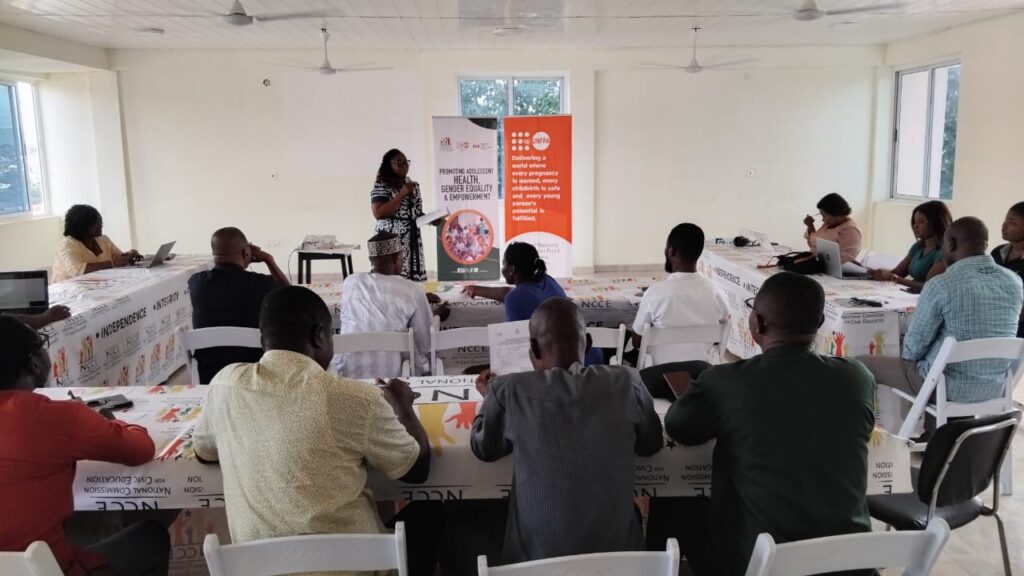
Mrs Thywill Eyra Kpe, Volta Regional Director of the Department of Gender, delivered a presentation on the role of men and boys in addressing gender-based violence.
She explained how socially constructed gender norms and stereotypes contributed to inequalities and violence against women and girls and urged participants to promote positive masculinity and challenge harmful cultural practices.
Mrs Kpe stressed that achieving gender equality required the active involvement of men and boys as partners in change.
Madam Shine Gavey, Health Promotion Officer at the Ho Municipal Health Directorate, educated participants on sexual and reproductive health and rights, highlighting issues such as teenage pregnancy, sexually transmitted infections and menstrual hygiene management.
She urged parents, teachers, religious leaders, and community members to create supportive environments that would enable young people to discuss reproductive health issues openly and without stigma.
Madam Gavey said protecting adolescents’ sexual and reproductive health rights was critical to improving educational outcomes, reducing teenage pregnancies, and empowering young people to reach their full potential.
Participants contributed to discussions on implementation strategies and key resolutions, while organisers expressed optimism that the programme would help build safer, healthier and more supportive communities for adolescents across the Volta Region.
GNA
Edited By: Maxwell Awumah/ Audrey Dekalu