By Edward Dankwah, GNA
Accra, June 23, GNA – Kotoka Basic School, from Burma Camp in the Greater Accra Region has emerged winners of the Drug-Free Clubs Art Competition organised as part of activities to commemorate the International Day Against Drug Abuse and Illicit Trafficking.
The school secured a total of 407 points from three judges to clinch the top position in the competition, receiving a trophy and plaque for the school, medals for the contestants, and a cash prize of GH¢2,000.
Burma Camp Basic School, also from Burma Camp in the Greater Accra Region placed second with 356 points accumulated from the judges, also awarded with a plaque, medals for contestants, and a cash prize of GH¢1,000.
The competition organised by Narcotics Control Commission (NACOC) formed part of efforts to promote anti-drug awareness among school children through creative arts and educational activities.
It was held on the theme, “Empowering the Youth Through Creative Arts.”
As part of the competition package, each contestant received art materials including one sketch pad (A4 standard), one pack of coloured pencils, one professional pack of art pencils and charcoal consisting of 16 pieces, one set of painting brushes, and one set of poster colours and brushes, all packaged in sealed bags.
In addition, Mr. Archibald Darko-Boateng, the Chief Executive Officer of El-Sayus Company Limited, presented GH¢1,000 to each contestant in support of their participation and creativity.
Speaking on behalf of Brigadier-General Maxwell Obuba Mantey, Director-General of NACOC, Mr. Solomon Stanley Eyo, Director of Operations, who is a Chief Narcotics Control Officer raised concerns over the increasing prevalence of substance abuse among students.
He said more than 36.4 per cent of junior and senior high school students in Ghana had experimented with at least two different substances.
He said findings from a report by the Consultative Committee to Combat Drug Menace in Schools showed that cigarettes, cannabis, and alcohol were the most commonly abused substances among boys, while pain relievers, shisha, and alcohol were prevalent among girls.
“The report further revealed that 88.6 per cent of students surveyed were under stress, which was identified as a major driver of substance abuse among young people,” he added.
Mr. Eyo explained that students themselves admitted that drug use contributed to absenteeism, poor academic performance, insomnia, and physical weakness.
He stressed that the Commission remained committed to implementing drug demand reduction strategies through continuous public sensitisation in schools, churches, mosques, marketplaces, and communities across the country.
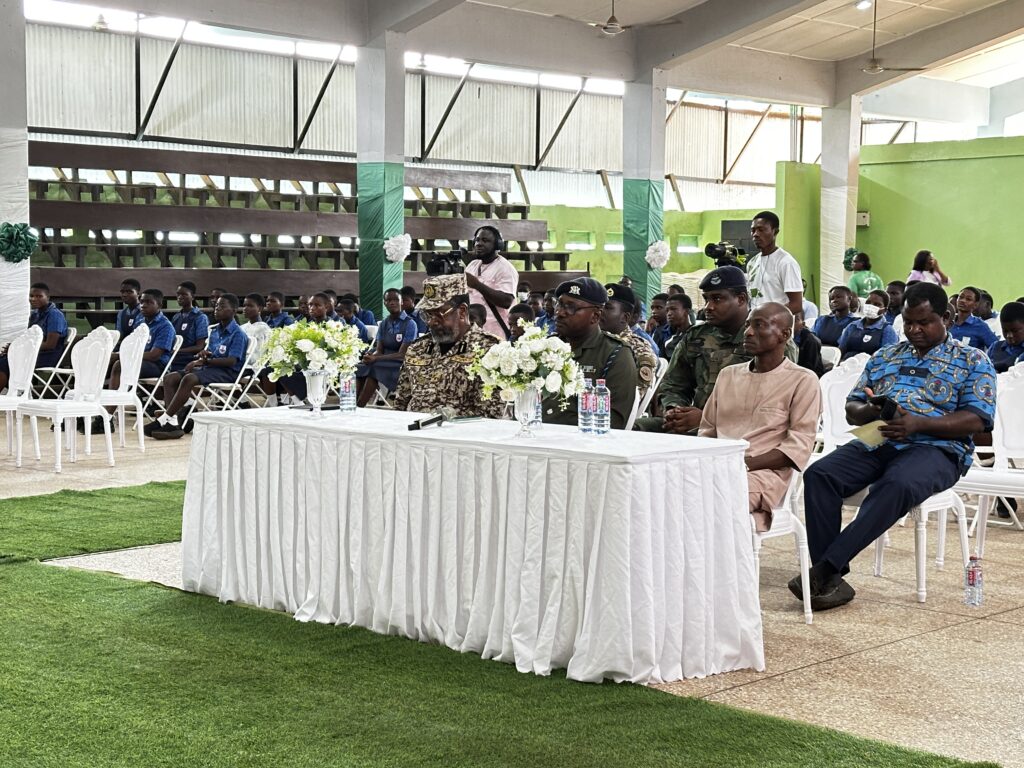
The Director of Operations said the competition was aimed at using creativity and peer influence to educate young people on the dangers of drug abuse.
He said art forms such as painting, poetry, drama, debates, and quizzes provided effective platforms for students to communicate anti-drug messages and inspire positive behavioural change among their peers.
Mr. Eyo noted that NACOC’s Drug-Free Clubs in schools were designed to equip students with life skills and empower them to become ambassadors against drug abuse.
He commended the headteachers, patrons, and students of Burma Camp JHS and Kotoka JHS for supporting the sustainability of the initiative.
He described the competition as proof that young people could become active agents of change by using creativity as a tool to promote a drug-free lifestyle and safeguard the future of Ghanaian youth.
GNA
KennethOdeng Adade