By Agnes Ansah
Accra, June 10, GNA – The Ministry of Transport has declared that individuals who refuse to wear life jackets before commuting on inland waterways will be barred from traveling.
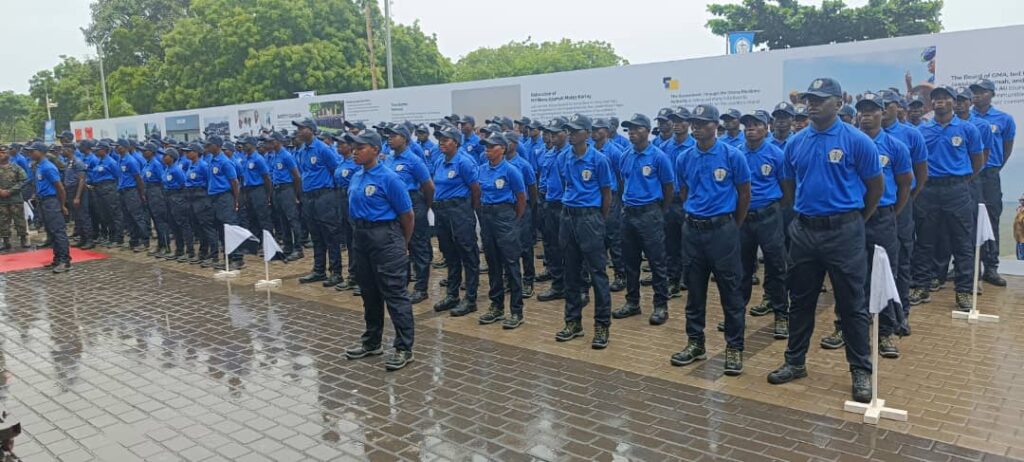
Mr. Joseph Bukari Nikpe, the sector Minister, made the declaration at the commissioning of 200 Water Safety Guards and the launch of the Life Jacket Safety and Livelihood Initiative on Tuesday in Accra.
The initiative was launched by the Ghana Maritime Authority (GMA), an institution under the direction and oversight of the Ministry of Transport.
Under the initiative, the GMA would provide subsidised sales, rental schemes, and a hybrid of outright sale and rental of life jackets to ensure no citizen left without a jacket whilst crossing a water body.
The Minister said the policy aligned with President Mahama’s agenda to “restore order, accountability and safety on our waterways” and prevent tragedies like the 2024 incident that claimed the lives of 70 students in Saboba.
The Minister stressed the economic and social importance of Ghana’s rivers and wetlands, “which connect farms to markets, school children to schools, and families to healthcare.”
Despite their value, he noted that the water bodies had also “brought us some grief” through years of preventable drowning deaths.
He recalled two major tragedies that prompted government action… “I recall two years ago… we have lost about 70 students who were crossing from one side to another. I can still recall that day when I rose out of the chair and asked what, 70?” he said.
He added that the most recent incident in Kete-Krachi involved families who got drowned in the water.

The Minister said President Mahama ordered that such deaths must end, adding that the Ministry and GMA responded by moving to recruit and train community-based safety personnel.
“Excellency President Mahama ordered that this should be the last one or we should work hard to put a stop to this needless life that we lose on a daily basis whilst our Ghanaian brothers and sisters cross from one side to another,” he said.
Dr Kamal-Deen Ali (Naval Captain Rtd), Director-General, GMA, said the deployment of 200 guards marked a shift “from acknowledging the challenges to actively taking steps to change the situation for the better.”
He described the initiative as more than equipment distribution but a cultural reset for Ghana’s inland transport sector.
He noted that the waterways had become a source of anxiety due to accidents and stressed that true safety was paramount to ensuring the development of the country.
Dr Ali called on boat operators to cooperate with the guards, stressing that the GMAs mission was to ensure that no boat left the shore without all passengers in life jackets.
“Boat operators should view the guards as partners in business and not adversaries,” he said, adding that “Commuters should cooperate with the guards to make the policy work.”
Mr Jacob Kabore Tetteh Ageke, President, National Inland Canoe Fishermen Council, pledged full backing for the initiative.
Speaking for the local communities, he said residents would ensure compliance at all crossing points.
“We commit to ensuring the regular use of life jackets by boat operators, canoe operators, passengers and community members,” he added.
Mr Ageke said the communities would actively support the 200 newly commissioned Water Safety Guards deployed by the GMA.
“We commit to supporting safety guards in discharging their duty,” he said, noting that local cooperation is key to making the policy work.
He stressed that enforcement will be easier when passengers and operators see guards as partners rather than enforcers, calling for public education and protection of equipment.
“We will create awareness and educate people on safety on inland water bodies. We commit to protecting all safety equipment,” Mr Ageke added.
GNA
Edited by Agnes Boye-Doe
Reporter: Agnes Ansah
[email protected]