By Iddi Yire, GNA Special Correspondent in London
London, June 1, GNA – Dr Cassiel Ato Baah Forson, the Minister of Finance has appealed to investors and Ghanaians in the diaspora to come and invest in Ghana, stating that the economy is now back track.
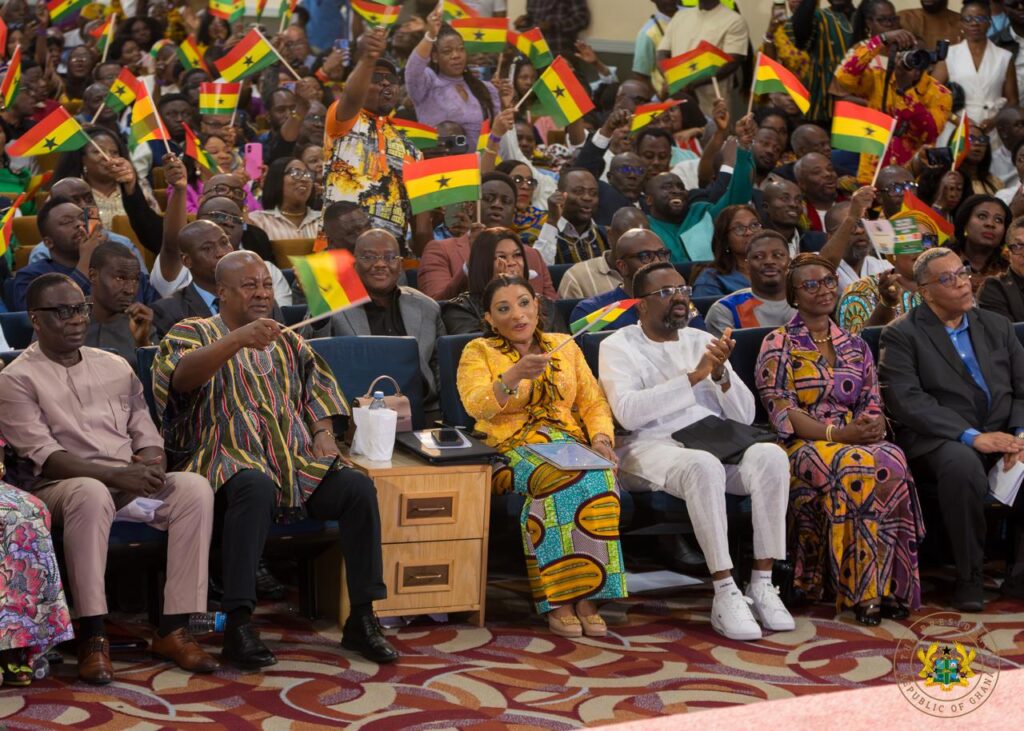
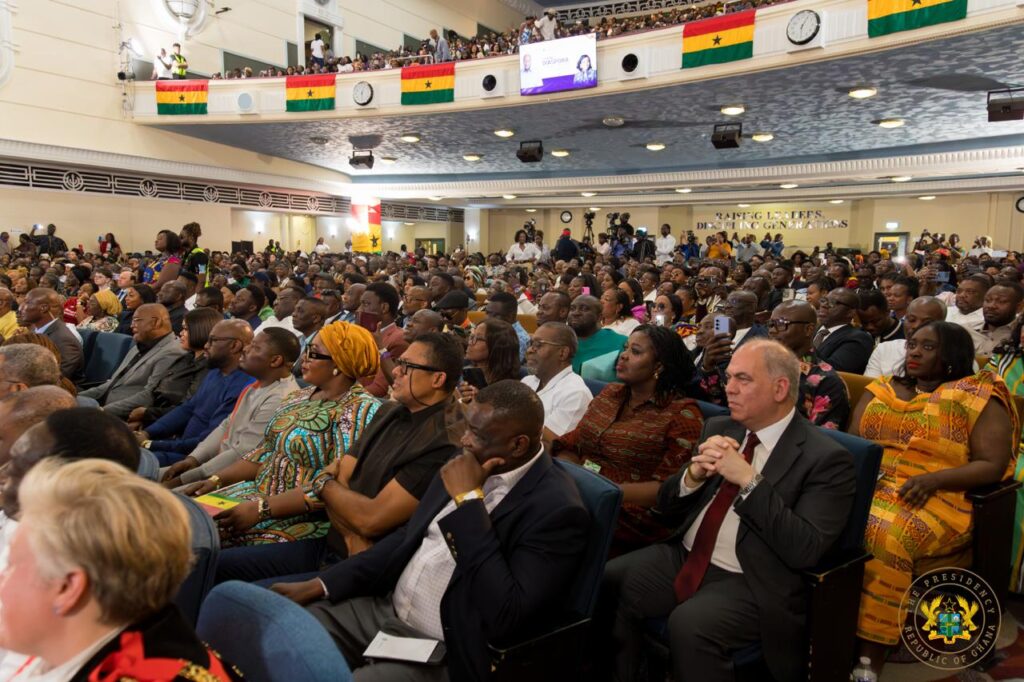
“Ghana is open for business. We welcome you. Come home and contribute.” Dr Forson stated in his remarks during President John Dramani Mahama’s Town Hall engagement in London with diaspora Ghanaians living in the United Kingdom.
This forms part of President Mahama’s five-day official visit to the UK.
Dr Forson said that very soon, the Central Bank intends to work with the Ministry of Finance to ensure that the remittance that the diaspora community brings home actually hit the balance of payment.
He said the Governor of the Bank of Ghana had informed him that last year, the remittance amounted to over $7 billion.
“And so, we see you as an important partner. We see you as our brothers and sisters in the diaspora. And you still have a role to play in the nation building.”
Dr Forson, who once lived in London, said:
“And London is home to some of us. Some of us had the privilege to grow up here.
“And myself, Honourable Kwami Agbodza (Minister of Roads and Highways) not long ago used to be members of this chapter until we had the privilege to go back home to serve our country.
“And so, you can also be one of us if you decide to come home and take part in nation building.”
Dr Forson said President Mahama inherited a terrible economy – an economy in difficult times.
Recounting some of the things that the country went through back in 2022, he said Ghana went through a very difficult economic crisis in a lifetime.
“I do not recall that our country had ever gone through such a level of economic crisis. The scale of the crisis was profound. It was extremely traumatic, if not distressful.” He stated.
“Our currency, the Ghana cedi, came under intense pressure. It nearly lost its value. Inflation rose to painful levels. Investor confidence deteriorated very sharply.”
Adding that Ghana’s external reserves were strained and Ghana lost access to the international capital market.
Dr Forson said as a result, the credit rating agencies responded by downgrading Ghana’s sovereign rating, which was repeatedly in 2022 to levels never seen in the country’s history.
“In February 2022, Moody’s downgraded Ghana to CAA1. In August, S&P also downgraded us to CCC+,” he stated.
“Again in the same year, August, Fitch also downgraded Ghana to CCC. And in September, Fitch again downgraded Ghana further down to double C. Finally, in October 2022, Ghana lost access to the international capital market.”
With Ghana’s euro bonds spread widening to all-time levels of over 300, 3400 basis points.
He said this further deepened the economic and financial crisis to the point that even the Ghana CocoBod was unable to secure a syndicated loan for the first time in over 33 years.
He said also, some domestic and commercial banks could no longer obtain external funding or establish even letters of credit as international banks declined to confirm these instruments.
“But the good news is that today our country is back. We are back.” He said.
Dr Forson reiterated that President Mahama, upon assuming office, took steps, difficult decisions, some extremely bitter, but in the end, they all recognise that prudence works.
“But let me share some of the outturn with you. I’m pleased to report that as a result of the measures that President Mahama took, today GDP growth is back. Ghana has recorded a GDP growth of six per cent in the year 2025.” He said.
“And most importantly, non-oil GDP growth was 7.6 per cent, the highest in 14 years.”
Dr Forson said for the first time, Ghana’s economy had crossed the $100 billion threshold, making it a fully-fledged emerging economy and that Ghana’s economy was now ranked the eighth largest economy in the entire Africa.
The Minister said Ghana’s GDP per capita was today $3,385 for the first time.
He announced that Ghana’s debt was now sustainable, unlike the past.
He noted that Ghana’s debt today had moved from unsustainable debt to high risk of debt distress and finally now to moderate risk of debt distress.
He said Ghana’s debt to GDP had declined to now 44.7 per cent of GDP, ahead of the target of 2034.
Dr Forson said Ghana achieved the debt to GDP level as was originally scheduled by the IMF that they would have achieved debt to GDP of 45 per cent by 2034, eight years, they used one single year to achieve that.
The Minister said inflation had declined from 23.8 per cent in December 2024 to 3.4 per cent in April 2024.
He said that the country was now borrowing quite cheaper; saying “in fact, 91 days Treasury Bill has declined by 2,300 basis points from 28.4 per cent to now 4.8 per cent in April 2026”.
“Our two-year, three-year and five-year bonds are now trading at a range of 11 to 12 per cent compared to 25 per cent in previous years.”
Adding that thanks to the Central Bank, the Monetary Policy Rate had also declined by 1,300 basis points from 27 per cent in January to now 14 per cent in April.
He said the current account balance recorded a surplus and this was extremely important.
“We were seeing persistent current account deficit. But for last year, we saw a current account surplus of 8.3 per cent of GDP in 2025,” he stated.
“And this is programmed to achieve double-digit 10 per cent plus by the year 2026, this year. But all of this point to one, something important. This result affirms that fiscal prudence and discipline always delivers results.”
He assured Ghanaians that President Mahama’s administration was determined to ensure that the gains they had made so far were maintained and were sustained going into the future.
GNA
Kenneth Odeng Adade