By D. I. Laary
Kukurantumi, June 19, GNA – The European Union and Germany have backed Ghana’s efforts to expand girls’ participation in Technical and Vocational Education and Training (TVET) to tackle youth unemployment, narrow gender disparities and strengthen workforce skills.
The support was underscored on Wednesday with the commissioning of a fully sustainable girls’ dormitory at St. Paul’s Technical Institute in Kukurantumi, where Haruna IHaruna Iddrisu, Minister of Education, announced plans for a dedicated TVET Fund and increased investment in technical education.
The intervention comes amid concerns over the gender gap in TVET enrolment. While between 16,000 and 17,000 girls are enrolled in TVET institutions nationwide, more than 40,000 boys are pursuing technical and vocational programmes.
“It means we need to work harder and mobilise more to encourage young girls to accept TVET as an equal path to their self-development and the development of our country,” Mr Iddrisu said.
Addressing the commissioning ceremony, the Minister described technical and vocational education as Ghana’s most effective response to unemployment and underemployment, particularly among the youth.
“Technical and vocational education is the surest way to mitigate unemployment and underemployment,” he said, stressing that increased investment in skills training was critical to addressing the country’s growing youth population.
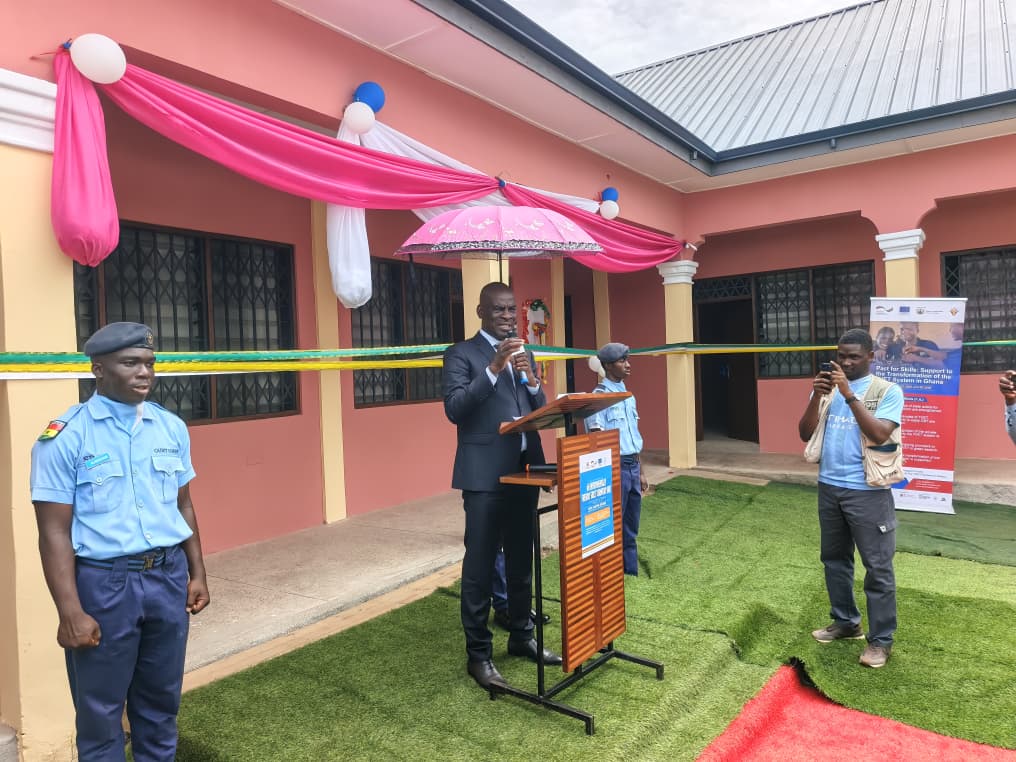
Mr Iddrisu disclosed the government’s plans for a dedicated TVET Fund to provide sustainable financing for infrastructure, equipment and skills development programmes.
“This government will dedicate to this country a TVET Fund in the coming days to provide speedy and sustainable resources to finance TVET,” he said.
He said government was also considering earmarking 10 per cent of annual GETFund allocations for TVET and disclosed that the World Bank had approved a 300-million-dollar facility to support secondary and technical education development nationwide.
According to him, the facility will support school rehabilitation, infrastructure upgrades and the construction of between 10 and 13 new secondary schools across the country.
Representing the German Ambassador to Ghana, Ms Chantel Lahmer, Policy Advisor at the German Embassy, said many girls pursuing technical education travelled long distances under difficult and sometimes unsafe conditions before arriving at school.
“How can a young woman fully focus on building her future when the journey to that future is already so difficult before the school day even begins?” she asked.
She described the dormitory as an investment in opportunity, safety and inclusion.
“This dormitory is a direct message that young women and girls belong in TVET. They belong in technical fields, workshops, laboratories, engineering and every space where Ghana’s future is being built,” she said.
The project, initiated under the Ghana Skills Development Initiative, received support from the European Union and the German Government and was completed after delays caused by the COVID-19 pandemic.
The facility is powered by solar energy and incorporates biodigester technology, making it a model for climate-smart educational infrastructure and green skills development.
Ms Lahmer, however, cautioned that infrastructure alone would not transform the sector.
“The long-term success of TVET also depends on sustainable financing. Quality training requires reliable sources for equipment, maintenance, teaching materials and instructors,” she said.
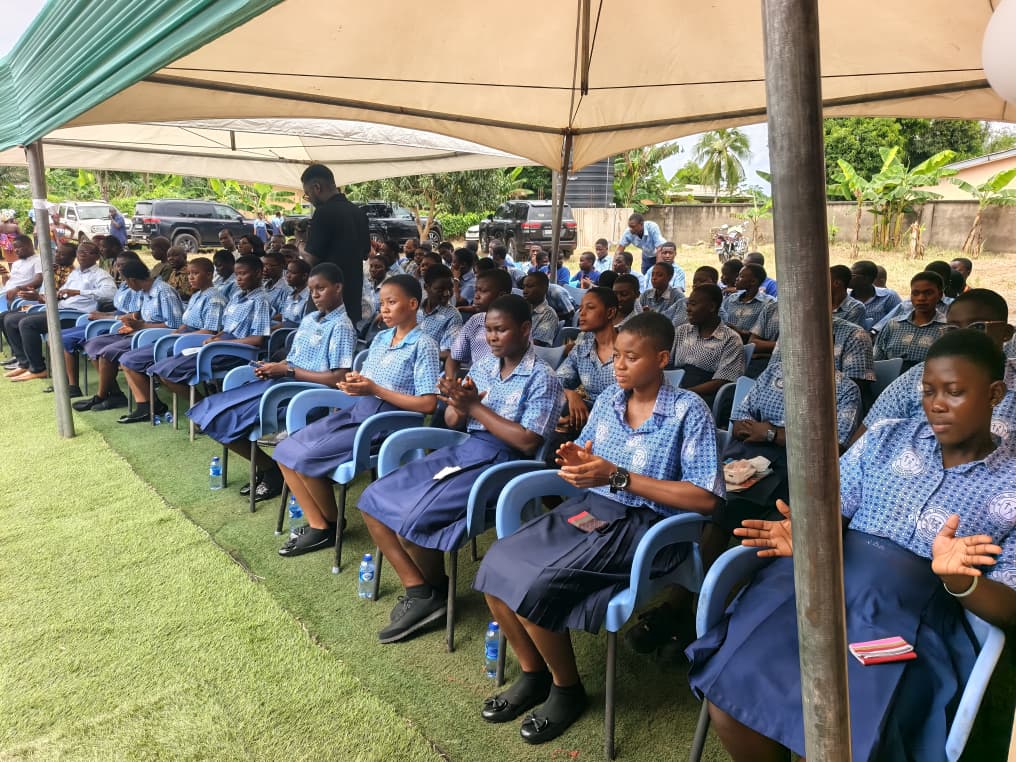
Speaking to journalists, Ms Gisela Spreitzhofer, Team Leader for Governance and Security at the European Union Delegation to Ghana, said the dormitory formed part of broader efforts to transform Ghana’s TVET ecosystem and prepare young people for emerging economic opportunities.
TVET, she noted, remained essential for creating decent jobs, supporting local value addition and driving an equitable, sustainable, green and digital economic transformation.
The dormitory project falls under a wider TVET transformation initiative jointly supported by the European Union and German Development Cooperation, with the EU contributing millions of euros towards sector reforms and skills development programmes.
Mr Teye-Bi-Teye Agualey, Principal of St. Paul’s Technical Institute, the school had only 187 female students out of a total enrolment of 2,769, reflecting the gender imbalance common across many technical institutions.
“Our school is predominantly male, but we have a female population of 187 girls out of a total student body of 2,769. This entire female population will be occupying this new facility,” he said.
He revealed that before completion of the dormitory, female students had been accommodated in teachers’ bungalows because of the absence of dedicated residential facilities.
“Before this, our main challenge was that the girls had to be housed in the teachers’ bungalows. Now they will relocate to the new dormitory, allowing us to release those bungalows back to our teaching staff,” he said.
Mr Agualey noted that the new facility would improve safety, privacy and learning conditions while helping attract more girls into technical programmes.
For Ghana, the new dormitory represents a broader policy shift that places technical skills, gender inclusion and sustainable development at the centre of efforts to create jobs and prepare young people for the future.
GNA
Kenneth Odeng Adade
Reporting by D.I. Laary