By Priscilla Oye Ofori
Accra, June 18, GNA – Panelists at a forum on women’s empowerment have called for the creation of more opportunities and platforms for women to demonstrate their leadership potential.
They noted that although many women had acquired the necessary skills and capacities, they often lacked the spaces and opportunities to showcase their expertise and assume leadership roles.
The call was made during a panel discussion at the second edition of the JAMILA International Women’s Forum, organised by the JAMILA Trust for International Development, a non-governmental organisation, in Accra.
The forum was held on the theme: “Empowering Women, Empowering Humanity: Breaking Barriers, Building Futures.”
The event brought together dignitaries, including representatives of the Ga Traditional Council, queen mothers, representatives of the Director-Generals of the Ghana Prisons Service, the Ghana National Fire Service (GNFS), the Ghana Military Police, civil society organisations, and academia.
Mrs Levinia Addae-Mensah, Executive Director of the West Africa Network for Peacebuilding (WANEP), said there was a misconception surrounding women’s empowerment, which suggested that women lacked power.
She explained that the real challenge was not the absence of power but the lack of opportunities for women to demonstrate and apply their capabilities.
“Sometimes you keep hearing, ‘We are doing something; let us bring a woman on board.’ It is often just about having a woman present. It should rather be about recognising the contribution, value, and perspectives that women bring,” she said.
“We bring women on board but often fail to give them meaningful responsibilities or decision-making roles.”
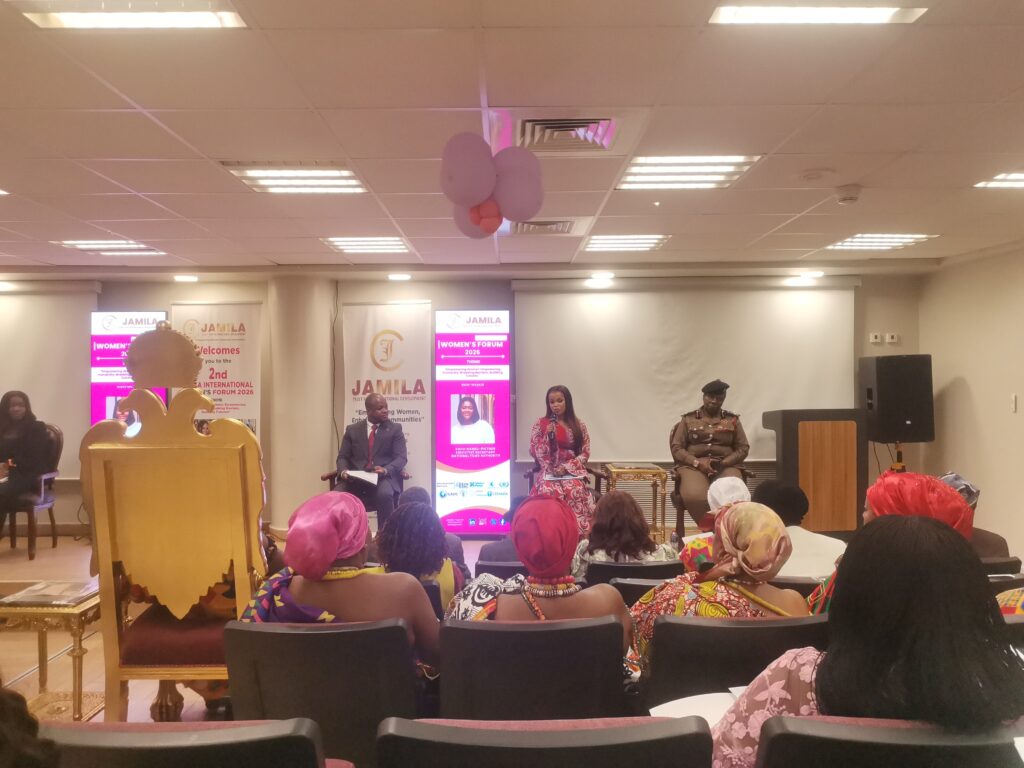
Mrs Addae-Mensah stressed the need to move beyond training women and instead build systems and policies that enable them to apply the skills they already demonstrate in homes, markets, and communities to broader roles in development, peacebuilding, and security.
She called for deliberate policy and institutional reforms, describing them as the real drivers of sustainable change.
Dr Felicia Odame, Board Director of the Alliance for African Women Initiative (AFAWI), emphasised that women’s empowerment was not a battle against men but a development issue that required the support and involvement of both men and boys.
Referring to the popular slogan, “What a man can do, a woman can do better,” she said: “I would rather say that what men can do, if they do it together with women, will lead to development. Let us all rise together because empowerment cannot be achieved by women alone.”
Mrs Rita Mills Kpormegbe, Relationship Officer at ABSA Bank Ghana, encouraged women, particularly entrepreneurs, to embrace digitalisation and leverage technology to enhance their businesses.
She highlighted the convenience of digital banking services, explaining that women could conduct transactions and access cash from automated teller machines (ATMs) without human intervention, enabling them to manage their businesses more efficiently.
Deputy Chief Fire Officer (DCFO) Doris Lamptey, Director of Welfare at the Ghana National Fire Service, speaking on behalf of the Director-General of the GNFS, urged women to aspire to excellence and emulate the achievements of prominent women in society through hard work, dedication, and perseverance.
The forum also recognised and honoured women who were driving positive change and making significant contributions to national development.
GNA
Edited by Agnes Boye-Doe
By Priscilla Oye Ofori