By Iddi Yire, GNA
Accra, May 16, GNA – Africa must position itself to lead in areas such as artificial intelligence, digital infrastructure, energy transition, and data sovereignty as African Continental Free Trade Area presents opportunities for market integration and growth, the Vice President Professor Jane Naana Opoku-Agyemang has said.
She said the Continent could not remain solely a consumer of externally built systems; rather, Africa must develop technologies and solutions rooted in its own realities and priorities.
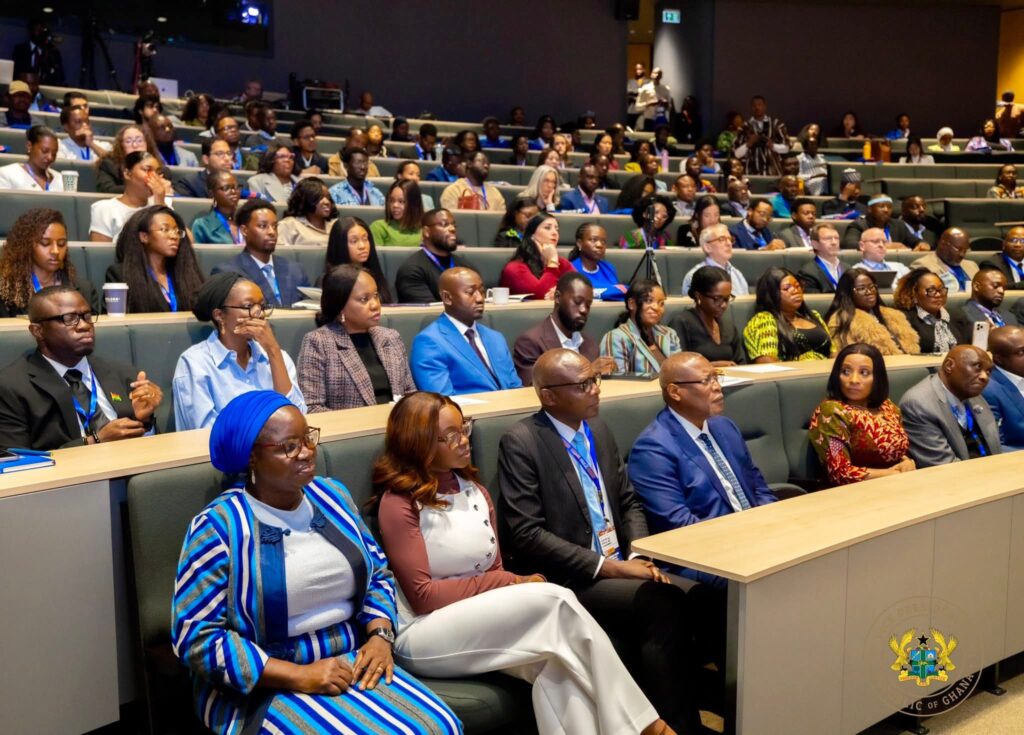
A statement issued by the Office of the Vice President said the Vice President said this when she delivered the keynote address at the 16th Oxford Africa Conference, organised by the Oxford Africa Society on the theme: “Anchoring Africa: Grounded Leadership in the Age of Disruption”.
The annual conference brings together leaders, academics, students, and innovators to reflect on Africa’s future in a rapidly changing world.
The Vice President said transformation depended on governance that remains disciplined, ethical, connected to implementation, and grounded in the people it serves.
She said effective leadership was defined by the daily responsibility of ensuring that institutions function and citizens feel the impact of policy.
It said while Africa continues to face significant challenges, the continent also possesses the capacity, talent, and resources required to shape its own future. Leadership in this era must focus on credible implementation, institutional resilience, and long-term economic transformation.
Ghana’s ongoing reforms to stabilise the economy, reduce dependency on raw material exports, and strengthen value addition—particularly within sectors such as cocoa processing—reflect this broader shift toward sustainable economic architecture.
Vice President Prof Opoku-Agyemang highlighted initiatives such as the 24-Hour Economy policy and the proposed Women’s Development Bank as practical efforts to integrate those often excluded from formal economic systems.
She said across Africa, women continue to form the backbone of informal trade and economic activity yet remained underrepresented within traditional financial structures.
She noted that the Women’s Development Bank seeks not only to provide financial support, but also to equip women with the skills and tools necessary to grow sustainably and participate more fully in economic transformation.
She also focused on the future of technology, trade, and African integration.
She also shared insights from my own experiences in academia and public service to underscore the importance of staying connected to communities and on-the-ground realities.
Vice President Prof Opoku-Agyemang said ultimately, Africa’s future would depend not only on the scale of disruption confronting the continent, but on how deliberately and collectively Africa chooses to organize itself to lead.
GNA
Edited by Linda Asante Agyei