By Samira Larbie, GNA
Accra, May 28, GNA – Hope for Future Generations (HFFG), in partnership with the International Medical Corporation Canada (IMCC-Ashipti), has launched a three-year project aimed at preventing Non-Communicable Diseases (NCDs) among school children in urban Ghana.
The project, dubbed the “ASHIPTI Project,” seeks to improve the physical health and well-being of children and increase awareness and knowledge on lifestyle-related diseases such as hypertension, diabetes, obesity and stroke.
The intervention, which runs from April 2026 to March 2029, would be implemented at St. Dominic Catholic School, Taifa, and St. Peter’s Catholic School, Osu, targeting about 640 students between the ages of 12 and 15 years.
Dr Felicia Akuribire, a Medical Doctor with the Korle-Bu Teaching Hospital, speaking at the launch expressed concern over the increasing incidence of hypertension, obesity and type 2 diabetes among children and young people.
She attributed the trend to unhealthy eating habits, physical inactivity and excessive screen time among children.
“These diseases begin with inflammatory processes that start at a very young age and later manifest fully in adulthood,” she said.
“In the past, children were more physically active. They played regularly and burnt calories naturally. Today, many children spend long hours behind computers and mobile phones with little or no physical activity.”
Dr Akuribire noted that studies showed that one in five children were either overweight or obese, increasing their risk of developing hypertension and diabetes later in life.
She said some studies had also identified hypertension among children within the 12 to 18 age bracket.
She called on parents, schools and communities to prioritise healthy lifestyles by reducing sugary drinks, promoting fruits and vegetables, encouraging exercise and limiting children’s screen time.
“We want children to form healthy habits early so that we do not continue to see young adults suffering from hypertension, kidney diseases and diabetes,” she stated.
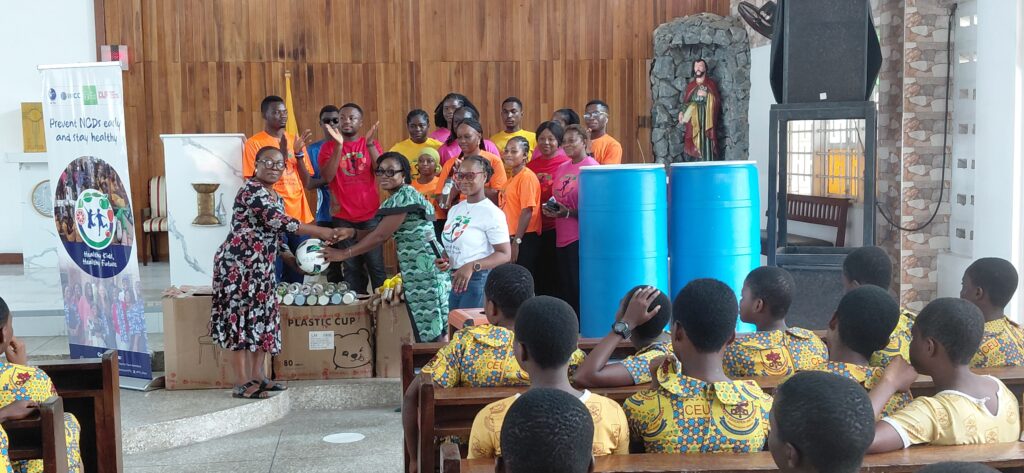
Ms Catherine Williams, Project Lead for the ASHIPTI, NCD prevention Project, said the initiative was first piloted in 2022 and yielded positive results, although it revealed a worrying lack of knowledge among school children about healthy diets and NCDs.
She said the expansion of the project from one school to two schools and from 100 to 640 beneficiaries reflected the commitment of IMCC-Ashipti to promoting preventive healthcare among children.
Ms Williams explained that, volunteers would visit the schools every Friday during Physical Education periods to engage students in activities such as football, volleyball, skipping, sack races, ampe and running.
To support the programme, the project donated 640 skipping ropes, 640 water bottles, 50 sports sacks, footballs, meal charts, physical activity catalogues and educational materials.
She said sporting and cooking competitions would also be organised biannually to promote healthy lifestyles among the students.
She expressed concern over the increasing preference for processed and fast foods among children.
“During our baseline assessment, some children confidently described foods such as Indomie, pizza, French fries, shawarma and fried chicken as healthy foods. That alone tells us there is a huge knowledge gap,” she said.
The Project Lead added that the programme would also engage parents through Parent-Teacher Association (PTA) meetings and advocate policies to regulate unhealthy food products and sugary beverages flooding local markets.
Mrs. Theresa Oppong Mensah, School Health Education Programme (SHEP) Coordinator of the Ghana Education Service, described the project as timely and necessary.
She said Ghana was witnessing a growing burden of NCDs among both adults and children due to changing lifestyles, unhealthy diets and reduced physical activity.
“If urgent action is not taken, we risk raising a generation that is academically equipped but physically unhealthy,” she warned.
Mrs. Oppong Mensah noted that education and health were inseparable, stressing that unhealthy children could not effectively learn or achieve their full potential.
She commended HFFG and its partners for demonstrating leadership in addressing a major public health concerns affecting children.
“This project goes beyond awareness creation. It empowers children with knowledge, promotes physical activity and encourages healthy eating habits,” she said.
She urged students to take their health seriously by exercising regularly, eating nutritious foods, drinking enough water and reducing the intake of sugary drinks and unhealthy snacks.
Ms Felicity Sarah Armah, the Headmistress of St Peters Catholic School, expressed gratitude to HFFG for the initiative and donating the items to the school.
She assured that the items would be used for the intended purpose to ensure the prevention of NCDs among children.
The ASHIPTI Project forms part of broader efforts to address Ghana’s growing burden of NCDs, which accounted for 43 per cent of all deaths in the country in 2016.
Health experts warn that rapid urbanisation, sedentary lifestyles and increased consumption of highly processed foods continue to fuel the rise in hypertension, diabetes and obesity among Ghana’s youthful population.
GNA
Edited by George-Ramsey Benamba
Reporter: Samira Larbie