By Hafsa Obeng
Accra, Aug. 8, GNA – The National Peace Council (NPC) has called for stronger stakeholder collaboration to deepen peace education in schools and sustain Ghana’s peace.
The Council said equipping young people with dialogue, tolerance, mutual respect and non-violence was critical to addressing emerging challenges, including misinformation, cyberbullying, hate speech, intolerance and substance abuse.
Madam Janet Sarney-Kuma, Director, Capacity Development and Outreach, NPC, made the call at a media briefing in Accra on the National Peace Council School Engagement Programme.
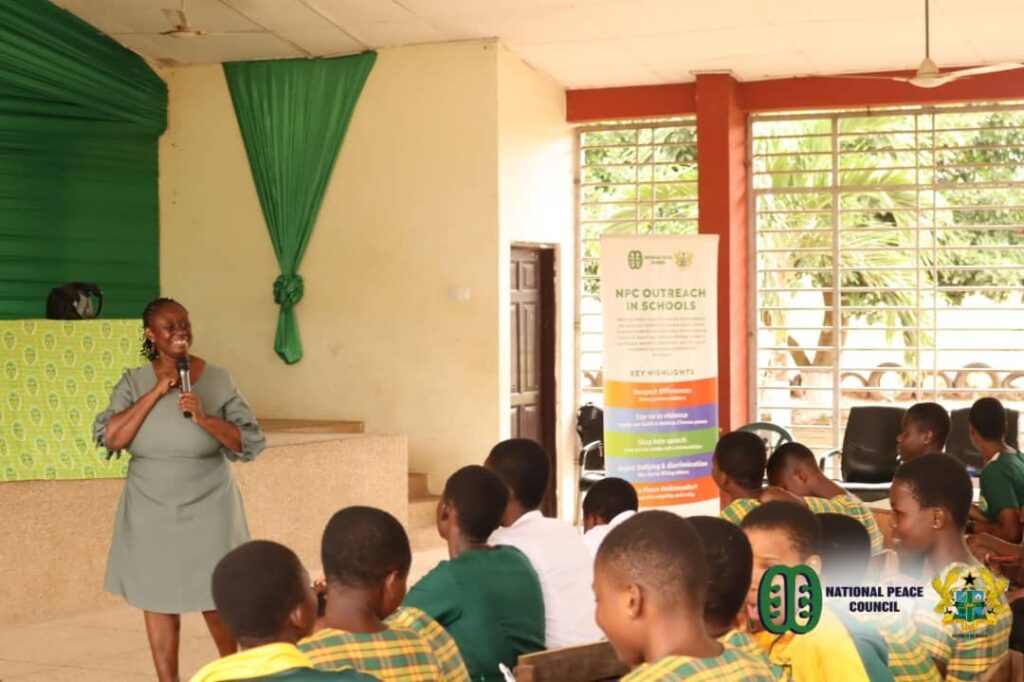
She said preventing conflicts helped keep schools open, while equipping learners with the values of dialogue and responsible citizenship enabled them to become lifelong ambassadors of peace.
Madam Sarney-Kuma said the programme sought to strengthen public understanding of peace education and collaboration with the media in highlighting young people’s contributions to peace in schools and communities.
She said schools were not only centres of academic learning but also places where character was formed, leadership nurtured and responsible citizenship developed.
“If Ghana is to sustain its hard-earned peace, we must intentionally cultivate the values of
dialogue, tolerance, respect and non-violence in our schools and classrooms,” she said.
Madam Sarney-Kuma said the Council worked with the Ghana Education Service, school authorities and other partners to promote peace education through classroom engagements, peace clubs, civic education, leadership mentoring and community outreach.
She said the programme had reached schools across all regions and empowered thousands of learners to serve as ambassadors of peace in their schools, homes and communities.
Madam Sarney-Kuma said peace education had become increasingly important because of young people’s exposure to misinformation, cyberbullying, hate speech and other social vices.
“Peace education is not a luxury. It is a necessity. It equips learners with the values and life skills to resolve differences peacefully, appreciate diversity and become responsible citizens,” she stated.
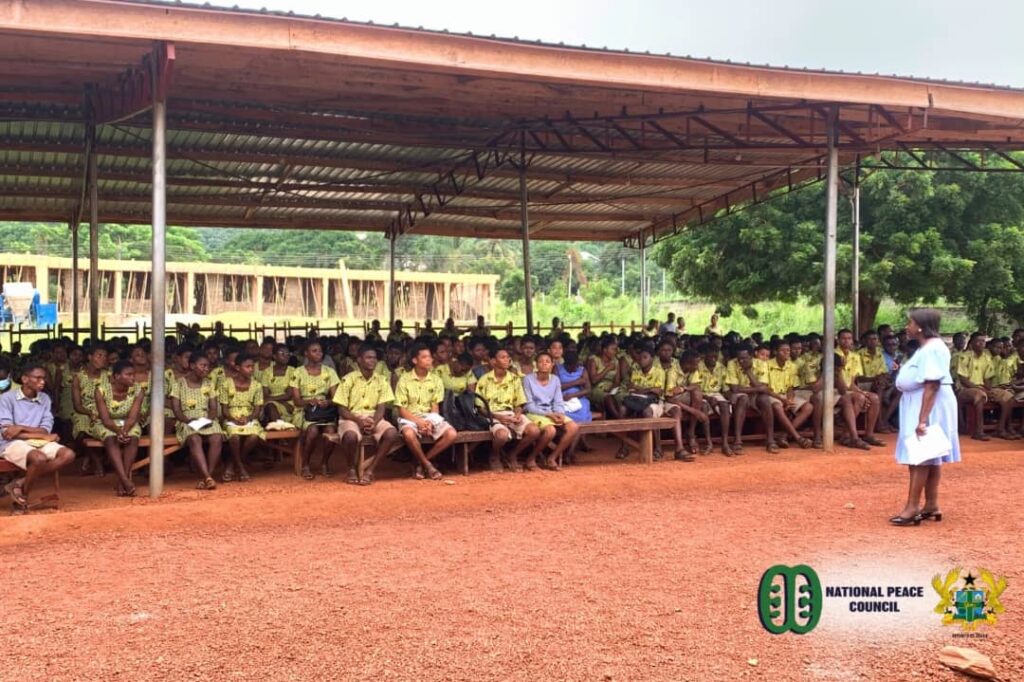
She said the programme was yielding positive results, with learners embracing dialogue rather than violence, promoting mutual respect through peace clubs and demonstrating leadership among their peers.
Madam Sarney-Kuma called on the Ghana Education Service, parents, teachers, faith-based organisations, traditional authorities, civil society organisations, development partners and the private sector to support peace education.
The Council also appealed to the media to give greater prominence to stories promoting peace and social cohesion.
“Conflict often dominates headlines, yet peace stories rarely receive the same attention. We invite you to help change this narrative by highlighting stories of young peace ambassadors in schools and promoting dialogue in communities where understanding is transforming lives,” she noted.
Madam Sarney-Kuma said the Council aspired to see every school become a centre for peace education and every learner become a champion of dialogue and national cohesion.
She urged stakeholders to continue working together to build a culture of peace, “one school, one student, one teacher and one community at a time.”
GNA
Edited by Kenneth Sackey
Reporter: Hafsa Obeng