By Francis Ntow,GNA
Accra, May 24, GNA – Mr Thomas Nyarko Ampem, the Deputy Finance Minister, has called on African leaders to make the continent a destination for investment rather than a recipient of aid in financing its development agenda.
He noted that the continent’s enormous transformation could only be achieved by harnessing the potential of its financial markets for long-term capital at scale through credible, innovative, and deep integration
At the close of the tw0-day ACI World Congress in Accra, the lawmaker encouraged continental leaders and financial market players to reposition Africa as an investment hub, generating the needed patient capital to drive economic transformation and stability.
“… Africa still receives a disproportionately small share of global capital flow. This must change; Africa must no longer be viewed merely as a destination for aid but as a destination for investment,” he said.
That, Mr Nyarko Ampem said, required patient capital, innovative financial structures, deeper and more integrated bond markets, blended finance solutions, venture capital and private equity, and sustainable financing instruments.
“We want African capital to finance African transformation, and we want our financial markets to become engines of innovation, enterprise and long-erm prosperity,” he said.
Mr Nyarko Ampem cited data from the African Development Bank (AfDB), which estimated that the continent faced an annual infrastructure financing gap of between US$68 billion and US$108 billion, saying it presented an avenue for liquidity management, national and continental transformation.
With one in every four people in the world being African by 2051, the Deputy Finance Minister called for strong economies, built on institutions, and enabling financial markets gain confidence in policy direction, fiscal discipline, and in Africa’s future.
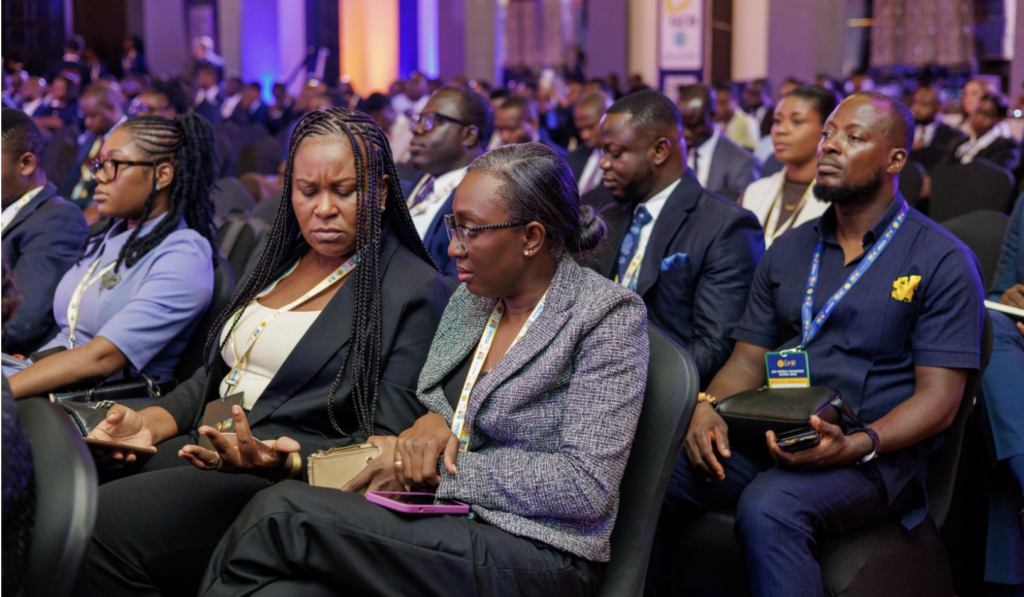
“Ultimately, financial markets must expand opportunity, finance information, support enterprise and improve the lives of people,” he said, urging that the continent’s young population, expanding digital ecosystems, rising urbanisation and untapped financing potential were used as strategic assets to convert savings into productive investments.
“The real question is no longer whether Africa has potential, but whether African financial systems are sufficiently prepared to finance the continent’s transformation – whether markets are deep enough to mobilise private capital, institutions are strong and credible enough to sustain investor confidence, and policy frameworks are designed to encourage innovation while preserving stability,” he noted.
The Deputy Finance Minister called on the financial professionals, regulators, investors, and innovators to treat the Accra gathering as a platform for building the partnerships, innovations, and financial architecture needed to define the next era of growth, resilience, and shared prosperity for Africa and the world.
He said the future of global finance would increasingly be shaped in cities like Accra, Kigali, Lagos, Lusaka, and Nairobi, “and it will belong to economies that are stable, innovative, resilient, and forward-looking.”
Ghana, he said, was determined to support Africa’s financial markets integration, with reforms to strengthen confidence, deepen trust in institutions, and mobilise capital towards infrastructure, technology, industrialisation, entrepreneurship, and sustainable growth.
GNA
Edited by Agnes Boye-Doe
24 May 2026
Picture attached
Reporter: Francis Ntow