By Maxwell Awumah
Ho, Jan 29, GNA – The Women with Disability Development and Advocacy Organisation (WODAO) has completed a training workshop for Zone Three women’s rights groups at Jasikan in the Oti Region, aimed at strengthening disability inclusion and advocacy among grassroots organisations.
The training forms part of a series held in Ho and Hohoe, bringing the total number of participants to 120. It aims to deepen advocacy, improve disability inclusion, and enhance the relevance of women’s rights interventions at the grassroots level.
The programme, under WODAO’s Disability Development and Accessibility Training for Women’s Rights Organisations (DDATWROs), responds to capacity gaps identified through project learning and assessments. These revealed limited understanding of disability inclusion, accessibility, and the intersection between gender and disability among grassroots women’s rights groups.
The training was organised under the Strengthening Civil Society Representation of Women with Disabilities Project, an EU-funded initiative implemented in partnership with Sightsavers. The project seeks to strengthen the capacity of civil society organisations to engage meaningfully in development and decision-making processes while ensuring that women with disabilities are not left behind.
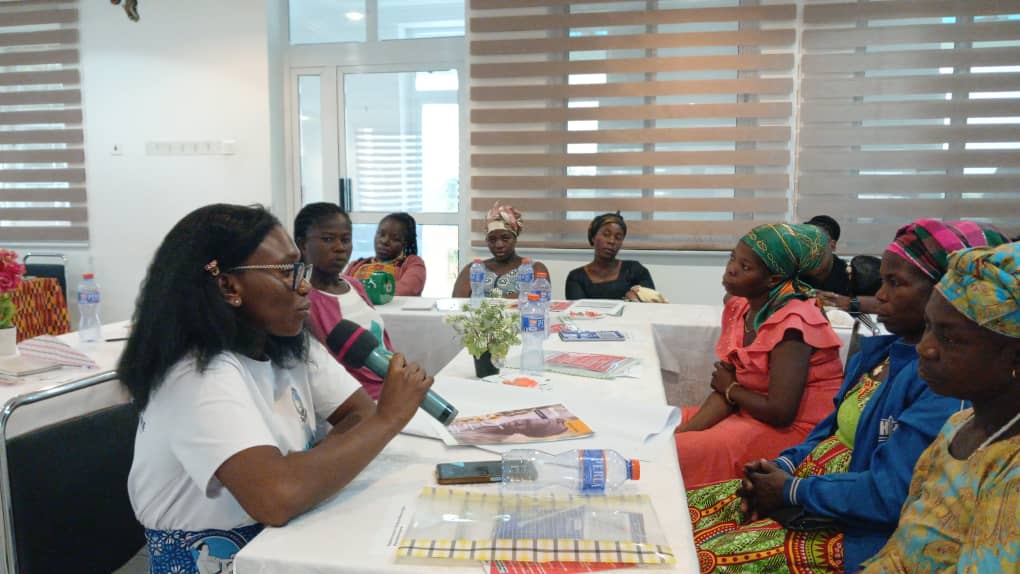
Madam Veronica Denyo Kofiedu, Executive Director of WODAO, said women with disabilities continue to face entrenched barriers driven by gender inequality, disability-based exclusion, poverty, and limited participation in decision-making.
She called for disability mainstreaming to ensure that the rights and needs of persons with disabilities are incorporated into the planning, implementation, and evaluation of all programmes and projects to benefit everyone, remove barriers, and promote equity in line with national and international laws.
Madam Kofiedu emphasised that culture is dynamic and criticised the continued use of derogatory language to describe disability. She cited a November 2020 study by Ghana Somubi Dwumadie (Ghana Participates Programme), which found that disability-related terms in local languages often reinforce stigma and discrimination, calling for stronger advocacy to reverse the trend.
She stressed that the human rights of persons with disabilities are equal to those of all people and cautioned against viewing disability through a charity or oppression lens.
She outlined key disability constituencies, including persons with visual, hearing, physical, cognitive, psychosocial, and multiple impairments, as well as those with chronic illnesses and mental health conditions.
Madam Kofiedu said the training promotes a rights-based and accountable programming approach focused on inclusive governance, political participation, and the prevention of gender-based violence against women with disabilities.
Mr George Edem Kofiedu, Project Officer of WODAO, said over two million Ghanaians, representing about eight per cent of the population, live with disabilities, while about 16 per cent of the global population has some form of disability, with nearly 80 per cent living in low- and middle-income countries.
He identified weak enforcement, poor data systems, slow infrastructure compliance, limited budgets, and low awareness among duty-bearers as persistent challenges.
The training forms part of WODAO’s cascading capacity-building model, which transfers knowledge from national and regional levels to community-based actors to ensure sustainability and local ownership.
WODAO hopes the initiative will help catalyse stronger and more inclusive women’s movements across the Oti and Volta regions and beyond.
GNA
Edited by: Audrey Dekalu