By Edward Acquah, GNA
Accra, Jan. 28, GNA – Mr Roey Gilad, the Israeli Ambassador to Ghana, Liberia and Sierra Leone, has called for the preservation of Holocaust memory as a moral obligation that must be consciously passed on to future generations.
He said remembrance must remain a shared responsibility, particularly as Holocaust survivors become fewer, noting that technology could not replace the power of personal testimony and deliberate storytelling.
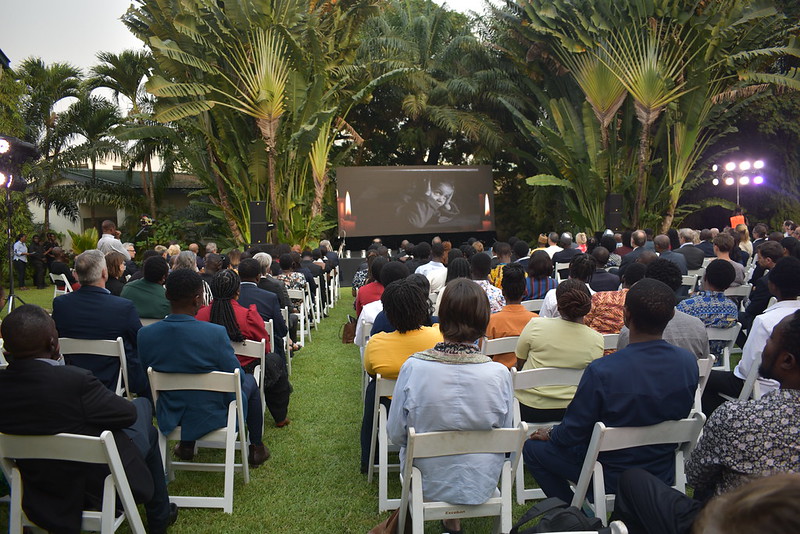
Mr Gilad made the call on Tuesday evening in Accra at a ceremony to mark International Holocaust Remembrance Day, held at the Residence of the German Ambassador to Ghana, on the theme: “Holocaust remembrance for dignity and human rights.”
The ceremony featured the lighting of memorial candles, prayers, poetry recitals, musical performances and the screening of a short documentary on the Holocaust.
“It is a moral obligation that cannot be ignored, nor forgotten. If we will not tell the story to our children, then who will?” Mr Gilad said.
Reflecting on the challenge of remembrance as survivors pass on, he said that although technology and artificial intelligence offered new possibilities, nothing could replicate the impact of live testimony.
Drawing from Jewish tradition, he cited the biblical instruction to pass memory from parent to child, saying the same principle must guide Holocaust remembrance to ensure its lessons endure.
Mr Frederik Landshöft, the German Ambassador to Ghana, described the Holocaust as a “civilisational rupture” and a crime against humanity committed by Germans in the name of Germany, stressing that remembrance carried a permanent responsibility.
“As a German, I say this clearly and without qualification: the Holocaust was a crime against humanity,” he said, adding that remembrance had no final chapter and must not fade with time.
Mr Landshöft warned that antisemitism remained a present danger, citing rising incidents globally, and said the lessons of the Holocaust demanded vigilance in defending human dignity, the rule of law and international humanitarian principles.
Mr Zia Choudhury, the United Nations Resident Coordinator in Ghana, said the Holocaust was not inevitable and that its architects acted openly, enabled by hatred, distortion, denial and indifference.
“When we remember these truths, we remember the humanity of each victim,” he said, urging renewed commitment to stand against antisemitism, racism and all forms of discrimination.
Mr James Gyakye Quayson, Deputy Minister for Foreign Affairs, described a recent visit to the Holocaust Museum in Israel as deeply moving, saying the atrocities reflected “the other side of humanity,” and urged societies to learn from history and choose compassion over hatred.
International Holocaust Remembrance Day is observed annually on January 27 to mark the liberation of the Auschwitz-Birkenau concentration camp by Soviet forces in 1945.
The Holocaust refers to the systematic persecution and murder of six million Jews by Nazi Germany and its collaborators between 1933 and 1945, during World War II.
GNA
Edited by Kenneth Sackey