GNA feature by James Amoh Junior
Accra, Dec. 30, GNA – On Christmas night, the Atlantic Ocean did not retreat into silence.
It breathed, sang and shimmered alongside thousands of revellers who gathered along Accra’s coastline, turning familiar beaches into open-air theatres of joy, memory and motion.
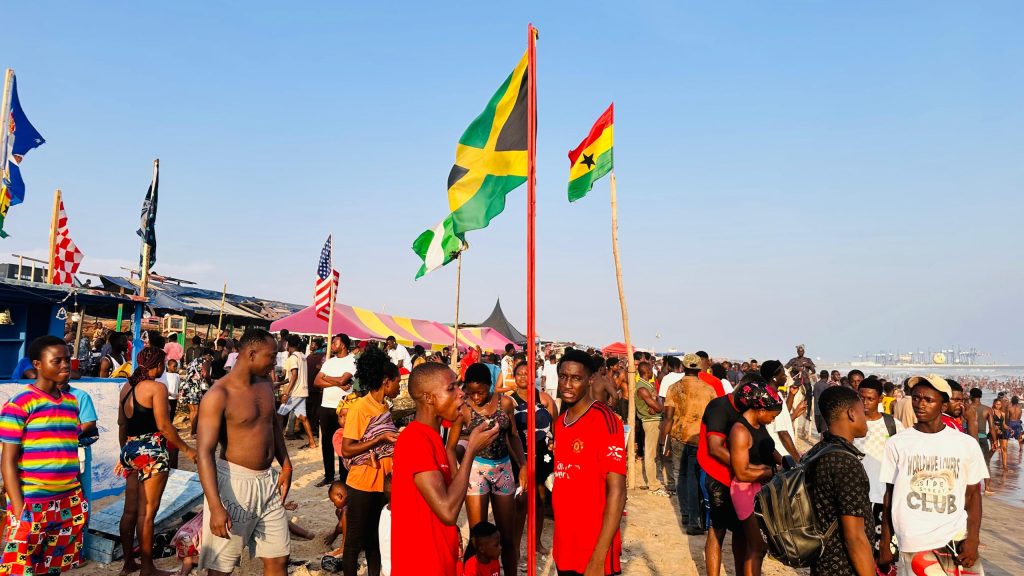
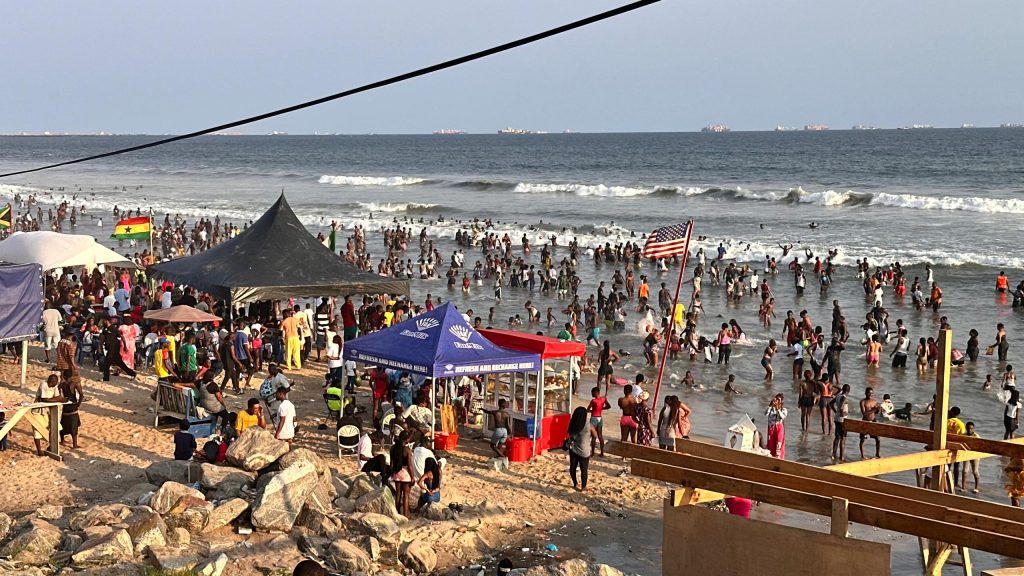
From Sakumono to Labadi, Laboma and beyond, the shoreline pulsed with music, laughter and life, as Ghanaians and visitors alike colonised the beaches as communal spaces, not merely of leisure, but of shared identity, cultural expression and economic opportunity.
It was a striking contrast to scenes from just a few years ago, when the beaches stood eerily deserted under COVID-19 restrictions, their calabashes empty and waves rolling onto unattended sand.
This Christmas the ocean bore witness to revival, human, cultural and economic.
Sakumono Beach, where the story begins
At Sakumono Beach, the evening unfolded gently before exploding into colour. The sun slipped behind the horizon, casting amber streaks across the water as families arrived in clusters, some with coolers balanced on shoulders, others clutching plastic chairs.
Children dashed barefooted across the sand, their laughter competing with the rhythm of the waves.
Small bonfires flickered to life, illuminating faces drawn together by music and shared anticipation.
The scent of grilled tilapia, spiced kebabs and roasted plantain drifted across the shore, merging with the salty ocean breeze.
“It feels like Ghana again,” Maame Esi, a 27-year-old university graduate, dancing lightly to Afrobeat rhythm, says.
She adds: “The last time I planned to come here was during Covid-19. But for a long time, we were careful, quiet, restricted. Tonight, we are free and together.”
Nearby, Kojo Mensah, a father of three from Tema, watched his children race toward the waterline.
“This is how memories are made. Long after Christmas clothes are forgotten, they will remember the beach,” he says.
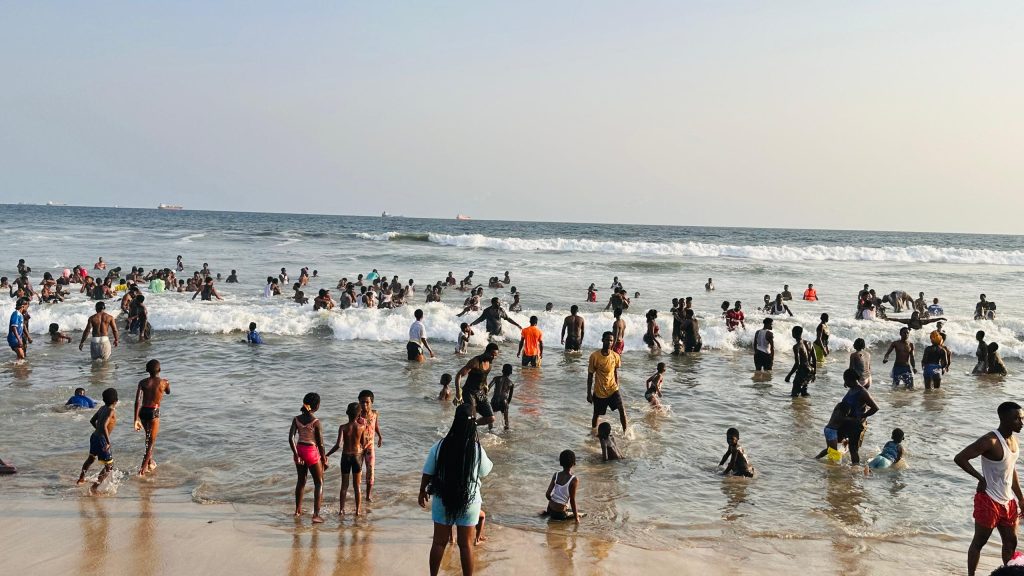
Sakumono’s appeal lay not only in its festivity but in its accessibility, a democratic space where traders, students and tourists and the commoners converge without barriers.
Labadi and Laboma: The pulse of the city
Further west, Labadi Beach roared with intensity. Known for its high-energy atmosphere, the beach transformed into a carnival ground.
Live drumming groups pounded rhythms deep into the night, dancers formed spontaneous circles, and DJs blended reggae, hiplife and amapiano into a seamless soundtrack.
At Laboma Beach, the mood softened but remained electric. Families picnicked under umbrellas, couples strolled hand in hand along the shoreline, and young creatives documented the night through cameras and phones, capturing silhouettes against the moonlit sea.
“This is our first Christmas in Ghana,” said Akosua Boamah, a UK-based Ghanaian visiting with her spouse.
“The beach feels spiritual. It’s celebration, but also reconnection.”
Her words reflected a broader trend, the return of the diaspora and the growing pull of Ghana’s coastal culture.
Tourism numbers behind the revelry
The scenes on Accra’s beaches mirrored Ghana’s rising tourism fortunes.
According to the Ghana Tourism Authority, international tourist arrivals exceeded 1.29 million in 2024, generating approximately US$4.8 billion in revenue, the highest in the country’s history.
Globally, the UN World Tourism Organization reports that international travel rebounded to nearly 90 per cent of pre-pandemic levels in 2024, with cultural and coastal destinations leading recovery.
Ghana’s “December in GH” initiative has become a magnet, with beaches serving as both literal and symbolic gateways, places where visitors encounter Ghana’s warmth before they experience its museums, festivals and historic landmarks.
Domestic tourism has also surged, with more than 15 million internal trips recorded in 2023, injecting billions of cedis into the local economy.
For many urban residents, Accra’s beaches are the most immediate and affordable tourism experience.
Livelihoods on the shoreline
For small-scale vendors, the festive season was not just celebration, it was economic survival.
“December feeds my family,” Samuel Atta, a grilled tilapia vendor at Labadi says, and adds that “When the music comes, the money comes.”
Food vendors, photographers, drummers, horse-ride guides and craftspeople all benefited from the crowds, turning the beaches into informal economic hubs.
Each plate sold, each souvenir purchased, rippled through households far beyond the sand.
The unfinished conversation: cleanliness and care
Yet beneath the joy lay a sobering reality. By dawn, traces of the night remained, plastic bottles, food wrappers, abandoned sandals.
Environmental advocates warn that the sustainability of beach tourism hinges on cleanliness and responsible use.
Pollution threatens not only marine ecosystems but Ghana’s reputation as a clean, attractive destination.
Some revellers took matters into their own hands, forming small clean-up groups before leaving.
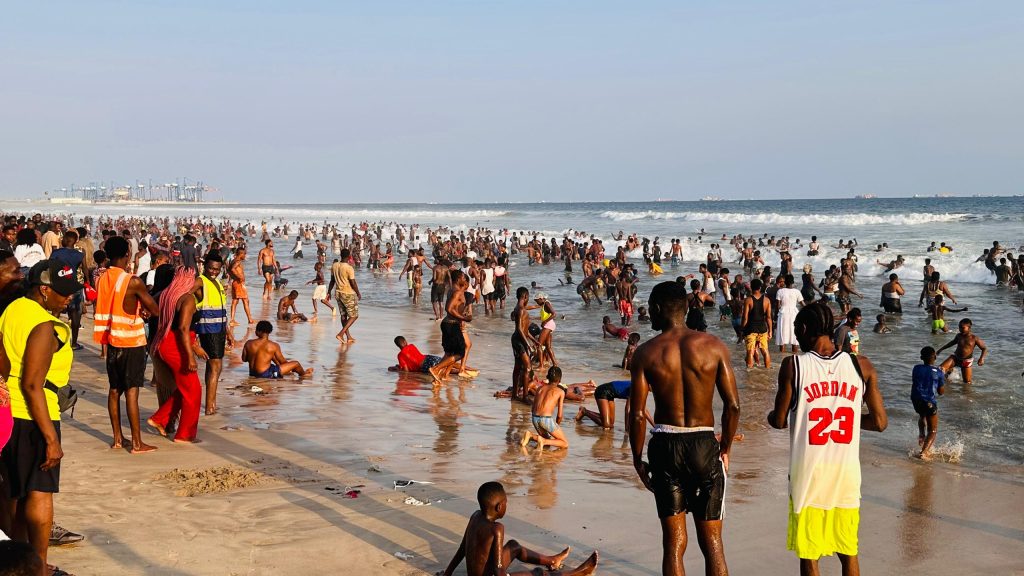
Others called for stronger municipal assembly presence and better waste infrastructure to improve sanitation at the beaches in Ghana.
“Enjoyment must come with responsibility. If we destroy what we love, the joy will not last,” Esi Hammond, a beachgoer at Sakumono, said.
The Ministry of Tourism, Culture and Creative Arts has repeatedly stressed that clean beaches are foundational to tourism growth, urging collaboration among local authorities, private operators and the public.
More than sand and sea
As the New Year dawned, the beaches gradually exhaled. Music faded, bonfires died down, and footprints dissolved under the tide. But what lingered was meaning.
Accra’s beaches, during Christmas and New Year, became mirrors, reflecting Ghana’s resilience, its hunger for joy, its economic creativity and its unfinished environmental responsibilities.
They were not merely places people visited; they were spaces people inhabited; emotionally, culturally and collectively.
In that sense, the Atlantic did more than receive waves. It held stories.
And for a nation steadily reclaiming its place on the global tourists map, those stories may yet be its strongest currency.
As dawn crept in, fishermen returned quietly to the shore, their canoes slicing through waters that only hours earlier had echoed with laughter and drums.
Early joggers traced fresh paths across the sand, stepping over remnants of the night before, while the sea calmly reclaimed its space, erasing footprints but not memory.
The beaches, once again subdued, seemed to rest, as if catching their breath after carrying the weight of a nation’s celebration.
In those quiet moments after the crowds thinned, Accra’s coastline revealed its enduring truth: that beyond festivity, beyond tourism and seasonal revelry, the beaches are living archives of Ghanaian life.
They are where joy gathers freely, where the past and present meet at the water’s edge, and where the simple act of coming together becomes a statement of hope.
Long after the music fades, the Atlantic continues its watch; steady, patient, and forever holding Ghana’s stories in its tide.
GNA
Edited by Samuel Osei-Frempong