By Muyid Deen Suleman
Accra Oct. 28, GNA–Journalists and other media practitioners have been urged to take advantage of the Right to Information law and harness it fully to promote accountable governance in the country.
Mr Zakaria Tanko Musah, a Lecturer at the University of Media, Arts, and Communication – Institute of Journalism (UniMAC-IJ), who made the call, said the RTI law should be used as an instrument to advocate and strengthen accountable governance at all levels.
He pointed out that the enactment of the RTI Law by the Ghanaian Parliament on March 26, 2019, after a protracted journey of nearly two decades, had made public institutions become aware of their actions that could put them on the spotlight.
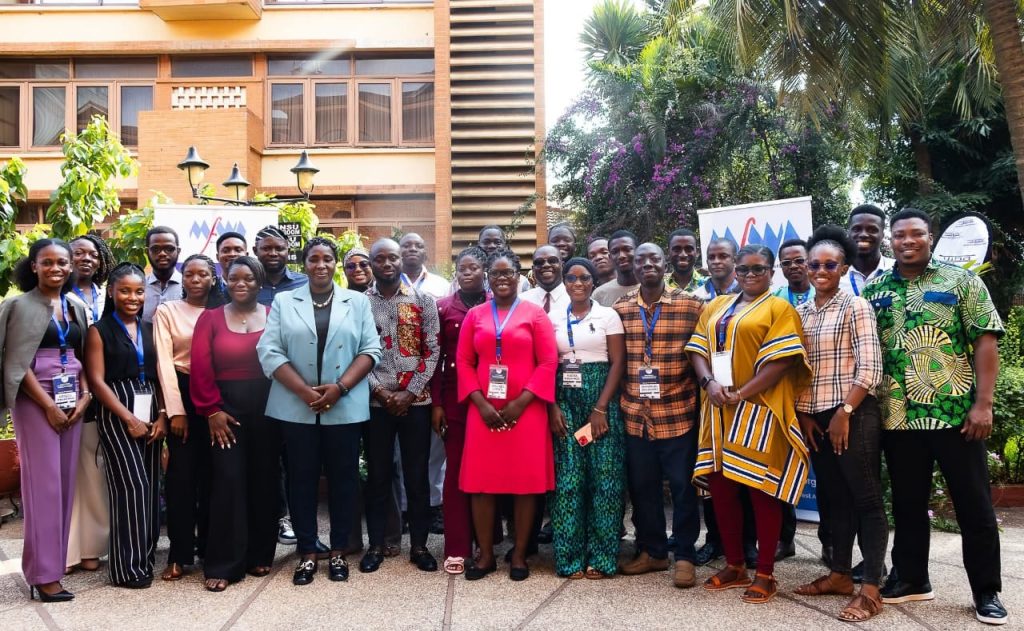
Mr Musah made the call at a three-day training session organized by the Media Foundation for West Africa (MFWA) for some 30 journalists selected from across the country.
The MFWA is a regional independent non-governmental organization with a network of national partner organizations spanning all 16 countries in West Africa.
It is also recognised as the largest and most influential media development and freedom of expression organisation in the region, holding UN ECOSOC (Economic and Social Council) consultative status.
The training was part of the second cohort of MFWA’s initiative titled, “Countering Corruption through Accountability Journalism and Improved Freedom of Expression.”
Mr Musah reminded the participants that every public institution was mandated to appoint an information officer, and under no circumstances should the absence of such an officer served as a barrier to obtaining information, unless explicitly stipulated by exceptions in the law.
He urged media practitioners to persist in their pursuit of information from public institutions, particularly at a time when officials may resort to propagandist tactics to impede their efforts.
Mrs Aurelia Ayisi, a lecturer from the Department of Communication Studies at the University of Ghana, who served as a facilitator, guided participants on the topic: “Gender-differentiated corruption.”
She encouraged media practitioners to critically examine how power dynamics and gender relations influenced corrupt practices and to report such narratives with rigor.
The training also encompassed discussions on media law and ethics, gender-differentiated corruption, among other pertinent topics.
The training initiative is part of the Participation, Accountability, Integrity for a Resilient Democracy (PAIReD) programme, commissioned by the German Federal Ministry for Economic Cooperation and Development (BMZ).
It is co-financed by the European Union (EU) and the Swiss State Secretariat for Economic Affairs (SECO) and is implemented by GIZ in collaboration with Ghana’s Ministry of Finance.
The final session is anticipated to occur in January and will concentrate on Data Journalism and Fact-Checking.
Participants expressed their gratitude to MFWA for the training and urged the organization to persist in its advocacy for governance accountability.
GNA
Edited by Kwabia Owusu-Mensah/Linda Asante Agyei