By Eric Appah Marfo
Accra, Sept. 18, GNA – A theologian has encouraged the translation of the Bible into more local languages to strengthen Ghanaian Christian faith and preserve Ghana’s rich cultural identity.
Reverend Professor B. Y. Quarshie, Former Rector of the Akrofi-Christaller Institute, said hearing God’s word in one’s mother tongue strengthened spirituality, safeguarded cultural values, and equipped believers to resist false teachings.
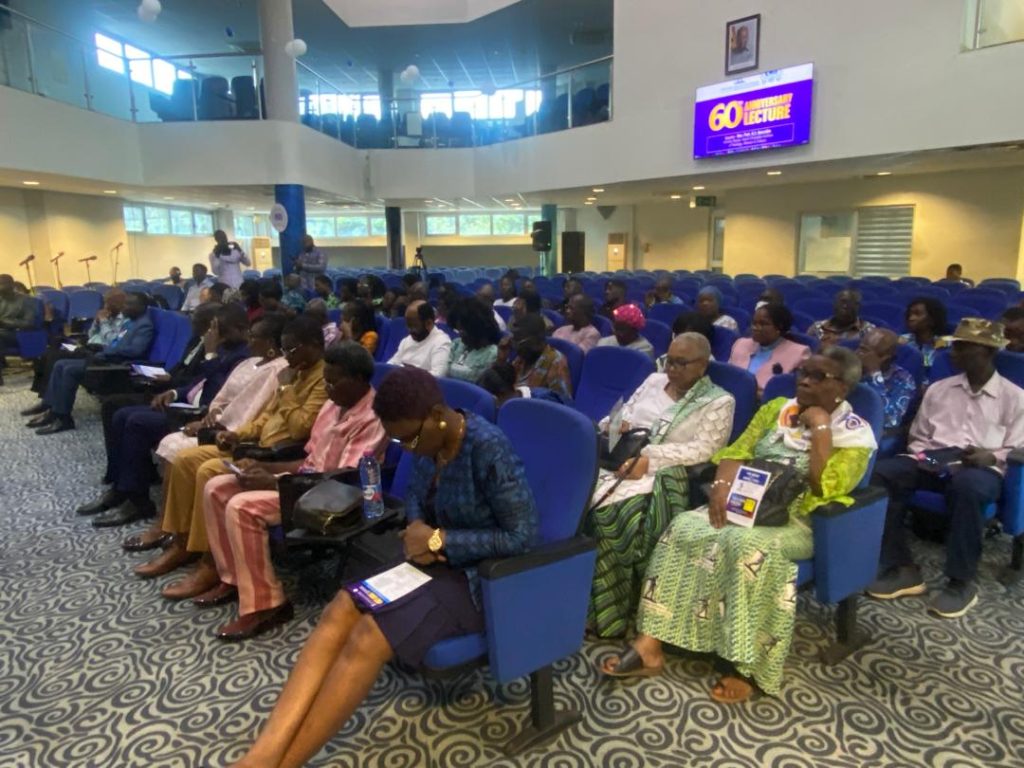
He made the call at the 60th Anniversary Lecture of the Bible Society of Ghana (BSG) in Accra, on the theme: “60 Years of the Bible Society of Ghana: Revitalising Our Bible Ministry for Greater Impact.”
He said the impact of the BSG would be realised when “a mother tongue Bible—not an English Bible, but a mother tongue Bible—is in the hands of every Christian,” including digital and online versions.
Rev. Prof. Quarshie stressed the need for new translations and periodic revisions to reflect the dynamism of language and culture, urging Christians not only to own but also to engage daily with Scripture in their mother tongue.
He said language was more than communication, noting: “God did not make a mistake when He created us with our languages. They embody our culture and transmit it to younger generations. If we lose our languages, we lose ourselves.”
He expressed concern over the decline in the teaching of local languages in schools, describing it as a setback to holistic education and national development.
Without cultural grounding, he said, many young people would lack values and identity, making them vulnerable to corruption and selfishness.
The Theologian also proposed the production of more diglots, including versions that combined two Ghanaian languages rather than English, and urged that BSG editions remained affordable through local support.
“Diglot” comes from the Greek words for “two” and “tongue” (or language) and can be used as an adjective meaning bilingual or a noun for a bilingual book or edition.
He encouraged churches across denominations to mobilise members as registered supporters of the BSG, adding that owning or reading the Bible was not enough unless its values were lived out.
“According to the 2021 Population and Housing Census, 71.3 per cent of Ghanaians identify as Christians. But this claim is not reflected in our national life,” he said, decrying the prevalence of selfishness, corruption, immorality and political dishonesty.
“When BSG’s Bible ministry is revitalised for greater impact, I expect that Ghanaian Christians will not only bear the name but live by it. Jesus said, ‘By their fruit, you shall know them’ (Matthew 7:16).”
He urged the BSG to intensify translation work, expand distribution, and make editions more affordable.
Professor Mrs. Henrietta Mensa-Bonsu, Justice of the Supreme Court, who chaired the event, commended the lecture and highlighted the importance of adapting Bible ministry to modern realities.
She acknowledged Prof. Quarshie’s emphasis on local languages but urged that the changing dynamics of Ghanaian families and societies be taken into account.
“So many people marry across ethnic groups that we do need our sociologists to study what our societies have become and to give advice,” she said.
Justice Mensa-Bonsu recounted personal experiences from her schooling days to illustrate the challenges of learning in local languages and the need to redefine “mother tongue” in contemporary Ghana.
She said while languages shaped culture and values, their application must reflect present-day contexts, adding that the BSG should focus more on the youth by producing Bible resources that resonated with them.
She proposed creative means of depicting the African presence in Scripture, citing examples such as the Ethiopian eunuch, Simon of Cyrene and Kushite figures.
“These days, young people are used to cartoons and visual content. Can we reach them with cartoons that look like us? Why don’t we have glossy books with black people, so that we do not perpetuate the impression that Christianity is foreign?” She asked.
Justice Mensa-Bonsu commended the BSG for making the Bible affordable and accessible.
“If the Bible was so expensive that one had to choose between the next meal and the Bible, many would not acquire it. I truly salute you for the work that you do,” she said.
She encouraged the BSG to reintroduce membership drives in churches to sustain its ministry.
GNA
Edited by Samuel Osei-Frempong