By Joyce Danso
Accra, Sept. 10, GNA – Fifty Civil Society Organisations (CSOs), government officials, and donor partners have converged on Accra to assess Ghana‘s Human Rights progression, retrogression, implementation and lapses.
At a two-day national workshop, which began on Tuesday, stakeholders were expected to draft and validate a unified CSOs midterm report reflecting on field-based data and experiences on implementation on Ghana’s Human Rights laws.
Ghana has in recent times abolished the death penalty and witchcraft camps (criminalising those who accused people of witchcraft) however these have come with demand for more funding in relation to their implementation.
Ghana ought to prepare itself for the upcoming forth United Nations Universal Periodic Review (UPR) meeting.
The UPR is a mechanism that reviews every member state within the UN Human Right Records in a four to five years period.
Speaking at the opening of the two-day workshop, Mrs Mercy Larbi, the Deputy Commissioner, Commission on Human Rights and Administrative Justice (CHRAJ), noted that Ghana’s engagement in the implementation of the UPR process was a cornerstone to its commitment to protecting and promoting human rights.
This is because “It highlights the nation’s dedication to upholding human rights standards and obligations.”
Mrs Larbi said CHRAJ had closely followed the implementation of the recommendations from Ghana’s three cycles.
She noted that CSO’s, who were key stakeholders, contributed to the UPR process by monitoring the human rights situation and supporting the implementation of recommendations received.
“CSOs analyses the current human situation, highlighting progresses made in the field as well as pending challenges and their impact on the population.
CSO’s serve as observers, holding duty-bearers accountable and giving voices to the voiceless.”
This collaboration, she said, “is the lifeblood of the human rights agenda.”
The Deputy CHRAJ Commissioner said the UPR midterm review process was about strengthening accountability and ensuring that human right commitments made at the International level translated into improvement in the lives of every Ghanaian.
“The ability to work together, using diverse perspectives and expertise from stakeholders, helps to push for the change we all desire,” Mrs Larbi said.
She, therefore, tasked stakeholders to approach the various deliberations with “a spirit of constructive dialogue and a shared commitment to human dignity and rights.”
“Your invaluable deliberations and contributions at this workshop will be instrumental in shaping the next phase of Ghana’s human rights journey.”
Mr Felix Logah, a representative from the Ministry of Gender, Children and Social Protection, said UPR remained one of the vital mechanisms for strengthening accountability, transparency, and human rights protection across nations.
“For Ghana, it provides a unique platform to demonstrate our continuous commitment to the promotion of human rights, social inclusion, and democratic governance.”
Mr Logah said the Ministry would remain committed to working hand in hand with CSO’s to ensure compliance, build capacity, and promote an enabling environment for advancing human rights and sustainable development.
Mr Jonathan Osei-Owusu, the Executive Director of POS Foundation, said Ghana had gone through UPR for the fourth time.
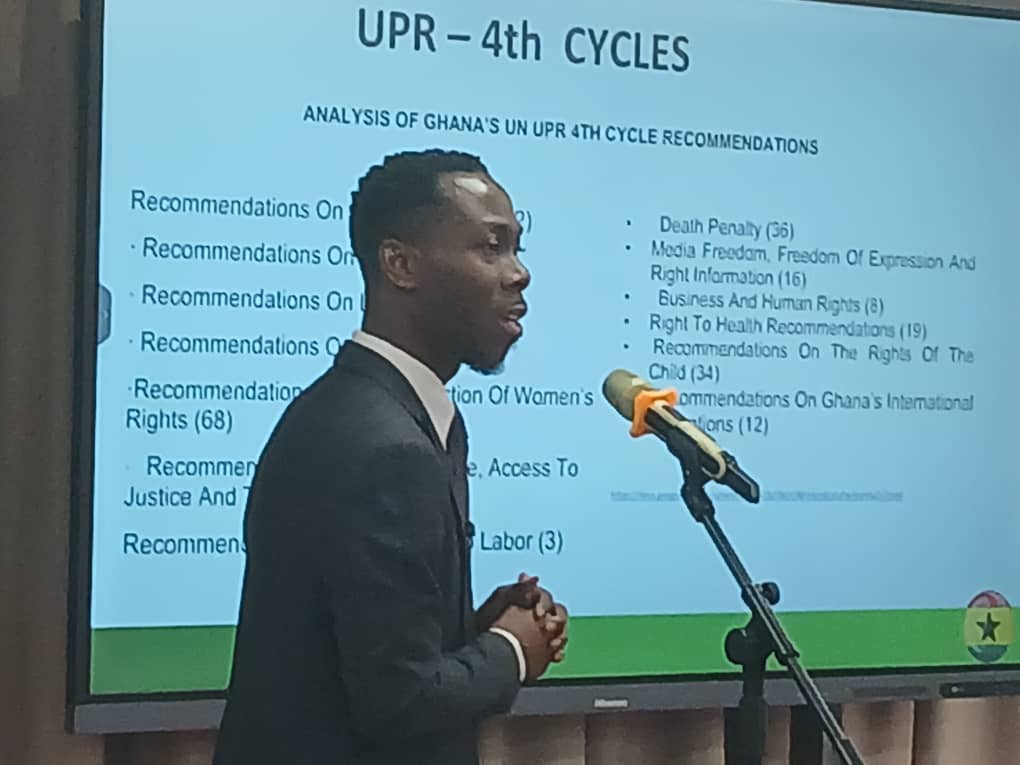
During the fourth cycle Ghana received 298 recommendations but accepted 265, he said.
Mr Osei-Owusu said those recommendations were geared towards improvement of Ghana’s human rights record.
“We have recommendations on Women and Children, Access to justice, Disability, Affirmative Action, Right to Information among others.”
He said it was important that Ghana did not retrogress in terms of its human rights records and perform better in the coming years in the areas of climate change and illegal mining.
Ms Patience Ampomah, a representative of Planned Parenthood Association of Ghana, urged stakeholders to prioritise Sexual and Reproductive Health Rights issues, which affected women and girls.
POS Foundation convened the meeting in collaboration with PPAG and the United Nations Population Fund.
The meeting was on the theme: ” Advancing Human Rights in Ghana: A Joint Civil Society Midterm Review to Bridge Advocacy and Strengthen Accountability under the UN UPR Mechanism.”
Ghana underwent its fourth Review under the UN Universal Periodic Review mechanism in January 2023 during the 42nd Session of the UN Human Rights Council.
GNA
Edited by Agnes Boye-Doe