By Joseph Agrace Wiyorbie
Wa (UWR), Sept. 12, GNA- President John Dramani Mahama has called drug abuse “an enemy to progress, and a “destructive menace” which slowly tightens its grip on communities.
It also endangers the very generation the nation relies upon to carry the torch of Ghana’s development.
The President indicated that fighting against drug abuse needed collective efforts and called on chiefs, elders and opinion leaders to help fight the menace.
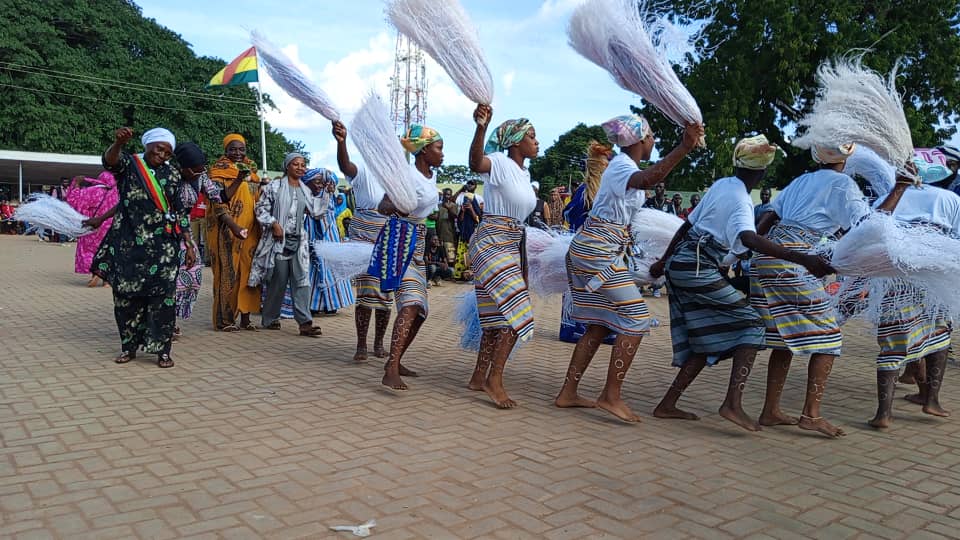
President Mahama made the call in a speech read on his behalf, in Wa, the capital of the Upper West Region, at a durbar to the climax of the celebration of the 2025 Dumba Festival by the Chiefs and People of the Wala Traditional Area in the Upper West Region.

The celebration was on the theme: “The Fight Against Drug Abuse: The Role of Traditional Authorities”.
President Mahama said: “Drug abuse is an enemy to progress. It destroys families, robs our youth of the potential, fuels crime, and undermines the moral fibre of society.”
President Mahama emphasised that the fight against drug abuse could not be left to the government alone and that traditional leaders, who remain custodians of culture and conscience, had a pivotal role to play in checking drug abuse.
He urged traditional leaders to intensify community sensitisation, enforcement of community by-laws, mentorship as well as providing guidance on the dangers and destructive habits of drug abuse.
The President reaffirmed his commitment to strengthening law enforcement to dismantle drug syndicate and prosecute offenders as well as expanding rehabilitation and counselling services to restore victims of addiction into productive citizens.
He said he was dedicated to creating 24-Hour Economy, industrial parks, and youth entrepreneurship support, to take young people away from idleness and despair.
President Mahama assured the chiefs and people of the region to deepening civic engagement through regional taskforces such as the upper West Regional Anti-Drug Abuse Taskforce, by ensuring that the communities themselves drive the fight.
“As we climax this festival, let us remind ourselves that our culture is not static: it is a living resource that must be nurtured and transmitted. Dumba must continue to inspire us to embrace accountability, discipline, and respect for authority,” the President stressed.
Mr Alban Sumana Kingsford Bagbin, the Speaker of Parliament said: “As you celebrate, let’s be happy and unite, knowing that Dumba Festival is one of the important festivals in Ghana that is celebrated to pave way for us to unite in the region”.
The Speaker mentioned that statistics from the Upper West Region indicates that between 2018 and 2020, about 700 people had mental disorders due to drug abuse while 2021 alone the region recorded 400 people with mental disorders.
He said the research conducted indicated the ratio of 77.6 per cent of the victims interviewed had abused tramadol while 83.9 presenting 84 per cent had taken other related drugs of which these groups were active population aging between 15 to 45 years.
The Overlord of the Waala Traditional Council, Naa Fuseini Seidu Pelpuo IV, has expressed worry over drug abuse among the youth in the region, and called for a holistic approach to halt the menace.
The Wa Naa described the situation as an “unfortunate menace” that mostly affects social, security and development in the Upper West Region and called for collective efforts to combat the menace.
He noted that majority of the promising youth involved in drug abuse especially tramadol and marijuana popular known today as “RED” in the region and stressed the need for the collaboration of everyone to educate each other on the dangers of drug abuse.
At the climax, the overlord successfully jumped over a laid down cow, signifying prosperous and successful year and a long reign ahead.
The celebration attracted eminent traditional leaders and opinion leaders across the length and breadth of the region as well as politicians, diplomats, tourists and some members of the public.
Dumba Festival is an annual festival celebrated by the chiefs and people of the Waa Traditional Area in the Upper West Region.
GNA
Edited by Caesar Abagali/Benjamin Mensah