By Christopher Arko
Accra, May 14, GNA – Professor Kwadwo Appiagyei-Atua, Associate Professor at the School of Law, University of Ghana, has called on academics to collaborate with unions and students to collectively advocate the protection of academic freedom on their campuses.
He said efforts by individual academics would not yield results unless they worked in partnership with unions and student bodies to defend and promote academic freedoms on campuses.
Prof Appiagyei-Atua made the remarks at a training workshop for academic unions on academic freedom and its importance in democratic society.
The event was organised by the African Coalition for Academic Freedom (ACAF) and attended by representatives of the University Teachers Association of Ghana (UTAG), Technical University Teachers’ Association of Ghana (TUTAG), and Colleges of Education Teachers Association of Ghana (CETAG).
Prof Appiagyei-Atua, who also serves as the Regional Director of ACAF, emphasised the need for a conducive environment where the academic community could conduct research to enhance knowledge without undue interference.
He noted that academic freedom afforded lecturers and researchers the specific rights and privileges that enabled them to contribute meaningfully to national and global development.
“Even though academic freedom is a fundamental right of the academic community, it has become clear that many academics are not fully aware of its scope and implications. This training aims to address that gap,” he said.
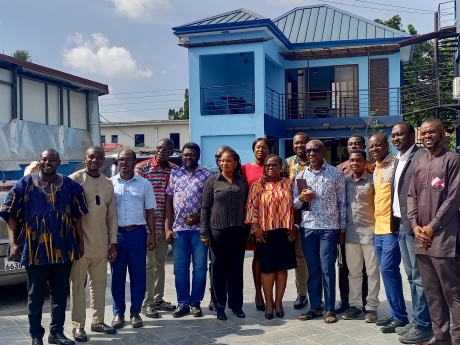
The workshop, the first of its kind for academics under ACAF, sought to educate participants on their rights and responsibilities, advocacy strategies, and collaboration mechanisms for promoting academic freedom.
Participants were introduced to both local and international legal frameworks on academic freedom, as well as the constitutional and statutory provisions that enshrine the principle in Ghana’s legal system.
Prof Appiagyei-Atua said the different stakeholders in the academic ecosystem – academics, students, and administrators -face varying forms of violations, and understanding those indicators helped in developing effective advocacy and redress strategies.
“When you know what constitutes a violation, and how to identify it, you are better positioned to prevent it or seek remedies through appropriate channels,” he said.
Dr Kofi Adu Koranteng, Senior Lecturer, Department of Distance Education, University of Ghana, who spoke on the topic: “The State of Academic Freedom in Africa’s Higher Education Institutions: Current Realities and Emerging Threats,” cited military takeovers as a major threat to academic freedom on the continent.
He explained that during such political transitions, many academics become fearful of conducting research or publishing findings that might be deemed offensive by military regimes.
Dr Koranteng said the workshop would help empower academics and unions to engage more actively in advocating academic freedom on their campuses.
GNA
ABD