By Morkporkpor Anku
Accra, April 28, GNA – The National Institute for Health and Care Research (NIHR) Tuesday opened a two-day Global Health Research Cross-Centre Symposium in Accra to advance sustainable responses to the growing burden of non-communicable diseases (NCDs) in low- and middle-income countries.
The symposium, hosted by the NIHR Global Health Research Centre for Non-Communicable Disease Control in West Africa (STOP-NCD Project), is being held from April 28 – 30.
It has brought together policymakers, funders, researchers and stakeholders from more than 12 countries across Africa, Asia, Latin America and the United Kingdom to share progress, lessons and strategies for long-term sustainability of global health research initiatives.
The Centre is co-led by the Ghana College of Physicians and Surgeons and the London School of Hygiene and Tropical Medicine, with research partners including Ashesi University, the Catholic University of West Africa in Burkina Faso and LASDEL in Niger.
It was on the theme: “Ensuring the Sustainability of the Global Health Research Centres (GHRCs).”
It aims to provide a platform for sharing the work of the five NIHR Global Health Research Centres and reflect on sustainability across partnerships, associations and collaborative networks.
Participants are expected to present and discuss progress made in NCD research, foster collaboration among centres, engage key stakeholders to influence policy and outline strategies to sustain research outcomes beyond project cycles.
The event also seeks to strengthen partnerships across more than 24 institutions involved in the NIHR Global Health Research Centres, spanning countries such as Afghanistan, Bangladesh, Bolivia, Burkina Faso, Colombia, Ghana, Guatemala, India, Indonesia, Nepal, Niger and Pakistan.
Established in November 2022, five centres each received approximately £10 million over five years to address the global burden of NCDs, while building research capacity in low- and middle-income countries.
The symposium also focused on how research can inform policy decisions and strengthen health systems in the face of emerging challenges such as climate change, economic pressures and widening health inequities.
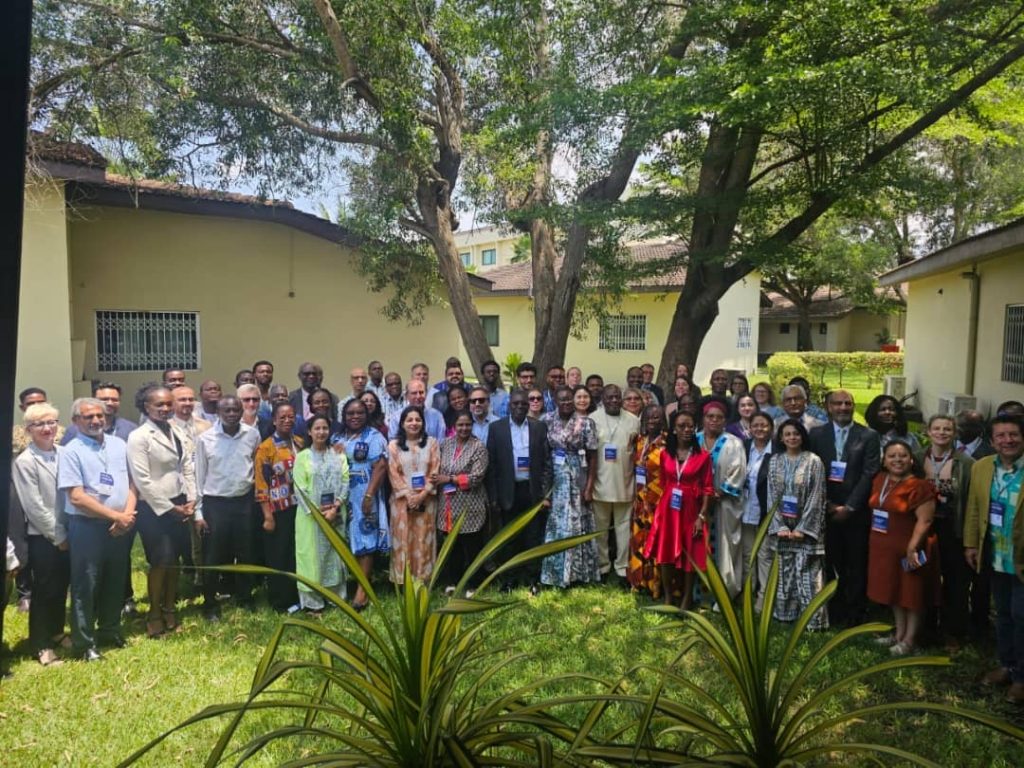
Professor Kara Hanson, Director of Global Health Research programme, NIHR, said the Institute had invested significantly in Ghana, supporting multiple institutions and projects.
There was the need for collaboration across research centres to be greater than individual efforts.
She said there should be learning across countries and applying lessons globally, while demonstrating the value of research investments, especially amid funding constraints.
She encouraged participants to focus on pathways to make impact, ensuring that research findings translate into policy, practice, and long-term health improvements.
Professor Enyonam Yao Kwawukume, Chair of the event, urged participants to actively engage in discussions aimed at strengthening global health systems and improving outcomes across diverse settings.
He noted that the strong participation at the event reflected growing global collaboration and a shared commitment to addressing health challenges, particularly in low- and middle-income countries.
He commended the NIHR and the UK Department of Health and Social Care for their sustained investment in global health research and support for equitable partnerships.
He said the symposium offered a valuable platform to reflect on progress made in tackling non-communicable diseases and to chart sustainable pathways for future interventions.
GNA
Edited by Agnes Boye-Doe
Reporter: Morkporkpor Anku
[email protected]