By Eric Appah Marfo
Accra, March 2, GNA – Maame Kwaaba Stephens, Founder of the Kwaaba Foundation, a non-governmental organisation supporting community health initiatives, has emphasised the need for early sensitisation on blood donation to cultivate enthusiasm among citizens.
While awareness campaigns had improved, sustainable structures must be established to maintain public interest in blood donation, she said.
“Even if you’re 15, it’s good to know about it so that when you’re 17, you can make that decision. Nobody should force you to do that,” the health advocate said.
“For some people, they have to really psych themselves to do it, so I think that once you let them know early, it gives them enough time to think about it and take an informed decision, so that when the time comes, they will yearn to donate blood.”
Maame Stephens suggested this during a blood donation awareness walk and beach blood drive on Saturday in Accra.
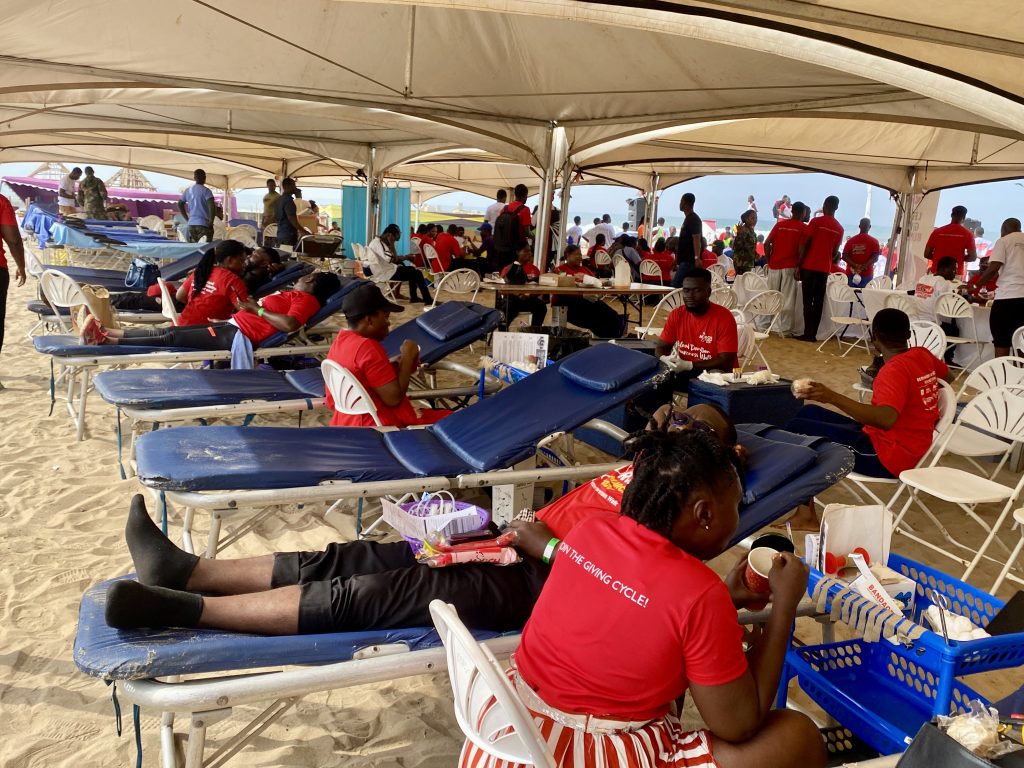
The event, organised by the Kwaaba Foundation and the Kaysens Group of companies, attracted participants from diverse backgrounds.
Maame Stephens is the Executive Director of the Kaysens Group of companies, under which she founded the Kwaaba, to support health and community initiatives, empowering individuals to reach their full potential.
She recounted the beginning of the awareness walk as a personal milestone celebration during her tenure as a brand ambassador for the National Blood Service, Ghana.
“In 2018, I wanted to mark a milestone birthday differently. Instead of the usual parties, I decided to support a cause that was already my mandate—promoting blood donation,” she said.
“Whenever we think about blood, we think about something negative, we think about the hospital, we think somebody is dying, but then we can also think about it in a positive sense.”
The concept of a blood donation awareness walk, she said, was novel at the time, as most health walks focused on general fitness.
The initiative has since grown, attracting participants from various parts of Ghana and beyond.
Donors now receive tree seedlings as part of her Green Initiative to encourage sustainable practices alongside blood donation, which had increased independent blood donation drives.
She addressed common misconceptions about blood donation, including fears of health risks and the belief that donated blood was misused.
“Not even one ounce of blood goes anywhere. It goes straight to the hospitals and when the blood is in the fridge, they can’t really use it for anything.”
“The other misconception is that when you give blood, you are deprived of blood. This is about my 16th time donating blood but if anything, it has rather made me healthier,” she clarified.
Mr Korku Adjorlolo, a blood donor organiser at the National Blood Service, detailed the stringent measures in place to ensure donor safety.
“Before donating, we assess each individual’s health history, blood levels, blood pressure, and weight. If any risk is detected, they are advised not to donate. We need blood, but we also prioritise donor safety,” he said.
He highlighted the life-saving impact of blood donation, stating; “One unit of blood can save up to three lives. If you’ve never done anything good for humanity, donating blood ensures you have.”
Mr Adjorlolo encouraged voluntary blood donation beyond organised events, urging the public to visit the National Blood Service offices to contribute regularly.
“If just one per cent of Ghana’s population donated blood consistently, we would eliminate shortages,” he noted.
Madam Pema Yangzom, Programme Coordinator, Ministry of Health in Bhutan, South Asia, and a friend to Maame Stephens, commended the initiative and encouraged broader participation.
“Blood donation is a gift of life. You don’t need money to make a difference—just the willingness to give is enough,” she said.
She urged the citizenry to support such campaigns to address blood shortages and save more lives.
GNA