By Anthony Adongo Apubeo, GNA
Bolgatanga, Oct. 22, GNA – Dr Steve Manteaw, Co-Chair of the Ghana Extractive Industries Transparency Initiative (Ghana EITI), has called for the attraction of large-scale mining companies to the Upper East Region, to maximise the economic benefits of its gold deposits.
He said large-scale mining operations could significantly increase mineral royalty revenues for government and beneficiary districts, create local business opportunities and provide additional resources to finance development.
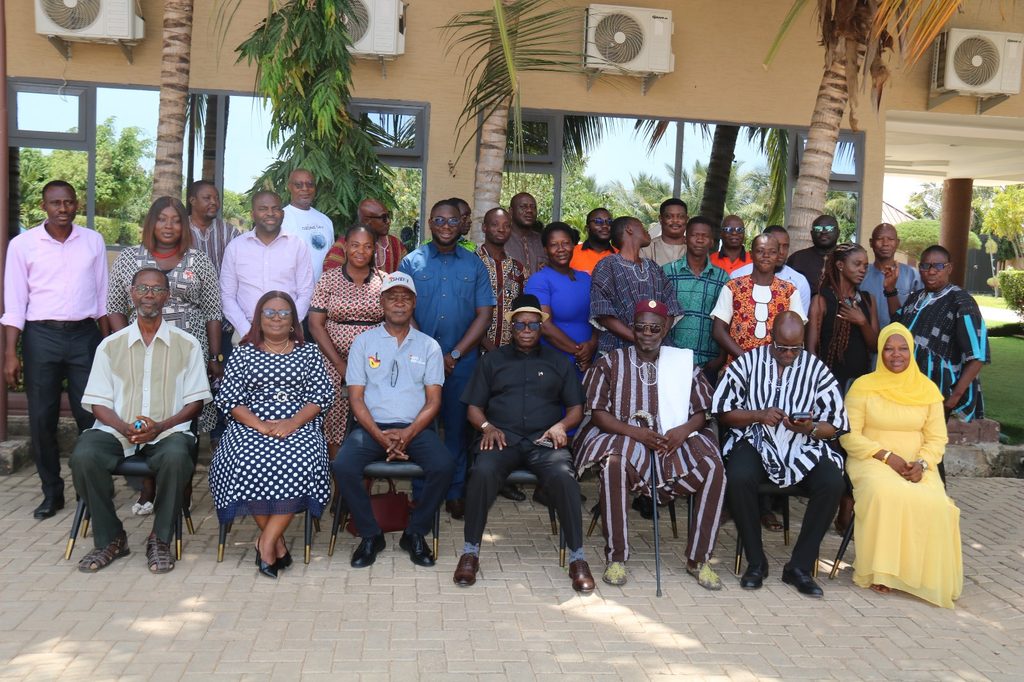
Dr Manteaw said this when the Ghana EITI, under the auspices of the Ministry of Finance engaged stakeholders in the region to disseminate the findings and recommendations of its 2023 reconciliation report on Ghana’s extractive industries.
He said the Upper East Region was emerging as a major mining frontier, with the Talensi area hosting the Cardinal Namdini Gold Mine, one of the country’s major mining projects, while several other districts also had gold deposits.
Dr Manteaw said although small-scale mining activities were widespread in some parts of the country, they contributed relatively little to government revenue compared with large-scale operations.
He cited the Savannah Region, where extensive mining activities, largely involving illegal and small-scale operators, generated limited revenue for district development.
“If they were to have just one large-scale mining company that can contribute substantially in terms of royalties, corporate income tax, property rate and other payments, the state itself stands to benefit tremendously,” he said.
He added that communities hosting large-scale mines could also benefit from local content opportunities, particularly through the supply of goods and services to mining companies.
Dr Manteaw said about 55 items had been identified by the Minerals Commission for exclusive supply to the mining industry by Ghanaians, creating opportunities for residents to establish businesses and participate in the mining value chain.
He, however, stressed the need for effective management of mining revenues to ensure that the benefits translated into lasting improvements in the living conditions of residents.
Dr Manteaw said the EITI’s 2023 report highlighted examples of districts that had failed to use mining-related revenues productively, with some spending their allocations on funeral donations, allowances and painting district assembly buildings.
He said others had invested their allocations in revenue-generating infrastructure such as markets and car parks, enabling them to mobilise additional resources for development.
He urged beneficiary districts in the Upper East Region to learn from the positive examples and invest mining revenues in sustainable projects that would improve livelihoods and strengthen local economies.
The Ghana EITI Co-Chair also called for measures to formalise small-scale mining and improve the collection of royalties from the sector.
He said the absence of an effective gold traceability mechanism made it difficult to determine the exact locations from which gold produced by small-scale miners originated, thereby complicating the allocation of mineral royalties to beneficiary districts.
Dr Manteaw said the introduction of an effective traceability system would help authorities identify the source of gold and ensure that the appropriate districts received their share of the revenue.
Mr Akamugri Donatus Atanga, the Upper East Regional Minister, said the region had developed a framework to ensure that its mineral resources were used to build a sustainable alternative economy that would continue to support livelihoods after the minerals were exhausted.
He said the framework, known as PEARL (Prosperity Through Enterprise, Agriculture Resilience and Livelihoods), was intended to leverage the region’s mineral resources to promote long-term economic development.
He observed that only a small proportion of revenues from mineral royalties, land rent and other mining-related payments reached the affected communities, with much of the revenue channelled through central government mechanisms before allocations were made.
The Regional Minister said technical experts were preparing a document that could inform legislative proposals to review the country’s mining laws and provide for a greater share of mineral revenues to benefit mining communities and the region.
GNA
Edited by Caesar Abagali/ Christabel Addo
Reporter: Anthony Adongo Apubeo
Reporter’s email: [email protected]