By Anthony Adongo Apubeo, GNA
Bolgatanga, Oct. 23, GNA – Ghana lost an estimated 1.1 million ounces of gold to smuggling in 2023, a report by the Ghana Extractive Industries Transparency Initiative (GHEITI) 2023 Mining Report has revealed.
The 2023 GHEITI Mining Report estimates that the volume of gold smuggled out of the country occurred in a year when Ghana’s mineral export earnings reached approximately GH¢94 billion, while the mining sector contributed about GH¢12.4 billion to government revenue.
Speaking to stakeholders in Bolgatanga at a workshop to disseminate the 2023 mining and oil and gas reports, Ms Phyllis Adwoa Fraikue, the National Coordinator of GHEITI, said the findings raised serious concerns about revenue leakages, regulatory enforcement and the country’s ability to retain the full value of its mineral resources.
The GHEITI dissemination workshop, organised under the auspices of the Ministry of Finance, brought together stakeholders to examine findings from the 2023 reports and discuss transparency, revenue management and accountability in Ghana’s mining, oil and gas sectors.
“The Report also estimates that approximately 1.1 million ounces of gold were smuggled out of Ghana during the reporting year.
“This raises serious concerns about revenue leakages, regulatory enforcement and our ability to capture the full value of our mineral resources,” she added.
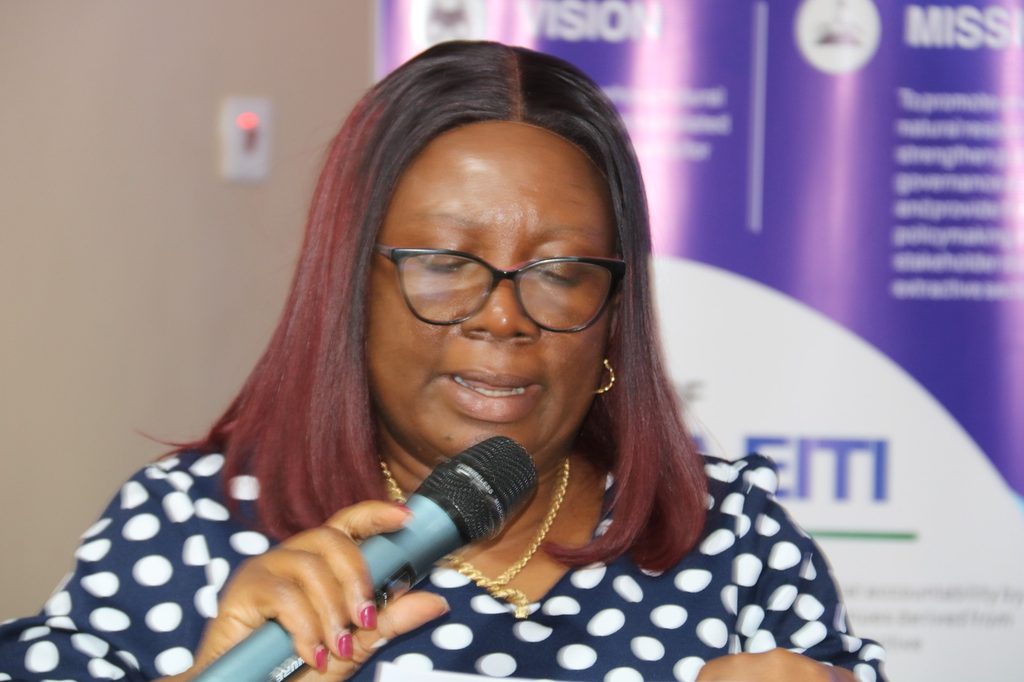
Ms Fraikue said the country’s success in the mining sector should not be measured only by the volume of gold extracted or exported, but also by the value retained for national development.
“These findings point to a fundamental principle: our success must be measured not only by how much gold we extract, but by how much value we retain and what we achieve with it,” she said.
She called for stronger accountability and corrective measures to address weaknesses in the management of the country’s extractive resources.
“But publishing information is not enough. Where revenue leakages occur, corrective action is required. Where statutory transfers are delayed, the causes must be addressed. Where public institutions fail to meet their obligations, accountability must follow.
“The publication of information must be the beginning of accountability, not its conclusion,” she added.
The National Coordinator said the findings were particularly relevant to the Upper East Region, where gold deposits had been identified in several municipal and district across the region.
She said the discovery of mineral resources presented opportunities for employment, investment and public revenue, but required effective management to ensure that the benefits translated into lasting development.
Dr Steve Manteaw, Co-Chair of the Ghana EITI, called for stronger measures to ensure that the country and mining communities derived greater benefits from mineral resources.
He said Ghana needed to strengthen the traceability of gold to establish its origin and improve the monitoring of mineral exports, including the capture of export data in the national Integrated Customs Management System (ICUMS).
Dr Manteaw said improved traceability would help authorities account for gold produced by both small-scale and large-scale mining operators and strengthen the management of mineral revenues.
Dr Manteaw further urged beneficiary district assemblies to invest mineral royalties in projects capable of generating long-term benefits rather than spending the funds mainly on recurrent expenditure.
Mr Akamugri Donatus Atanga, the Upper East Regional Minister, said the region was emerging as a significant mining area, with gold deposits identified in several districts, adding that measures were needed to ensure that mineral wealth contributed meaningfully to local development.
Mr Atanga said discussions were ongoing on ways to strengthen the region’s share of mining royalties, land rents and other revenues generated from extractive activities, including proposals for changes to the relevant mining laws.
He said the region was working towards a coordinated development approach under its PEARL framework (Prosperity through Enterprise, Agriculture, Resilience and Livelihoods) to guide investment and development initiatives.
The Minister said a coordinated approach was important to ensure that the region’s natural resources contributed to shared development priorities rather than leaving individual assemblies to pursue fragmented initiatives.
The GHEITI dissemination workshop brought together stakeholders to examine findings from the 2023 reports and discuss transparency, revenue management and accountability in Ghana’s mining, oil and gas sectors.
GNA
Edited by Caesar Abagali /Kenneth Odeng Adade
Reporter: Anthony Adongo Apubeo
Reporter’s email: [email protected]