Accra, Oct. 5, GNA – The Executive Women Network (EWN) has unveiled four flagship initiatives to deepen women’s leadership, entrepreneurship, mentorship and access to opportunities as it enters its second decade.
The initiatives, launched at the EWN@10 Conference and Expo in Accra, form part of the Network’s new phase, dubbed “EWN 2.0”.
They are the Collaborative Ecosystem, EWN Skills Catalogue, EWN VentureHer and an expanded EWN Ellevate programme – aimed at turning conversations on women’s advancement into practical pathways for greater impact.
The two-day conference, held under the theme: “A Decade of Leadership, A Future Toward Holistic Impact: Self & Family, Career, Legacy,” brought together women leaders, business executives, entrepreneurs, policymakers, corporate institutions and other stakeholders.
The Second Deputy Governor of the Bank of Ghana, Mrs Matilda Asante-Asiedu, who chaired the conference, urged women to continue building their capacity, using their influence and creating pathways for others.
She, however, noted that progress could not rest on women alone.
Institutions, she urged, must, therefore, create the opportunities, visibility and access needed for talent to thrive.
“While mentorship provides guidance, sponsorship opens doors. We need more leaders who are willing to advocate for capable women,” she emphasised.
Mrs Asante-Asiedu said platforms such as EWN were important because they created connections, conversations and support systems that enabled women to advance and make meaningful contributions.
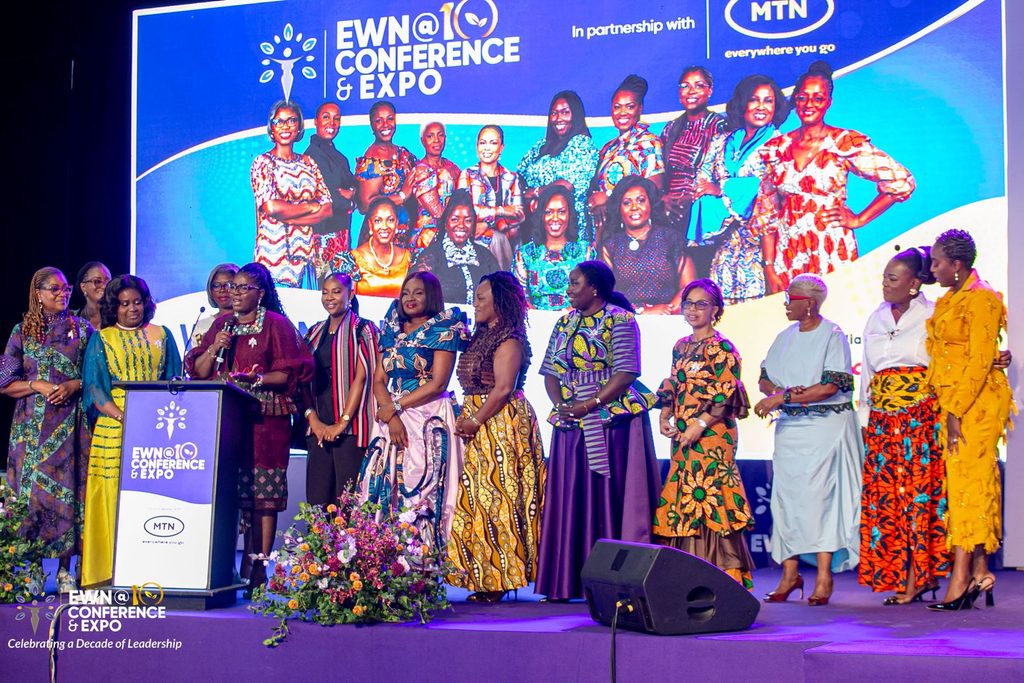
Mrs Janet Sunkwa-Mills, Executive Committee Chairperson of EWN, said the Network had grown significantly since its establishment on April 19, 2016.
It now brings together more than 200 women Chief Executive Officers, Managing Directors, Board Chairs, entrepreneurs and heads of institutions across 28 industry sectors.
Between 2016 and September 2026, she said, the Network had directly impacted more than 10,000 lives.
The Collaborative Ecosystem is an alliance with nine strategic partners aimed at advancing greater gender parity in decision-making positions.
The EWN Skills Catalogue provides access to a pool of EWN mentors and coaches with expertise in leadership development and capacity building.
EWN VentureHer would support women entrepreneurs to strengthen their capacity and gain access to key markets.
The expanded EWN Ellevate mentorship programme is currently engaging 500 Senior High School girls in Tamale, with plans to extend it to another region.
Mrs Sunkwa-Mills urged participants to turn the conference discussions into action.
She encouraged them to mentor young women, sponsor girls’ education, open doors for others and champion the Affirmative Action Act within their organisations.
“Lift as you rise,” she emphasised.
The keynote speaker, Ehunabobrim Nana Prah Agyensaim VI, Paramount Chief of the Assin Owirenkyi Traditional Area, challenged leaders to move beyond mentorship and embrace sponsorship as a deliberate way of creating opportunities for women.
He described women’s participation in leadership “as not merely a women’s issue but also a leadership, development and economic issue”.
He said the country could not fully realise its potential while a significant proportion of its talent remained underrepresented in positions of influence.
Nana Prah Agyensaim urged leaders to deliberately recommend women for opportunities and use their influence to open doors for them.
He also encouraged women leaders to use their positions and influence to create pathways for those coming behind them.
“Mentorship says: ‘I will advise you.’ Sponsorship says: ‘I will use my influence to create an opportunity for you,” he explained.
He challenged EWN to strengthen its position as a leadership pipeline for women across Africa and extend its reach beyond Accra.
He also offered to welcome the Network’s mentorship programme to young women in the Owirenkyi Traditional Area.
The EWN@10 Conference and Expo featured an exhibition of products and services from women-led businesses and partner institutions.
It also featured discussions on leadership, ownership, career advancement, influence, role modelling and legacy.
GNA
Edited by Agnes Boye-Doe