By Prince Acquah
Cape Coast, Sept 26, GNA – The School of Medical Sciences (SMS) of the University of Cape Coast (UCC) has held its 17th White Coat ceremony with an urgent call on government to address weaknesses in the health system through increased and targeted investments in the sector.
The ceremony ushered 155 students into the clinical phase of their medical training which now allows them to practice with real patients instead of mannequins and other artificial learning tools.
The colourful session brought joy to the students and their parents as they moved a step closer to realising their dreams of becoming medical doctors.
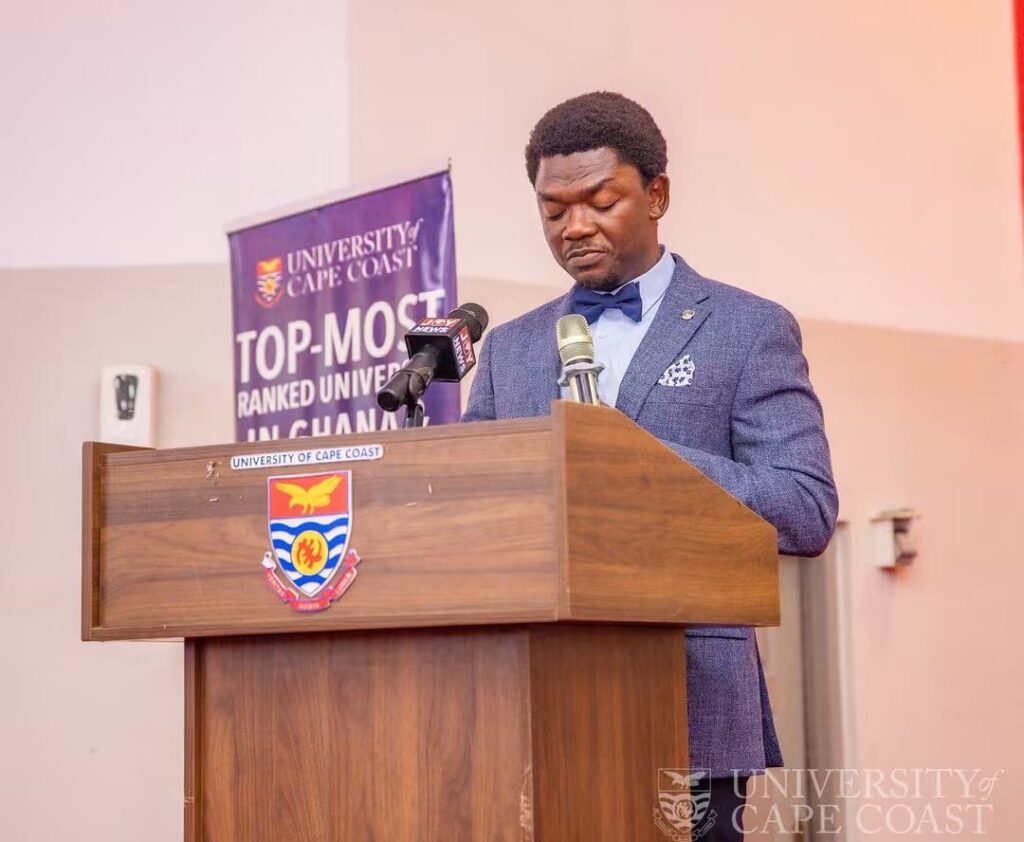
Dr Philip Anderson, a physician and Country Manager of Roche Ghana, addressing the gathering as a guest speaker, highlighted several weaknesses in the health system, including inadequate diagnostics, medicines, equipment, specialist services, beds and infrastructure which threatened the lives of patients and implored government to act swiftly to resolve them.
Citing the recent hit-and-run incident that led to the death of an engineer in Accra, and without defending the reported actions of the health professionals involved, he insisted that Ghana must increase investment in healthcare and medical training and equip health professionals with adequate facilities, technology, equipment, medicines, specialist support and infrastructure to improve the quality and capacity of the health system.
He suggested that medical training must be supported with funding for research, while teachers, clinicians and researchers must also receive the resources needed to train the next generation.
“We must train more health professionals, but we must equip them to excel and create conditions in which their skills can serve the country,” he stressed.
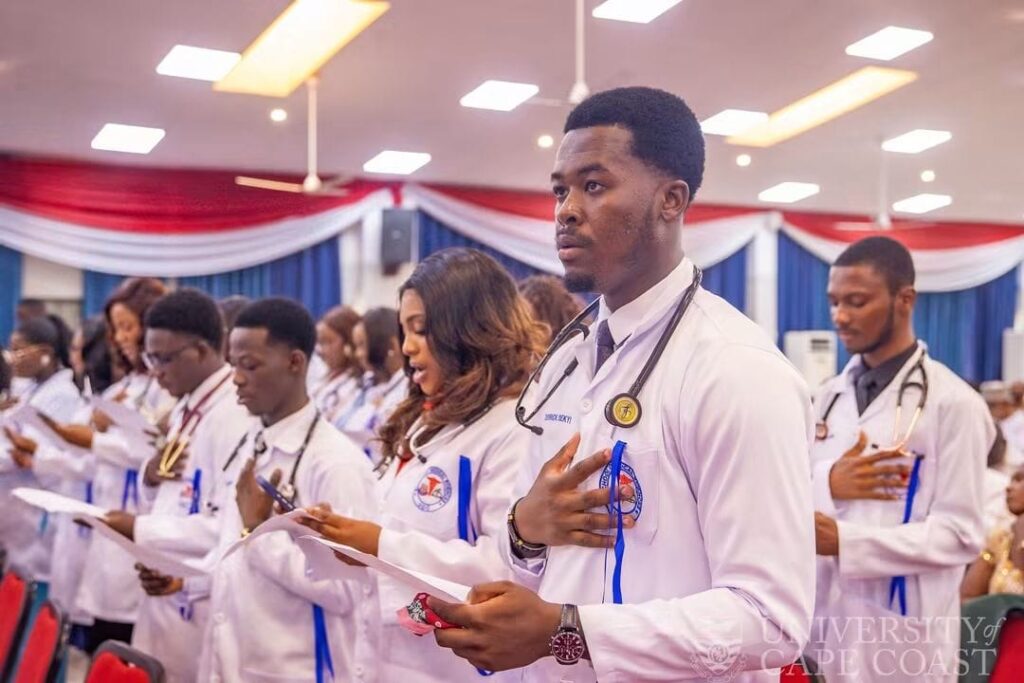
According to him, investment in health professional education was an investment in national resilience, productivity and dignity, rather than merely an expenditure.
Touching on the deployment of technology in health care, Dr Anderson said Ghanaian doctors must embrace innovation and emerging fields, including genomics, precision medicine, remote monitoring, robotic surgery, and cell and gene therapies.
He acknowledged that innovations such as Artificial Intelligence and other emerging technologies were transforming health care but maintained that they could never replace health professionals.
“Artificial intelligence will recognise patterns that human beings will miss. But information is not compassion. A machine may support a diagnosis, but it cannot replace the humanity of sitting beside a frightened patient,” he said.
In a direct address to the future doctors, he challenged them to uphold excellence, humility and continuous learning, recognising the limits of their knowledge and learning from nurses, pharmacists, laboratory scientists, colleagues and patients.
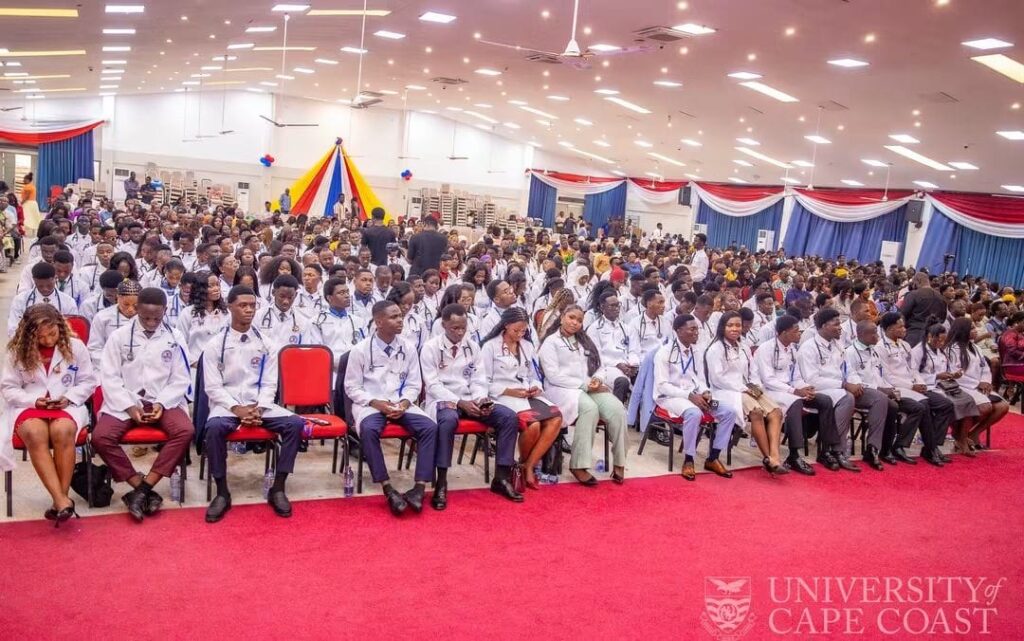
Prof Patrick Kafui Akakpo, the Dean of SMS, entreated the students to approach the medical profession with compassion, professionalism, accountability, service, integrity and commitment to patients and communities.
He noted that as they entered clinical training, they would encounter suffering, resilience, uncertainty and healing but urged them to be guided by empathy, courage and integrity.
“The White Coat is not a symbol of status; it is a symbol of service and accountability,” he said, stressing that “the true measure of a doctor is found not only in the clinical classroom, but in how you respond when a human being stands before you in their most vulnerable moments.”
Prof Akakpo urged the aspiring doctors not to become indifferent to patients or allow distractions, such as mobile phones, to interfere with patient care.
The Dean assured that the school aimed to produce doctors who carried their communities in their hearts as much as they carried science in their minds.
He said since admitting its first students in 2008, the school had grown into a centre of excellence, maintaining that they sought to produce doctors who were thinkers, leaders and compassionate advocates for patients.
Going forward, he announced that UCCSMS planned to modernise teaching and embrace new technologies, including artificial intelligence to enhance students’ learning.
The Dean praised lecturers, mentors and other staff for their contribution to medical education.
He appealed to parents, guardians and benefactors to the SMS Endowment Fund that had been established to support scholarships, faculty development, research infrastructure and innovation in medical education.
Prof Mrs Christine Adu-Yaboah, the Acting Pro Vice-Chancellor of UCC, argued that Ghana needed doctors who understood the link between poverty and disease and were committed to serving rural and underserved communities, rather than merely increasing the number of medical professionals.
She said medical practice must extend beyond hospital walls to address the social determinants of health, including access to clean water, sanitation and adequate nutrition.
She, therefore, urged medical professionals to place greater emphasis on preventive and public health interventions to improve health outcomes in communities.
Prof Adu-Yeboah assured that UCC management remained committed to strengthening the School of Medical Sciences through improved research capacity, better clinical training conditions and stronger interdisciplinary collaboration to produce medical professionals capable of responding to Ghana’s healthcare needs.
GNA
Edited by Alice Tettey/Benjamin Mensah
Reporter: Prince Acquah
E-mail: [email protected]