By Eunice Hilda A. Mensah
Accra, Sept. 19, GNA – Ghana is positioning itself to become a leading hub for responsible digital asset innovation in Africa through a regulatory framework designed to promote trust, protect consumers and stimulate economic growth.
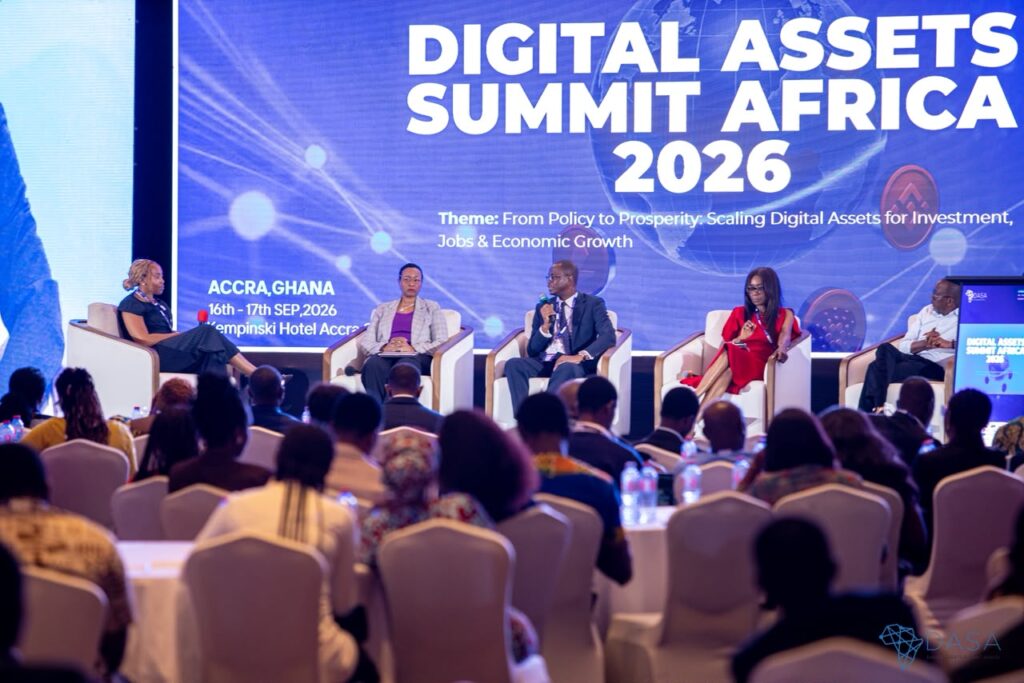
Speakers at the opening of the second edition of the Digital Asset Summit Africa (DASA) 2026 in Accra said the country was taking deliberate steps to ensure that innovation in virtual assets developed within a secure and transparent ecosystem.
Mr Peter Frimpong Manso, Chief Executive Officer of ProMark Elite Limited and Convener of the Summit, said Africa could not afford to remain on the sidelines of the digital asset revolution.
He said the success of mobile money across the continent had demonstrated the transformative power of accessible and trusted financial innovation.
“The answer is not to replace mobile money, but to build on it responsibly. Blockchain, stablecoins, tokenisation and other digital infrastructure can expand access, unlock investments and create new opportunities,” he said.
Mr Manso stressed that innovation must move alongside regulation, consumer protection and trust, saying the summit had brought together regulators, policymakers, financial institutions, technology firms, investors, academics and young innovators to develop a responsible digital asset ecosystem for Africa.
He said this year’s theme, “From Policy to Prosperity: Scaling Digital Assets for Investment, Jobs and Economic Growth in Africa,” reflected the need to translate policy into tangible economic outcomes.
He said the summit would also create opportunities for African startups through the Startup World Cup regional competition, with the winning startup representing Africa at the global finals in San Francisco for a chance to secure a $1-million investment prize.
Mr Owurieku Asare, Director of Financial Technology and Innovation at the Bank of Ghana, said Ghana’s financial sector had undergone significant transformation over the past decade through digital technology adoption, with mobile money becoming deeply embedded in everyday economic life.
He said Ghana recorded about three billion mobile money transactions valued at approximately GH¢560 billion in 2020, while by 2025, transactions had risen to nearly 10 billion, valued at about GH¢4.5 trillion.
“Innovation is most effective when it is supported by strong institutions, credible regulations and public confidence,” he said.
Mr Asare said increasing attention was being directed towards tokenisation, digital securities, stablecoins and digital asset custody, which would shape future financial markets.
He said the recently enacted Virtual Asset Service Providers Act, 2025 (Act 1154), provided the legal basis for regulating the emerging sector and mandated the establishment of a Virtual Asset Coordinating Committee to strengthen collaboration among regulators.
He urged industry operators to incorporate compliance into their business models from the outset, engage regulators early and protect customer assets.
Mr Philip Kwaw Sebuabe, Head of the Virtual Assets Department at the Bank of Ghana, said trust remained critical to building a successful digital assets market.
He said more than three million people in Ghana were already participating in virtual asset activities, including trading, savings and value transfers, while billions of dollars in virtual asset flows were linked to the country.
“The choice is no longer whether virtual assets should exist. It is whether they will develop deliberately, transparently and safely, or whether the public will navigate them alone,” he said.
Mr Sebuabe said Act 1154 provided the legal foundation for the registration, licensing and supervision of virtual asset service providers.
He said the Bank of Ghana, the Securities and Exchange Commission and other relevant institutions were developing coordinated regulations based on the functions and risks associated with virtual asset activities.
He emphasised the importance of cybersecurity, anti-money laundering controls, governance standards and consumer asset protection.
The Head of the Virtual Assets Department also called for stronger collaboration among African regulators, noting that digital assets and financial risks did not respect national borders.
He urged industry players to prioritise consumer protection and trust-building, describing trust as the bridge between policy and prosperity.
“Technology may change how value is represented or transferred, but it does not remove the obligation to protect Ghana’s financial system and its people,” he added.
GNA
Edited by Audrey Dekalu
Reporter Email: [email protected]