By Albert Allotey
Accra, Sept 9, GNA – Professor Godfred Bopkin, an Economist and a Lecturer at the University of Ghana has said it was time African countries leverage the African Continental Free Trade Area (AfCFTA) to move businesses from local to continental and even global.
He said the understanding was that Africa was the only continent that traded far less amongst itself and that the understanding was also that if they were able to trade more amongst themselves then that became like a platform.
“The platform would serve as a launch-pad for us to be able to improve on value addition, quality and standard, so that it would also help us move a lot of our businesses to the global level,” he stated.
Prof Bopkin made the assertion in an interview with the Ghana News Agency at the Leicester Alumni Business Forum on the theme, “From Local to Continental: Using AfCFTA to Scale African Businesses,” held at the British Council Hall in Accra.
He said the opportunities for African businesses to scale up was quite high, adding, “Because if you look at Africa as individual countries, it looks very small but if we were to pull all our markets together then we are talking about a market with the GDP of more than three trillion dollars.”
“We are talking about a population that is as big as 1.5 billion people, so that is quite good for businesses,” he added.
He said, “The challenge is that because of fragmentation, enabled also by the partition of Africa from the Berlin conference in 1884 there about, we realised that Africa as we have today was not designed to serve Africa.”
“Africa was designed to serve the rest of the world, so our land ports, the road connectivity, air transport, among others, only connect Africa to the world, and if you have that situation then there is going to be quite challenging to scale up intra-regional trade in the face of the lack of physical connectivity,” he stated.
“So, while we talk about the potential for AfCFTA to deliver in terms of increase output, job creation, poverty reduction, narrowing inequality, and being a platform to raise African businesses all these oughts to happens within certain challenge because of lack of physical connectivity.
“So, these are challenges because if you must ship goods to some African countries, you first have to go to Europe for you to be redirected, that is higher transaction cost, even for payment within the continent if you have to trade,” he stated.
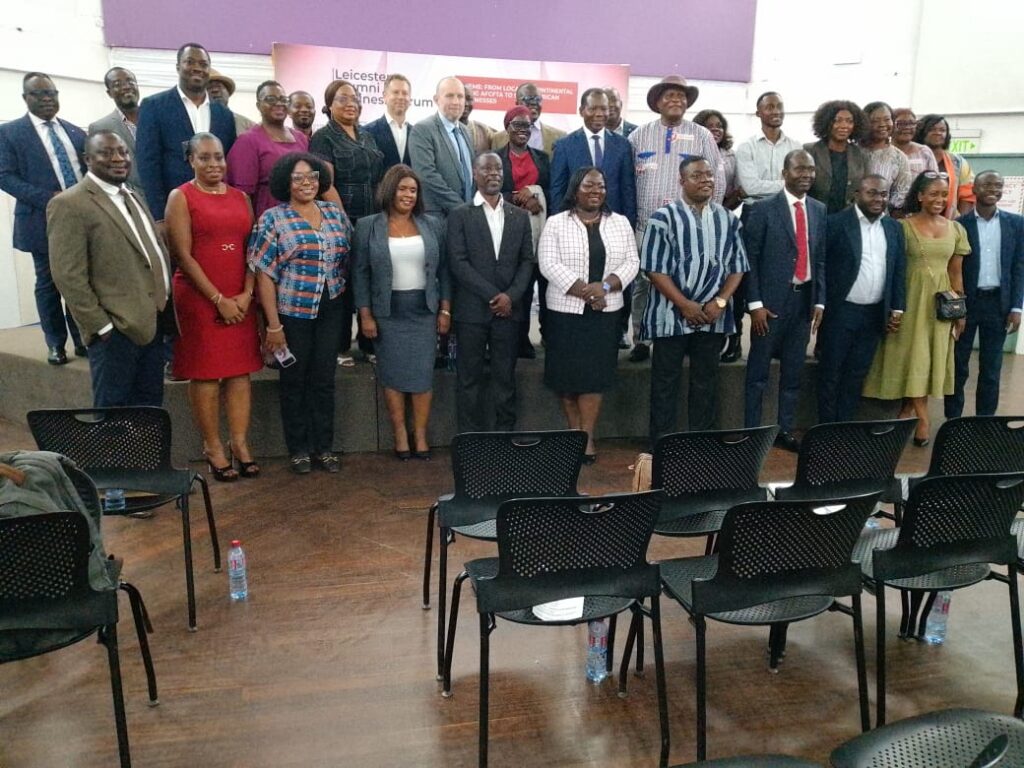
Prof Bopkin stressed, “If you look at the whole package of the AfCFTA almost all these challenges have been identified, whilst we may say they are challenges if you flip it there are business opportunities.
“Opportunities to invest in infrastructure, to improve connectivity either by rail, port, water, or by air and the potential were quite huge and these are investment that easily pay-off ”
He said Africa was the only continent with that growth potential that must be able to take advantage of, adding, “So am quite hopeful. We have youthful population that can also support production”
He noted that the average age of the African was 19, other continent like Asia they were close to 48-49, Europe they are more than 30 and 39, so it means that Africa has young population that we must empower in terms of quality education that could support production.
GNA
Edited by George-Ramsey Benamba