A feature by Nataki Kambon
Accra, Aug 21, GNA — This week, millions across the African world marked the 139th birthday of Marcus Mosiah Garvey, whose ideas about African unity, self-determination and economic independence travelled far beyond his native Jamaica and helped shape political thought in Ghana itself.
For young people still asking what they can become, and for elders wondering whether the work of one generation can survive into the next, Garvey’s influence offers one answer. So does the life of a Ghanaian citizen of Jamaican descent who spent years trying to turn those principles into something people could actually use.
Madam Naomi Patricia Palmer-Buchanan, known widely as Wudase Mariam or Mama Wudase, was granted Ghanaian citizenship in 2019 after years of building a life in the country.
Her family said she regarded that citizenship as full reintegration into her ancestral homeland. She had first travelled to Ghana in 1993, later settled permanently, and helped establish the Marcus Mosiah Garvey Foundation, MMGF.
Her work was not simply about celebrating Garvey. It was about asking what his principles could produce in society.
Together with her husband Neville Buchanan and other co-founders, Mama Wudase helped build programmes aimed at equipping young Ghanaians with practical skills, confidence and a stronger sense of African identity. MMGF’s work has included vocational training, mentorship, African heritage education and technical instruction in areas including domestic electrical wiring, solar installation and CCTV systems.
The significance is not the training programme alone. It is what happens after the training.
Young people who entered as students have moved into certification and professional work. Some are now earning livelihoods from technical skills that allow them to serve households, businesses and communities. Young women have also entered electrical work, developing expertise in a profession where women have traditionally been less visible.
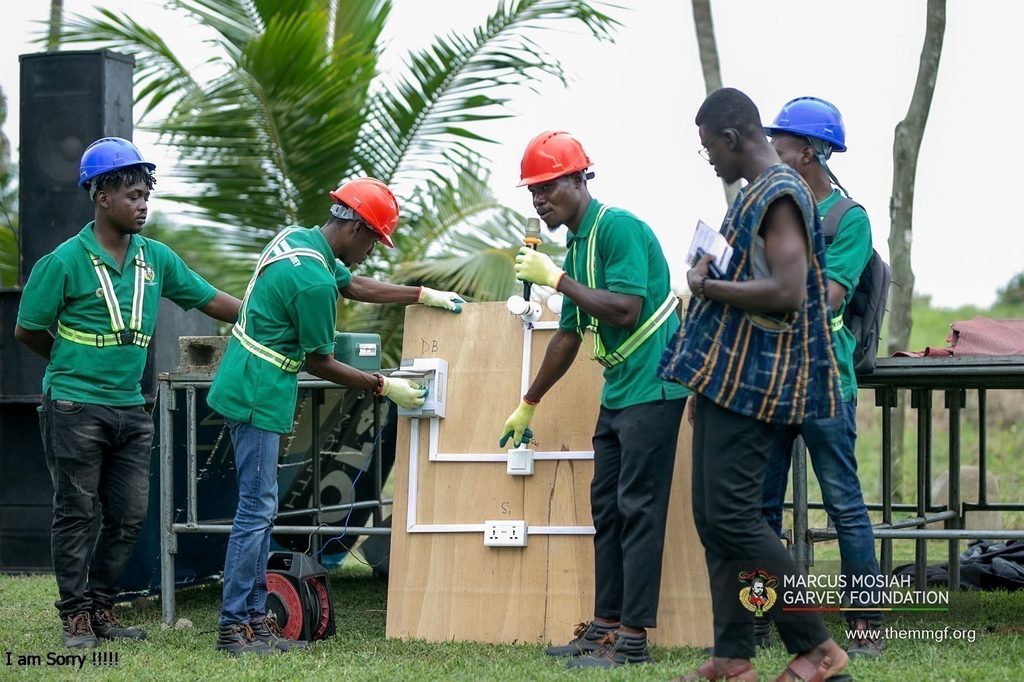
That matters because technical competence has consequences beyond an individual certificate. A trained electrician can earn an income, support a household, carry out work safely, build a reputation for skill and integrity, employ someone else and eventually train another person.
In that sense, the outcome is social as much as vocational.
At Mama Wudase’s funeral, MMGF students recalled that she pushed them to become qualified electricians and to work as professionals, telling them that Africa’s future depended upon young people being equipped rather than left without useful skills.
Her husband described the Foundation in similar terms. Buchanan said its work grew from an aspect of Garvey’s philosophy emphasizing the need for African people to develop technical capacity so they could participate in building an industrial future that serves African interests.
That interpretation of Garvey has particular resonance in Ghana.
Garvey built one of the largest mass movements of African-descended people of the early 20th century around racial dignity, African unity, economic self-reliance and the creation of independent institutions. His influence later reached African independence movements and leaders including Kwame Nkrumah.
For Mama Wudase, that history was not something to admire from a distance. Her life became part of the same Ghana-Diaspora exchange.
Born in Trelawny, Jamaica, in 1952, she moved to Britain as a teenager and later became deeply influenced by Garvey’s philosophy and Pan-African thought. She travelled to Ghana in the 1990s, built a home with Buchanan and settled permanently in the country in 2005.
Mama Wudase’s Ghanaian life also brought her into conversation with national leaders. In one documented meeting with former President Jerry John Rawlings, she attended alongside her husband and young people she was mentoring.
She later spoke about the encounter as an important experience in her life — an example of how mentorship, community work and public leadership could meet in the same room.
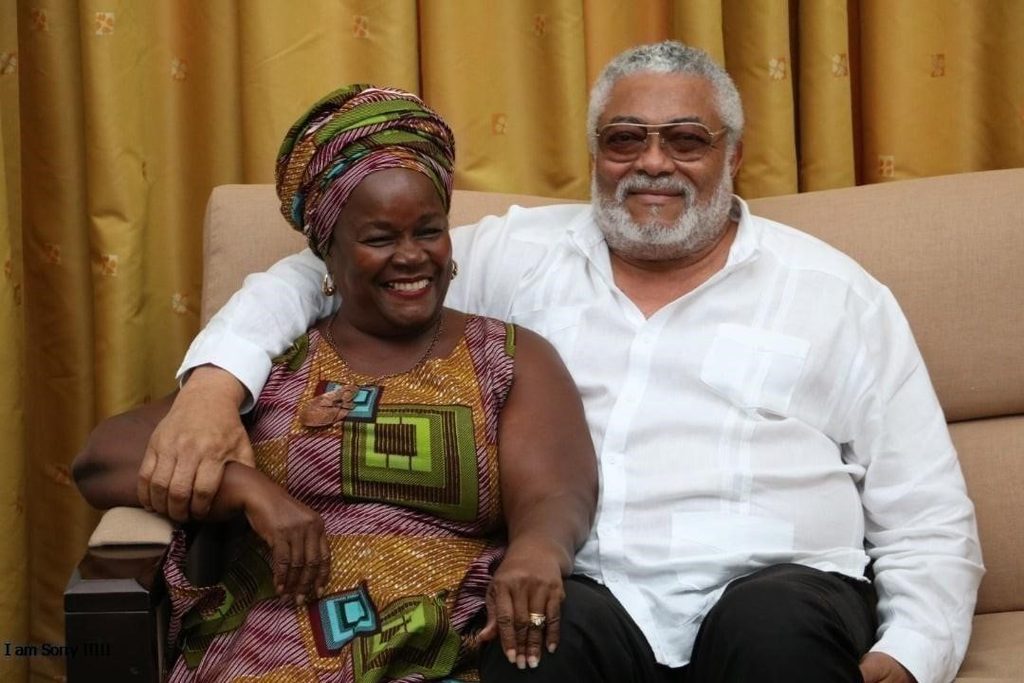
Her husband remembered her as someone who organized almost instinctively — helping people navigate citizenship, arranging vocational training, directing people toward legal assistance and supporting community organizations.
The breadth of that influence became especially visible after her death. Mama Wudase died at her home on December 23, 2025, at age 73.
At her funeral, representatives from Ghana, Jamaica, Suriname and the wider Historic Diaspora described a woman whose work moved across communities rather than remaining inside one organization.
The Ambassador of Suriname recalled meeting Mama Wudase after being posted to Ghana and said she was quickly embraced “as her Caribbean sister.” She described Wudase as someone who kept her connected to Foundation activities and who believed deeply in the relationship between Africa and the Caribbean.
The Honorary Consul of Jamaica in Ghana remembered another dimension of her leadership. He said Wudase understood that community was built “through service, and through showing up when it matters,” adding that the Jamaican community had come to regard her as a mother because of her consistent presence and support.
Obadele Kambon described the young people she worked with as “leaders in preparation” — people worthy of guidance, expectations and real investment because they would be among those expected to build the future.
Those accounts broaden the meaning of the technical work she helped advance.
Her concern was not simply whether someone completed a course. It was whether people became more capable, more confident and better positioned to contribute to the communities around them.
That belief is now visible beyond the classroom.
There are young professionals earning from work they were trained to do. There are women performing skilled technical work in spaces where women have traditionally been less visible. There are families benefiting from those incomes and customers depending upon the competence of people whose training gave them another path into working life.
One skill begins producing consequences far beyond one student. And that is how capacity begins to reproduce itself.
The loss of Mama Wudase also raised a question every movement eventually faces: what happens to useful work when one of the people most identified with advancing it is gone?
The answer, so far, has been continuation.
The organisation she helped build has continued through a wider community of directors, educators, mentors, youth leaders, volunteers, supporters and graduates. That continuation matters because legacy is often discussed as though it belongs to extraordinary individuals.
But enduring legacy is rarely the work of one person alone.
It depends upon whether people recognize useful work while it is being done, strengthen it, learn from it and eventually carry it without needing the original person at the centre.
That is one reason this weekend carries meaning beyond another annual commemoration.
On Saturday, August 22, Ghanaians and Historic Diasporans will gather at the Dr. Kwame Nkrumah Memorial Park in Accra around two connected legacies: the birth of Marcus Garvey and the work of Mama Wudase, who tried to give those ideas practical expression in Ghana.
The event itself is only the occasion.
The larger story is already visible in the people.
It is visible in young technicians earning a living from skilled work. It is visible in women entering professions where they were once rarely seen. It is visible in elders who have watched ideas cross oceans and generations, and in younger people discovering that history does not have to remain history.
Garvey’s influence endured because people who came after him did more than admire him. They studied his ideas, adapted them to their circumstances, built institutions around them and passed them forward.
Mama Wudase did the same in Ghana.
Now others are doing it again.
That is where legacy becomes more than remembrance.
It becomes capacity, livelihood, confidence and responsibility passed from one generation to the next.
Editorial feature. Photographs supplied through the Marcus Mosiah Garvey Foundation website. Reporting incorporates biographical material and testimony from the funeral of Naomi Patricia Palmer-Buchanan (Wudase Mariam), including remarks from students, diplomatic and community representatives
GNA
The feature article incorporates biographical material and testimony from the funeral of Madam Naomi Patricia Palmer-Buchanan (Wudase Mariam), including remarks from students, diplomatic and community representatives.