By Caleb Kuleke, GNA
Ho, Aug.15, GNA – Mr Desmond Anokye Ntim, Co-founder of DEECOM Nutrifoods, has urged young people to adopt strategic business models, essential for transitioning from a linear “take-make-dispose” economy to a sustainable, regenerative circular economy.
He stated that impactful circular solutions must make absolute business sense, noting that sustainable enterprises were built on resilient business models rather than well-meaning intentions.
Mr Ntim made the remarks at a programme organised by the Ghana Circular Economy Centre at the Ho Technical University to celebrate this year’s International Youth Day.
The day was celebrated was on the theme: “Youth Shaping Ghana’s Circular Economy: From Ideas to Action.”
Mr Ntim, who was the guest speaker, emphasised that the circular economy was fundamentally about shifting perceptions, seeing tangible value where others see waste.
He highlighted the youth as catalysts for this transition, citing their intrinsic curiosity, creativity, digital literacy, and appetite for experimentation as distinct competitive advantages in the emerging circular landscape.
Challenging the youth to bridge the gap between ideation and execution, he urged young innovators to transition from merely identifying environmental problems to actively designing comprehensive mechanisms that solve them.
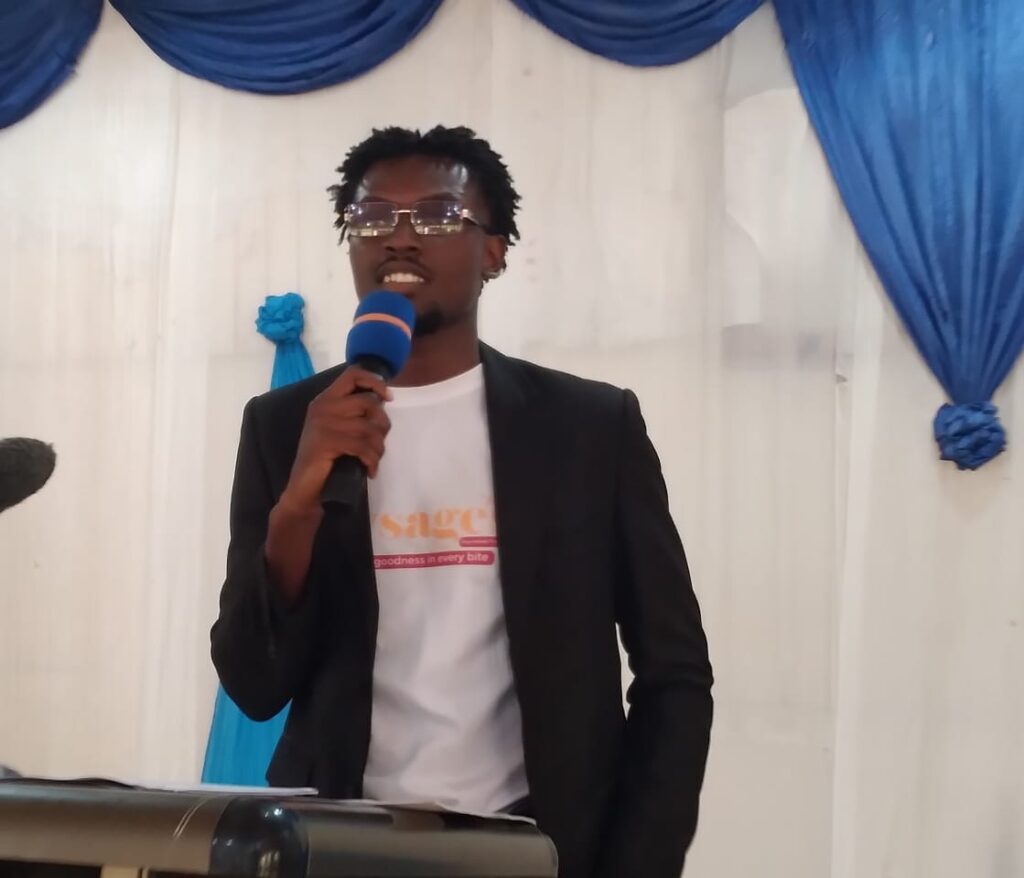
Mr Ntim said Ghana’s transition to a circular economy offered massive potential for the youth to create jobs, protect the environment and for and sustainable economic growth.
He charged young people to reconsider their everyday habits regarding waste disposal, emphasising that treating waste as a resource could unlock new entrepreneurial pathways for the younger generation.
Mr Ntim urged the youth to desire to become the next generation of entrepreneurs, innovators, and business leaders tasked with transforming the economic landscape.
True innovation, he noted, did not always require inventing something entirely new; instead, it often stemmed from viewing existing resources through a different lens and finding ways to add value.
Mr Ntim called on key stakeholders including academia, industry, government, and development partners to forge active partnerships required for coordinated ecosystems to achieve this systemic shift.
He urged the stakeholders to fulfill their respective roles by equipping youth with critical skills, opening market access, fostering enabling regulatory environments, and providing essential technical support alongside targeted funding opportunities.
The Co-founder stated that a viable circular economy relied on robust commercial strategies rather than conceptual merit alone.
Mr Emmanuel Grandison Adu-Gyamfi, Facility Manager at the Green Africa Youth Organisation (GAYO), urged young people to turn their ideas into practical actions to drive growth.
He said GAYO believed that the youth must be at the centre of Ghana’s transition to circular economy as active contributors, designing and implementing practical solutions.
Mr Adu-Gyamfi urged the country to ensure that circular economy solutions were practical, inclusive, locally driven, and capable of creating green jobs.
GNA
Edited by Maxwell Awumah/Benjamin Mensah