By Michael Foli Jackidy, GNA
Ehi-Horme (V/R), July 7, GNA – The chiefs and people of Ehi in the Ketu North Municipality have officially launched the 10th edition of the Ehi Nutome Gali Za (Festival), with renewed calls for unity, strategic planning and accelerated socio-economic development.
The week-long festival, scheduled for the last week of September, is under the theme: “A Decade of Mirroring the Future,” marking 10 years of using culture as a platform to mobilise resources and promote community development.
Addressing the gathering at Ehi-Horme on Saturday, Rev Martin Amenaki, Municipal Chief Executive (MCE) for Ketu North, commended the Planning Committee for what he described as an exceptional launch, saying it set a high standard for community festivals across the municipality.
The MCE said festivals should go beyond cultural displays to serve as platforms for uniting citizens, attracting indigenes home and mobilising resources for local development.
He urged the chiefs and people of Ehi to sustain the prevailing peace and unity to attract investment and improve the community’s development prospects.
Responding to development concerns raised by the traditional authorities, Rev Amenaki assured residents that the Assembly was committed to addressing key infrastructure challenges, including education, healthcare, roads, drainage, and security.
He said the Assembly would support efforts to establish a Community-based Health Planning and Services (CHPS) compound at Ehi-Horme once the required processes had been completed, adding that government was already constructing similar facilities in other communities within the municipality.
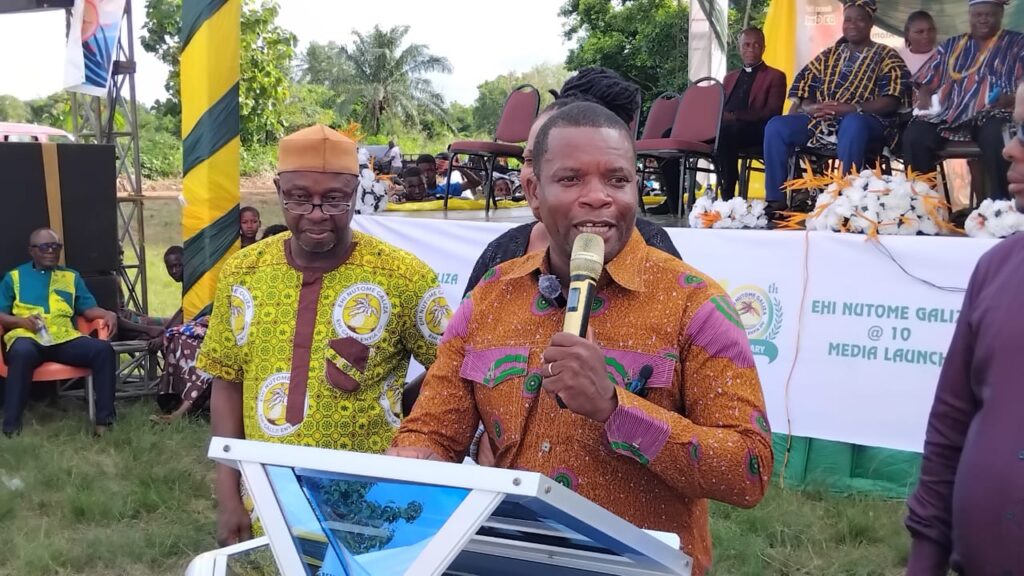
On education, he acknowledged delays in completing a classroom block at the Ehi MA Basic School, explaining that although the contractor had financed the project with personal resources since October 2024, payment had been delayed by the previous government and the current government was validating the cost of projects.
He expressed optimism that the contractor would be paid within the next two months to enable the classrooms to be handed over for use.
Rev. Amenaki also announced plans to construct an ultramodern Kindergarten block in the community before the end of the year, improve drainage infrastructure to prevent erosion and flooding, and facilitate the construction of a new police station.
He disclosed that investigations were ongoing into the abandoned Ehi-Agbozume, and Dzodze-Ehi Road project after official records reportedly indicated that substantial payments had been made despite the road remaining incomplete.
He said the government was determined to recover any public funds that might have been wrongly paid while arrangements were being made to continue the remaining works.
The MCE commends the Ehi Development Council (EDC) for educational materials, including khaki fabric and other clothing materials, donated to Ehi-Horme Basic School.
Torgbui Dzeble-Adukpo IV, Dufia of Ehi and Head of the Ehi Division of the Weta Traditional Council, said the festival had, over the past decade, evolved from a cultural event into a platform for promoting unity, development and community participation.
He said Galiza was established in 2016 to celebrate Ehi’s six varieties of gali while mobilising the people towards a shared vision of sustainable development.
“Ten years may appear short in the history of our people, but it is enough time to assess our progress, learn important lessons and ask ourselves what kind of Ehi we want future generations to inherit,” he said.
The traditional ruler noted that the greatest asset of Ehi was not its land or its famous gali, but its people, whose knowledge, skills and commitment would determine the community’s future.
He urged citizens, particularly those living outside the community and in the diaspora, to reconnect with their roots by investing in education, entrepreneurship, agriculture and youth development.
Torgbui Dzeble-Adukpo also advocated the preparation of a comprehensive spatial development plan for Ehi in collaboration with the Ketu North Municipal Assembly, the Ehi Development Council and the area’s Member of Parliament to ensure orderly growth over the next decade.
He further encouraged families to expose their children to the community’s traditions and cultural values while appealing to development partners and investors to support Ehi’s transformation agenda.
Torgbui Shippa IV, Chief of Ehi-Horme, described the 10th anniversary as an opportunity to celebrate the achievements of the festival while renewing the community’s commitment to development.
He said Gali za had become a symbol of unity, cultural identity and collective responsibility, bringing together chiefs, youth, women, professionals and development partners to promote the progress of Ehi.
He paid tribute to the founders of the festival, members of the Planning Committee, volunteers, sponsors and past coordinators whose dedication had sustained the initiative over the past decade.
He also expressed appreciation to Togbui Dzeble-Adukpo IV for his leadership and continued support for the development of the Ehi communities.
The launch was marked by the donation of school uniform fabric to Ehi-Horme Basic School for the sewing of uniforms for pupils, as part of efforts to support education in the community.
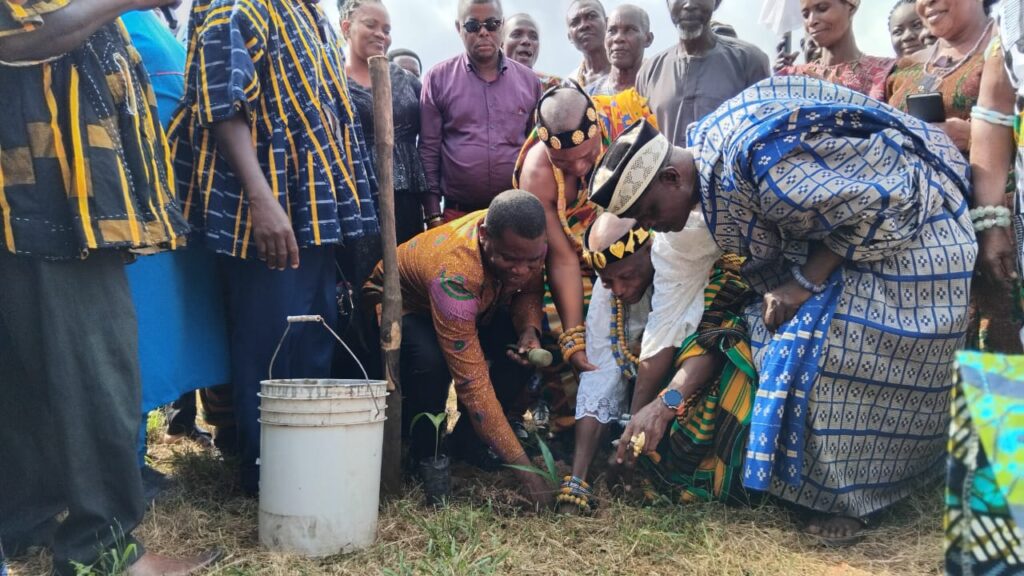
As part of activities commemorating the 10th anniversary of the Galiza Festival, the organisers also planted 200 Royal Palm trees led by Ehi Development Council (EDC) along the roadsides of Ehi-Horme to promote environmental sustainability and beautify the community.
Chiefs, government officials, political leaders, religious organisations, youth groups, cultural troupes and residents attended the launch.
The climax of the 10th anniversary celebrations is expected to take place during the last week of September with a series of cultural, educational and development activities aimed at showcasing the heritage and progress of the Ehi people.
GNA
Edited by Maxwell Awumah/ Christabel Addo