By Anthony Adongo Apubeo
Bolgatanga, July 1, GNA – Norsaac, an advocacy non-governmental organisation, has called for stronger collaboration among government institutions, traditional authorities, schools, parents, civil society organisations and the media to effectively combat the rising incidence of Sexual and Gender-Based Violence (SGBV).
The organisation said addressing SGBV requires coordinated action rather than isolated interventions by individual institutions.
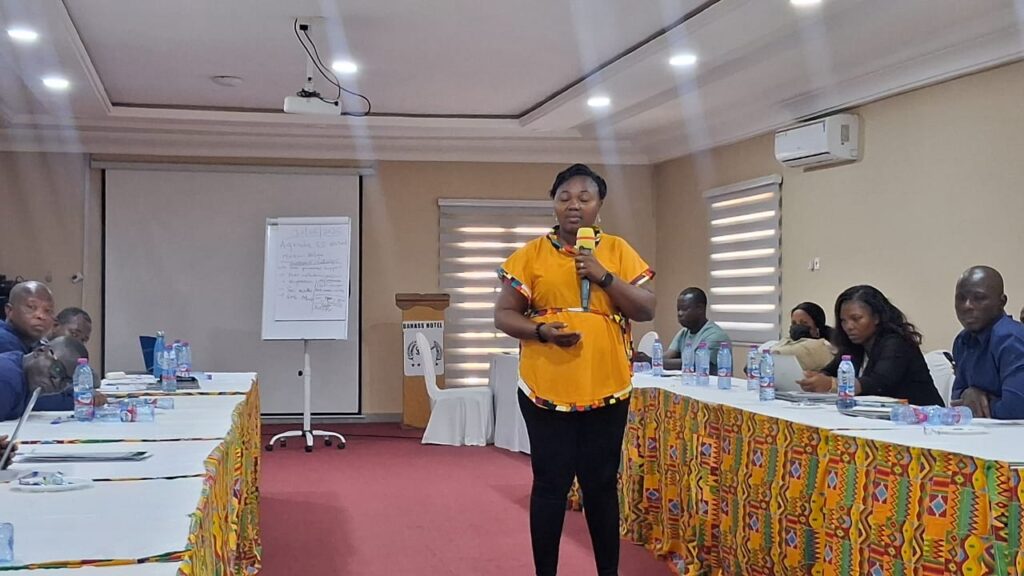
Ms Mathilda Ayineboma Ayamga, Programmes Advisor for Social Protection Interventions and Head of Norsaac’s Policy Office in Accra, made the call at an annual review meeting under the Agenda 55 Initiative in Bolgatanga.
The initiative, implemented by Norsaac in collaboration with the National Development Planning Commission (NDPC) and the Ministry of Local Government, Chieftaincy and Religious Affairs, seeks to eliminate sexual and gender-based violence across the 55 Metropolitan, Municipal and District Assemblies (MMDAs) in northern Ghana.
It forms part of the Strengthening Accountability for Inclusive Development (SAID Ghana) Project, implemented by Norsaac with support from Oxfam in Ghana.
Ms Ayamga said participating MMDAs had adopted nine indicators to monitor and respond to cases of defilement, rape, assault and other forms of SGBV, with some assemblies already integrating them into their medium-term development plans.
She said the annual review provides an opportunity to assess implementation of the indicators and strengthen district-level systems for preventing and responding to SGBV.
“We recognised the need to collaborate more as different institutions working in this space. The Domestic Violence and Victim Support Unit (DOVVSU), the Commission on Human Rights and Administrative Justice (CHRAJ), the MMDAs, Ghana Education Service, Ghana Health Service and civil society organisations must put our efforts together so that we do not work in silos,” she said.
Ms Ayamga said the initiative aims to improve reporting systems, referrals and follow-up on SGBV cases.
She expressed concern that about 82 per cent of reported SGBV cases occur in homes, describing it as worrying since homes are expected to be safe spaces for children.
“If a child is more at risk at home, then where is the safety net? Parents must become more available and supportive in protecting their children,” she said.
She also called on school authorities to strengthen child protection measures amid rising concerns about school-related abuse.
Traditional authorities, she added, should cooperate with state institutions rather than resolve SGBV cases in ways that fail to deter perpetrators.
She further urged the media to give greater attention to SGBV issues to raise awareness and promote accountability.
Mr Kampini Batie Binapak, North East Regional Director of the Department of Community Development, described the Agenda 55 Initiative as timely and called for similar interventions to be replicated.
He said northern Ghana continues to face child protection challenges, including teenage pregnancy, child marriage and gender-based violence, making sustained public education and community engagement essential.
Mr Binapak noted that poverty remains a major driver of abuse in the North East Region, where all six districts rank among the poorest in the country, according to the Ghana Statistical Service.
He stressed the need to complement child protection efforts with economic empowerment programmes for women through skills training and income-generating activities.
“When women are economically empowered, they are better able to provide for their children, reducing vulnerabilities that contribute to child marriage, teenage pregnancy and other forms of abuse,” he said.
Participants at the meeting, drawn from the Upper East, North East and Upper West Regions, reaffirmed their commitment to strengthening coordination among institutions and integrating SGBV prevention into local development planning to protect women, girls and other vulnerable groups.
GNA
Edited by Caesar Abagali/AudreyDekalu
Writer: Anthony Adongo Apubeo
Email: [email protected]