By Gifty Amofa
Beijing (China), July 14, GNA – Mainstream media organisations have been urged to uphold accuracy, credibility and professionalism by providing authentic and reliable information to the public despite the growing influence of new media and Artificial Intelligence (AI).
Media practitioners should use AI as a tool to enhance journalism rather than replace editorial judgement, ensuring that information disseminated to audiences remains accurate and trustworthy.
Mr Li Zhihui, the Executive Deputy Editor-in-Chief of Xinhua Net, made the call when participants of a media and communication training programme visited Xinhua News Agency and Xinhua Net, a subsidiary of China’s premier wire service.
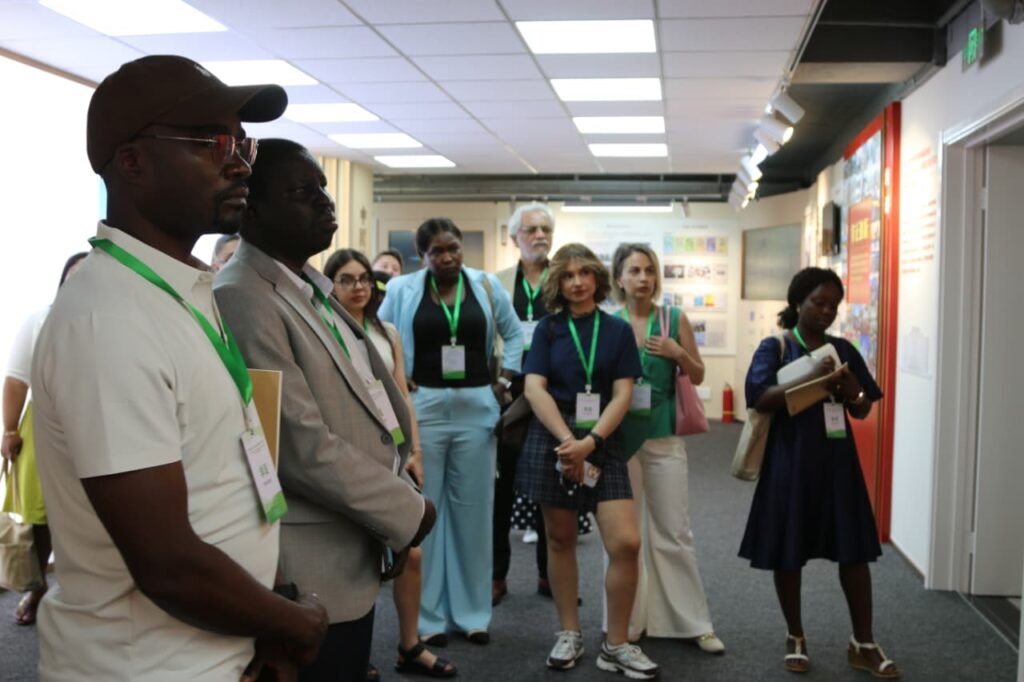
The visit formed part of a three-week training programme organised by the China International Communication Group (CICG) for 27 media professionals from 10 developing countries, including Ghana, Turkey, Costa Rica, Kenya, South Sudan, Azerbaijan, Grenada and Guyana.
Sponsored by the Ministry of Commerce (MoFCOM) of the People’s Republic of China, the programme is being implemented by the CICG’s Institute of International Studies and Advanced Training (IISAT).
“There should be zero tolerance for misinformation,” Mr Li said.
“Do not rely entirely on AI. Use it as a tool to enhance your work so that you do not misinform the public.”
He stressed that AI should support, rather than replace, journalism, noting that it must be used responsibly to strengthen public trust in the media.
Mr Li said journalists could encounter challenges in using AI and, therefore, had a responsibility to verify facts thoroughly before publishing information.
He urged media organisations to focus on development-oriented reporting by promoting sectors such as agriculture, science and technology, education, culture, research and social development.
Mr Li also encouraged the public to visit Xinhua Net’s website and provide feedback to help improve its services.
He said Xinhua Net would continue to expand its multilingual platforms to promote shared global development goals and strengthen international communication.
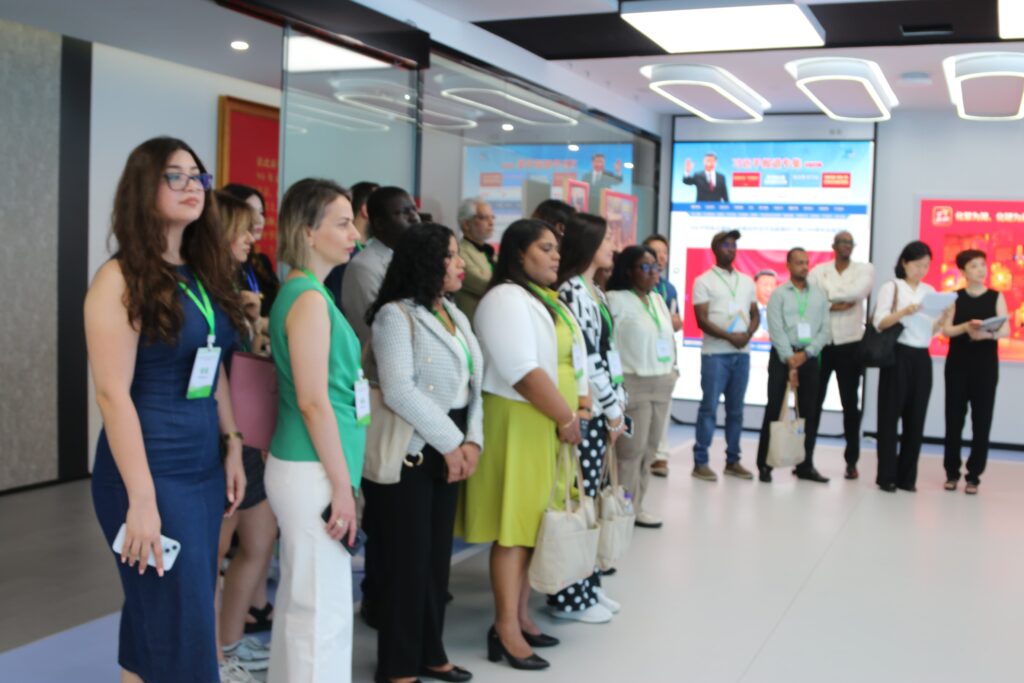
Mr Han Liqiang, Deputy Director of CICG and representative of the organising institution, said the training programme sought to strengthen cooperation between Chinese media professionals and journalists from developing countries through knowledge sharing and professional exchanges.
The programme was also intended to equip participants with skills to support national development and amplify the voices of underrepresented communities, he said.
Established in 1997, Xinhua Net operates 31 domestic channels and publishes content in Chinese, English, French, Spanish, and Arabic among other languages.
In addition to classroom lectures, participants will undertake institutional study visits and cultural exchange activities to enhance their understanding of the issues.
GNA
Edited by Agnes Boye-Doe
Writer: Gifty Amofa