By Yussif Ibrahim
Zieng (N/R), July 4, GNA – Stakeholders from three communities selected to benefit from irrigation interventions under the Adaptation and Vulnerability – Strengthening Transdisciplinary Engagement for Climate Resilience (AV-STEC) Project have embarked on a study tour to successful dry-season vegetable irrigation schemes.
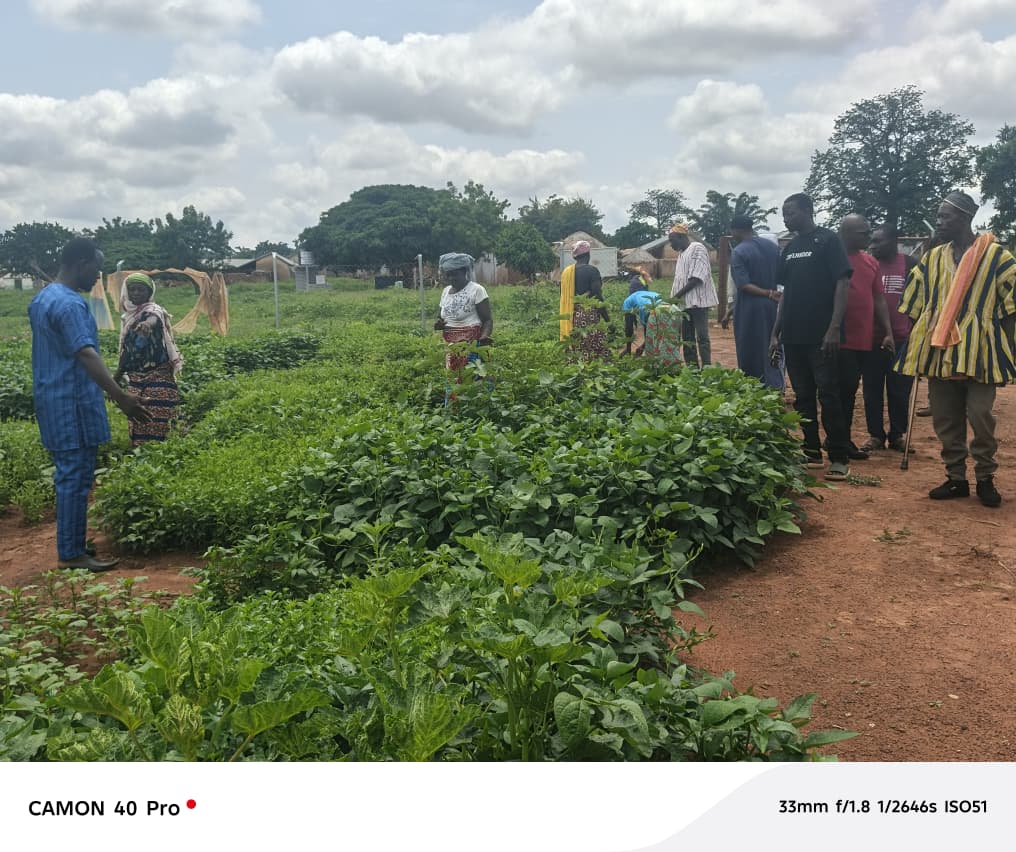
The beneficiaries, drawn from Yapei in the Central Gonja District, Sariba in the West Mamprusi Municipality, and Nungu in the Talensi District, visited irrigation facilities at Zieng in the Nanton District and Tamalgu in the Karaga District to observe first-hand how the systems operate and contribute to improving livelihoods.
The study tour was organised to expose community members to functioning irrigation models and enable them to make informed decisions on the type of irrigation systems to be established in their respective communities as part of climate adaptation and livelihood enhancement interventions under the AV-STEC Project.
Addressing participants during the visit, Field Activities Coordinator for the AV-STEC Project, Mr. Emmanuel N. A. Taye, said the intervention stemmed from concerns and priorities raised by the beneficiary communities during stakeholder consultations held earlier this year.
He explained that community members had identified irrigation infrastructure as one of the key interventions needed to support dry-season farming and reduce their dependence on rainfall for agricultural production.
“During our meeting in January, some of us met in Bolgatanga and asked you to identify projects that would be beneficial to your communities. One of the key interventions that emerged was the establishment of irrigation systems to support dry-season farming. That is why we are here today,” he said.
Mr. Taye noted that the project team was determined to ensure that any irrigation facility established would meet the specific needs of the beneficiary communities.
“We do not want to simply come into your communities and establish something that may not be beneficial to you. We want you to see for yourselves the different irrigation systems that are already working, understand how they operate and then decide which option best suits your community,” he stated.
He encouraged participants to actively engage with farmers and managers of the irrigation schemes, ask questions and share their concerns to ensure that future decisions regarding the interventions would be based on adequate knowledge and practical experience.
According to him, the success and sustainability of the interventions would largely depend on community ownership and informed decision-making.
During the tour, participants interacted with farmers benefiting from the irrigation facilities and learned about system operations, maintenance requirements, water management practices, crop production techniques and the economic benefits associated with year-round vegetable farming.
The community representatives also witnessed how access to irrigation had enabled farmers to cultivate vegetables during the dry season, improve household incomes, strengthen food security and create employment opportunities, particularly for women and young people.
Many participants expressed optimism that similar interventions in their communities would help increase agricultural productivity, diversify livelihoods and build resilience against the impacts of climate variability and prolonged dry spells.
The irrigation intervention forms part of efforts under the AV-STEC Project to strengthen the adaptive capacity of vulnerable communities through practical and sustainable climate resilience solutions.
The AV-STEC Project seeks to enhance the resilience of climate-vulnerable communities along the White Volta basin in Ghana and Burkina Faso by promoting community-driven adaptation strategies, nature-based solutions, sustainable livelihood interventions and stakeholder engagement.
The initiative focuses on addressing climate-related challenges, including flooding, drought and livelihood insecurity, through collaborative approaches that bring together researchers, policymakers and local communities.
The project is jointly implemented by the Centre for Biodiversity Conservation Research (CBCR), York University in Canada, and Naturama in Burkina Faso, with funding support from the International Development Research Centre (IDRC) through the Climate Adaptation and Resilience (CLARE) Initiative.
The study tour is expected to guide the selection and design of irrigation systems that will support climate-resilient agriculture and improve the livelihoods of beneficiary communities under the project.
GNA
Edited by Kenneth Odeng Adade
Reporter: Yussif Ibrahim