By Emmanuella Owusu
Ashaiman, July 31, GNA – The Ashaiman Municipal Assembly (ASHMA) has convened a major sanitation stakeholders’ engagement to formulate sustainable strategies, to address the municipality’s daily generation of 150 metric tonnes of refuse.
The engagement, which brought together traditional authorities, religious leaders, environmental health officers, youth groups, and sanitation volunteers, aimed at shifting community attitudes from indiscriminate dumping to waste segregation and resource recovery.
Addressing the participants, representatives of the assembly highlighted that plastics constitute the largest proportion of waste generated in the municipality, choking gutters, drainage channels, and major thoroughfares.
To tackle the menace, the assembly announced a policy shift towards mandatory waste segregation at the source, encouraging residents to separate bio-digestible waste from recyclable materials like plastics, metals, and glass bottles.
Mr Freeman Tsekpor, the Municipal Chief Executive (MCE), explained that partnering with local recycling firms, such as Smart Plastic, would unlock the economic potential of plastic waste, create local employment, and significantly reduce the volume of refuse hauled to landfill sites.
He said to boost public participation, the assembly was considering declaring a dedicated “Plastic Collection Day”, where residents will gather and send plastic waste directly to recycling facilities.
Addressing concerns over weak enforcement, the assembly acknowledged the low ratio of environmental health officers (Nsamansama) relative to the municipality’s growing population.
He, however, assured residents that a joint taskforce comprising health inspectors, security personnel, and local youth groups would intensify patrols, particularly along principal streets, commercial hubs, and market areas, to apprehend and prosecute offenders.
The MCE also outlined plans to acquire additional patrol vehicles to curtail late-night and early-morning illegal dumping along median strips by traders and unauthorised collectors.
Further measures announced by the assembly include the rollout of a comprehensive zoning system to improve waste collection schemes, enhance service provider supervision, and ensure equitable waste management coverage across all operational zones.
Additionally, standard waste bins will be placed at strategic locations, including markets, transport terminals, and major roads, with a call on community leaders, transport unions, and residents to safeguard the infrastructure against theft and vandalism.
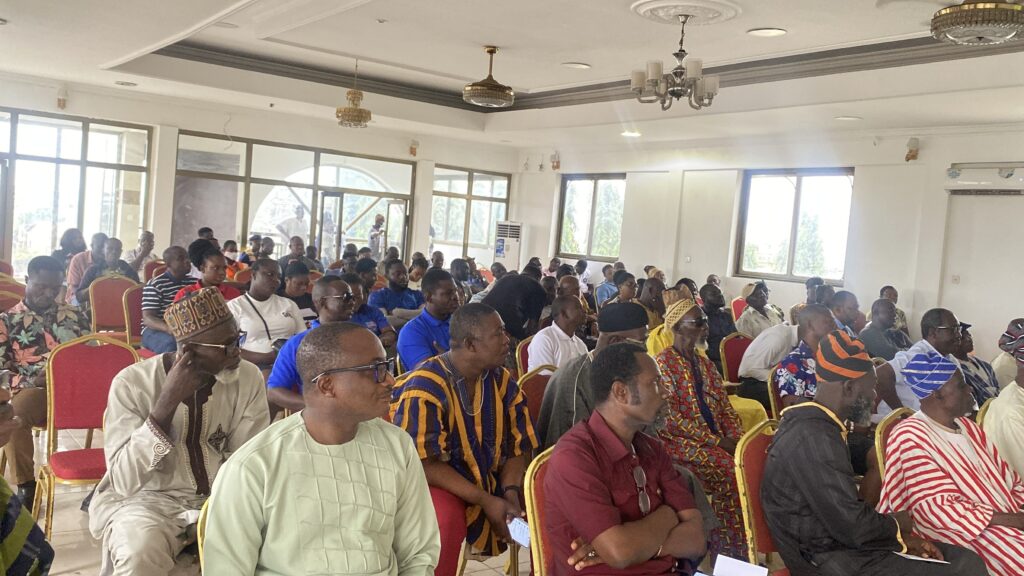
Contributing to the discussions, Mr Vincent Tekper, the Leader and Coordinator of App Town Cleaners, a local environmental volunteer group, urged government and local authorities to treat sanitation with the same aggressiveness applied to fighting corruption.
Mr Tekper noted that relying solely on basic manual tools like shovels and wheelbarrows was insufficient for dealing with severe drainage blockages caused by dumped construction blocks, discarded vehicle tyres, and heavy silt.
He appealed for increased financial investment and heavy machinery to support community-led sanitation efforts, revealing that his organisation spent over GH¢75,000 in personal and volunteer resources in the previous year to desilt gutters and conduct public education.
“Sanitation cannot be achieved by the assembly alone. It requires money, heavy machinery, continuous education, and a complete mindset shift where every citizen views cleanliness as a shared responsibility,” Mr Tekper added.
The assembly assured stakeholders of its commitment to implementing all recommendations from the engagement, reaffirming that enforcement will be strictly sustained to transform Ashaiman into a clean, healthy, and prosperous municipality.
GNA
Edited by Laudia Anyorkor Nunoo/ Christabel Addo
Reporter: Emmanuella Owusu, GNA